TL;DR: The Quick Answer
If you only change one thing about your home office lighting, make it this: match the Kelvin number to the clock, not to whatever bulb the fixture came with. I default clients to a neutral white light around 4000K for daytime work, then let it drift warmer once the sun goes down.
- For daytime focus and detail work: Use a cooler white light (4500K-5000K).
- For evening comfort and winding down: Shift to a warmer light (3000K-3500K).
- For the best of both worlds: Invest in a tuneable-white light source that allows you to adjust the color temperature from 2700K to 5000K throughout the day.
Aim for a brightness of around 500 lux on your desk and always choose lighting with low glare to protect your eyes. For more on the different types of lighting you need, check out our guide on Task vs. Ambient Lighting: The Ultimate Guide to Your Office Setup.
What Is Color Temperature?
Before you can choose the best color temperature, it helps to understand what it is. Color temperature, measured in Kelvin (K), describes the hue of light. The lower the Kelvin number, the “warmer” or more yellow/orange the light appears. The higher the number, the “cooler” or bluer/whiter the light looks. If you want a deeper dive, our guide on Cool vs Warm Bulbs: What’s Best for Work? breaks down the differences in detail.
Color temperature is not the same as brightness. A 2700K bulb can be just as bright as a 5000K bulb; they just have different colors.
Tip: You’ll also see a value called CRI (Color Rendering Index). A high CRI (90+) means the light shows colors more accurately, which is important for design work and especially for looking your best on video calls.
Which Kelvin Should You Choose? 3000K vs 4000K vs 5000K
Different color temperatures are suited for different tasks and times of the day. Here’s a breakdown of the most common options for home office lighting.
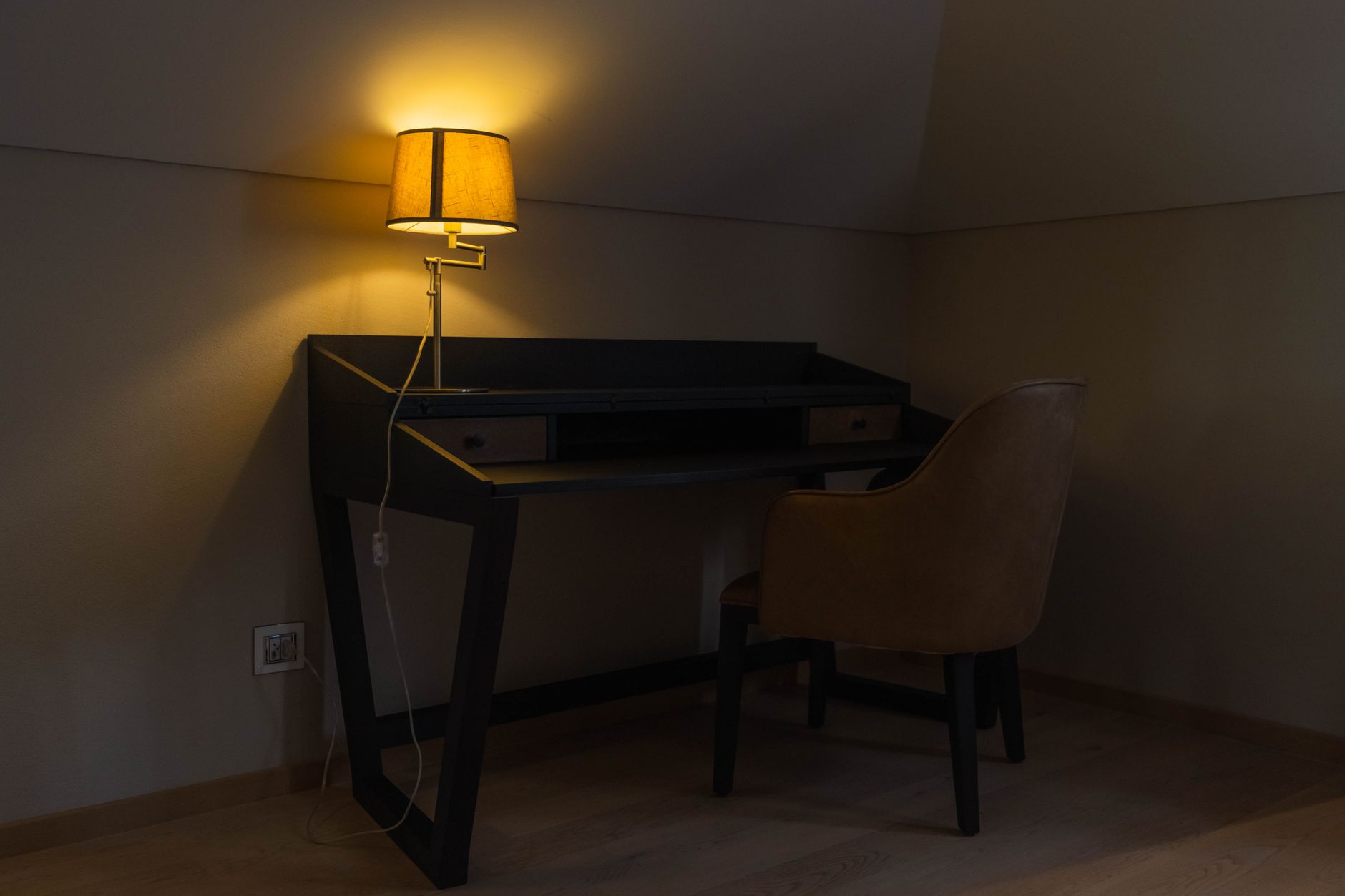
3000K: Warm White
- Pros: Creates a comfortable, cozy atmosphere; ideal for relaxing.
- Cons: Can make it harder to focus on detailed tasks; may feel too dim for some.
- Best for: Evenings and a relaxed work atmosphere. If your office is a multi-purpose room (e.g., a bedroom), this is a great choice for winding down.
- Time of day: Evening, after 6 PM.
4000K: Neutral or Cool White
- Pros: A balanced, crisp light that feels natural; a widely recommended choice for general office work.
- Cons: Not as cozy as warmer light for evenings.
- Best for: All-day productivity and general office tasks. It’s a great baseline for your primary desk lamp. This color temperature is also excellent for video calls, as it provides a professional, neutral light that makes skin tones look natural. For more tips on this, read our guide on How to Light Your Office for Zoom and Video Calls.
- Time of day: All-day, but especially during the core workday (9 AM - 5 PM).
5000K: Cool White or Daylight
- Pros: Enhances alertness and concentration; great for tasks requiring high visibility and detail. Mimics natural daylight.
- Cons: Can feel harsh or even sterile; may contribute to eye strain during long sessions, especially on a computer screen.
- Best for: Fine detail work, reviewing physical documents, or tasks that require maximum focus. Think of it as a temporary boost for your most demanding tasks.
- Time of day: Early morning or for specific, short-term tasks.
Tuneable-White Lighting for Hybrid Schedules
The most effective solution for a modern home office is tuneable-white lighting. These smart bulbs and lamps let you change the color temperature through the day to match your needs and your body’s natural circadian rhythm.
- Morning: Start your day with a cooler, energizing light around 4500K-5000K to boost alertness.
- Mid-day: Settle into a productive 4000K neutral white.
- Evening: As you wrap up your work, switch to a warm 3000K to prepare your mind for rest and relaxation.
Tuneable lighting suits anyone with a hybrid work schedule, and anyone whose home office doubles as another room. For more on what the technology can do, read our article on Smart Lighting for the Home Office.
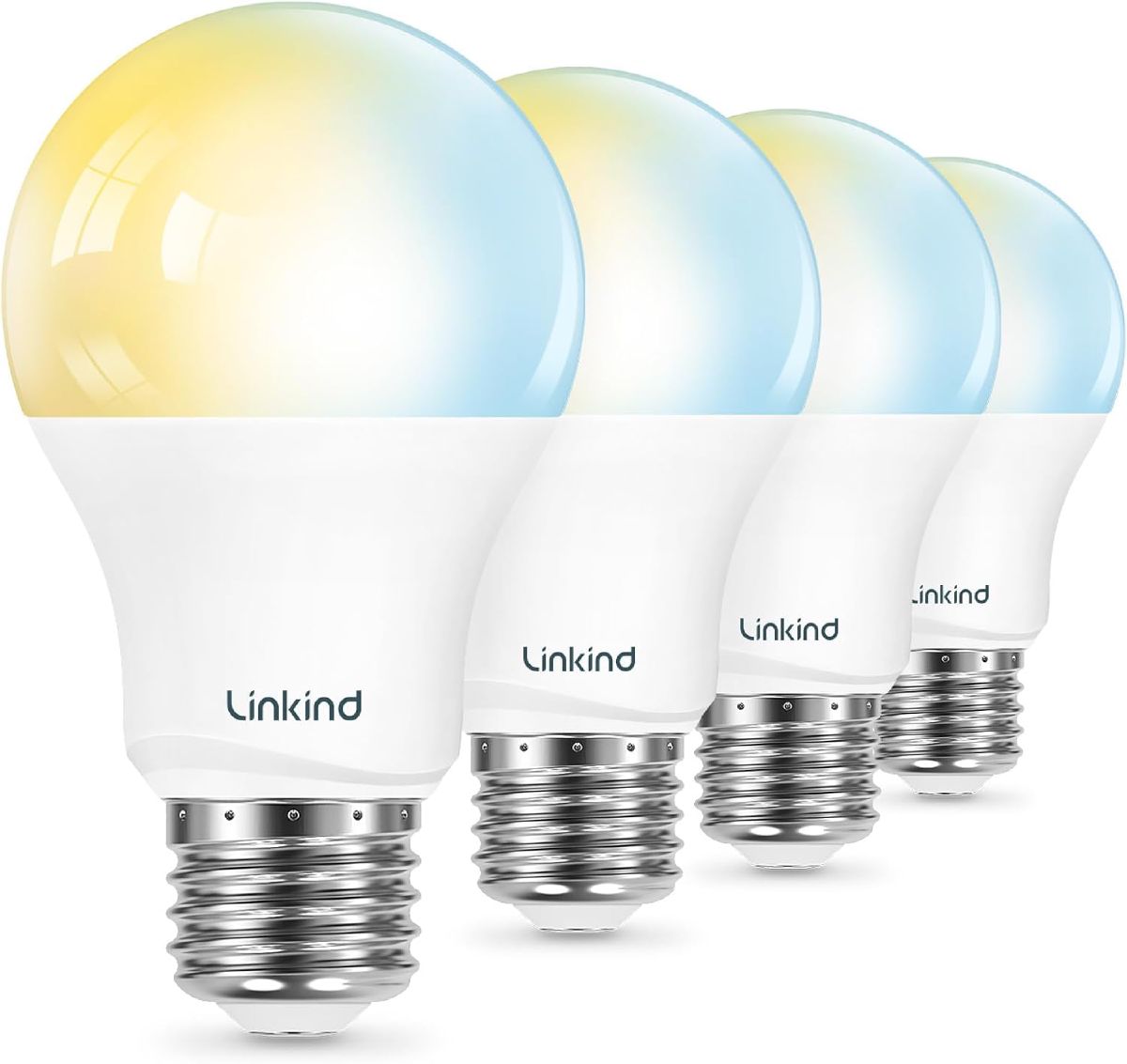
The cheapest route to everything above is usually a bulb swap, not new hardware. If your existing lamp or ceiling fixture takes a standard E26 bulb, the Linkind tunable white smart bulb 4-pack turns it into a tunable fixture: a single bulb walks the entire 2700K-6500K spectrum this guide has been quoting, it needs nothing beyond Wi-Fi to work, and the four-pack covers a whole office for less than one designer lamp. It holds 4.5 stars across 500-plus ratings.
 $19.99 price as of Oct 23
The trade-off: all control happens in software (the app, Alexa, or Google Home). There’s no support for a dimmer on the wall, which rules it out for anyone who prefers turning a real dial.
Buy the Linkind Smart Bulb 4-Pack on Amazon
Glare and Eye Comfort: A Crucial Caveat
No matter which color temperature you choose, the most important factor for eye health is glare control, not Kelvin. Higher CCT light (4000K-5000K) can sometimes feel harsher, increasing the risk of discomfort glare.
- Choose diffused light: Use a lamp with a lampshade or diffuser to soften the light.
- Go for indirect lighting: Bounce light off a wall or the ceiling to create a softer, more even glow.
- Check for flicker: A high-quality LED light will have a flicker-free driver, which is essential for preventing eye strain and headaches during long work sessions.
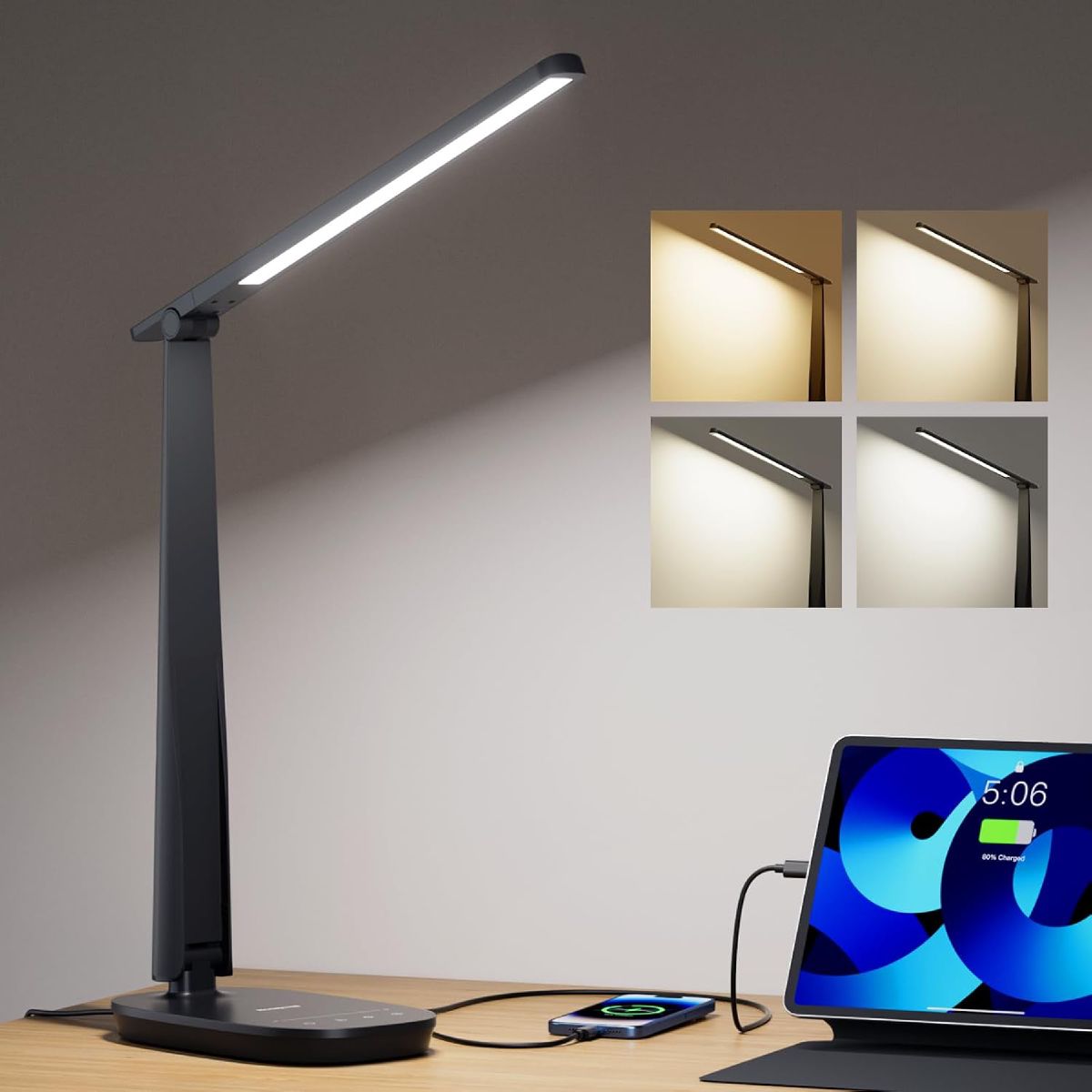
For a desk lamp that solves both problems at once, color temperature and glare, I’d point you at the Honeywell LED Desk Lamp. Every schedule in this guide maps onto one of its presets: the four modes span 2700K-5700K, covering the warm morning start, the neutral midday stretch, and the crisper focus settings. The light itself stays full-spectrum and flicker-free at CRI ≥94, the eye-comfort spec most lamps at this price skip. Its 4.8-star average over 857 ratings suggests owners agree.
 $30.59 price as of Oct 23
What I’d change: Honeywell doesn’t publish a lumen figure for this lamp, so there’s no way to compare its raw brightness against rivals on paper. You’re buying it for light quality and tunability, not headline output.
Buy the Honeywell LED Desk Lamp on Amazon
FAQs
Is 6500K too blue for a home office?
For long work sessions, 6500K is generally too blue and can feel very harsh and unnatural. It’s often best to stick to the 3000K-5000K range for comfort and long-term use.
What’s the best color temperature for evenings?
For evenings, we recommend a warm light between 3000K and 3500K. This helps signal to your body that it’s time to start winding down, which can improve your sleep quality.
Does color temperature affect productivity?
While some studies suggest cooler light (like 5000K) can enhance alertness, the evidence is mixed. Ultimately, personal comfort and preference play a huge role. This is another reason why tuneable-white lighting is a great solution. It lets you find what works best for you and your schedule. For a deeper dive into overall home office design, including other home office lighting ideas, read our comprehensive Ultimate Guide to Home Office Lighting.