
Updated: October 2026: a new section on putting fairy lights on a bedroom ceiling or wall, including plug-in vs battery for ceiling runs.
Fairy lights are still the cheapest, lowest-commitment way to make a bedroom feel finished. My pick for most bedrooms is a warm-white curtain or string set on a remote: it gives you an instant backdrop without an electrician or a big spend. If you want copper-wire flexibility for shaping around a headboard, or app control for color-changing scenes, those are the picks below; for everyday cozy glow, start with string or curtain lights in warm white.
Quick terminology note before we get into picks: “fairy lights” and “string lights” are the same product. It’s mostly a UK-vs-US naming split (fairy lights leans British, string lights leans American), and I’ll use both terms interchangeably through this guide because that’s genuinely how people search for and shop for them. You’ll also see the same category sold as “indoor string lights” or “LED string lights” on some listings. That’s retailer wording, not a different product, so don’t let the label steer you away from a pick that’s otherwise right for your room.
How I Chose These Picks
I shortlisted from Amazon’s fairy-light category with three filters: real customer rating of 4.3+ stars, enough reviews to trust that rating (hundreds, not a handful), and a genuine “best for” use case rather than five near-identical strings padded onto a list. I then built a deliberate spread (battery vs. plug-in, budget vs. app-controlled, subtle vs. statement) because “best fairy lights for a bedroom” means something different in a rental with no wiring access than it does for a permanent headboard feature. Every pick below gets an honest downside alongside the case for it.
Why Fairy Lights Work So Well in a Bedroom
A bedroom rarely needs more light. It needs warmer, more layered light, and fairy lights are one of the few fixtures built specifically for that job. Here’s what makes them worth the shelf space:
- Soft, diffused glow. Dozens of small warm-white points read as ambiance, not illumination: exactly what you want for a wind-down space, unlike a single bright bulb.
- Real mood lighting. Used well, they replace (or supplement) a dimmer switch you don’t have.
- Low commitment. Most sets are removable, renter-friendly, and cheap enough that trying a look costs you $10-20, not a fixture swap.
- Efficient by default. Nearly every set on the market now is LED, so running them all night costs pennies, not a line item on your electricity bill.
If you’re building a fuller mood-lighting scheme beyond fairy lights alone (sconces, LED strips, dimmable lamps), I cover that layering approach in my bedroom accent lighting guide.
My Top Picks by Type
| String Lights | Curtain Lights | Smart App-Controlled | Mason Jar / Battery | Copper Wire | |
|---|---|---|---|---|---|
| Pick | Minetom Globe String Lights | HXWEIYE 300LED Fairy Curtain Lights | JMEXSUSS Smart RGB Fairy Lights | Wire Firefly Starry Lights | Twinkle Star Copper Wire Lights |
| Best for | Cozy bedside glow | Statement window/wall backdrop | Color-changing scenes, voice control | Cordless nightstand accent | Wrapping mirrors, headboards, DIY shapes |
| Power | Plug-in | Plug-in | Plug-in (USB), app + Alexa/Google | Battery | Plug-in |
| Honest con | Globes are bulkier than plain string, so skip them in a tight space | Needs a full window or wall run to look intentional, not sparse | Setup app + WiFi is more fuss than a plain remote | Battery packs need regular swaps if left on nightly | Wire holds shape but kinks permanently if reshaped too often |
1. String Lights: my pick for a first-timer’s bedside glow
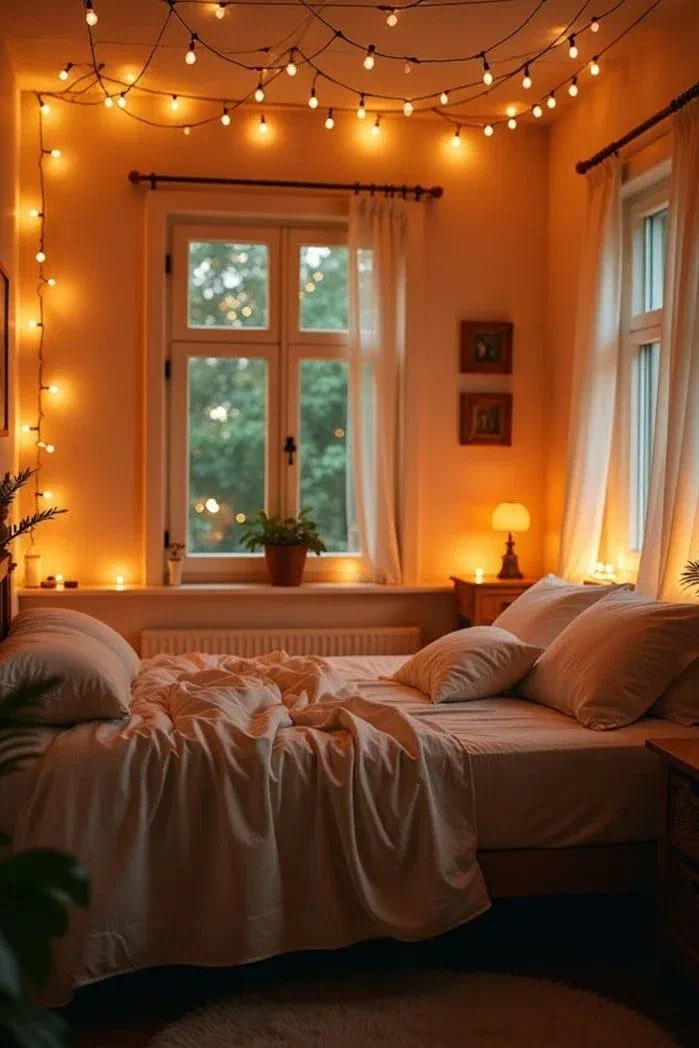
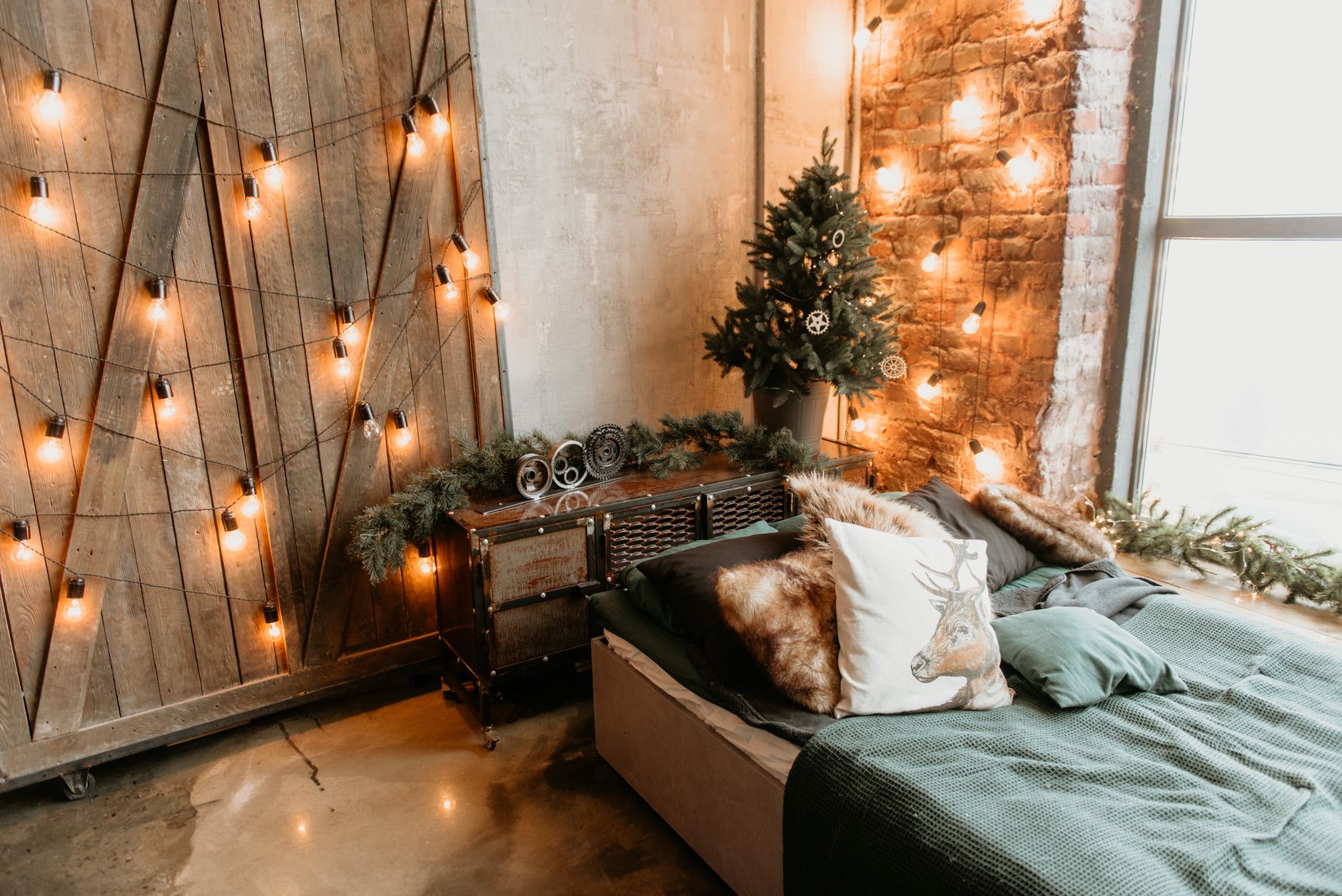
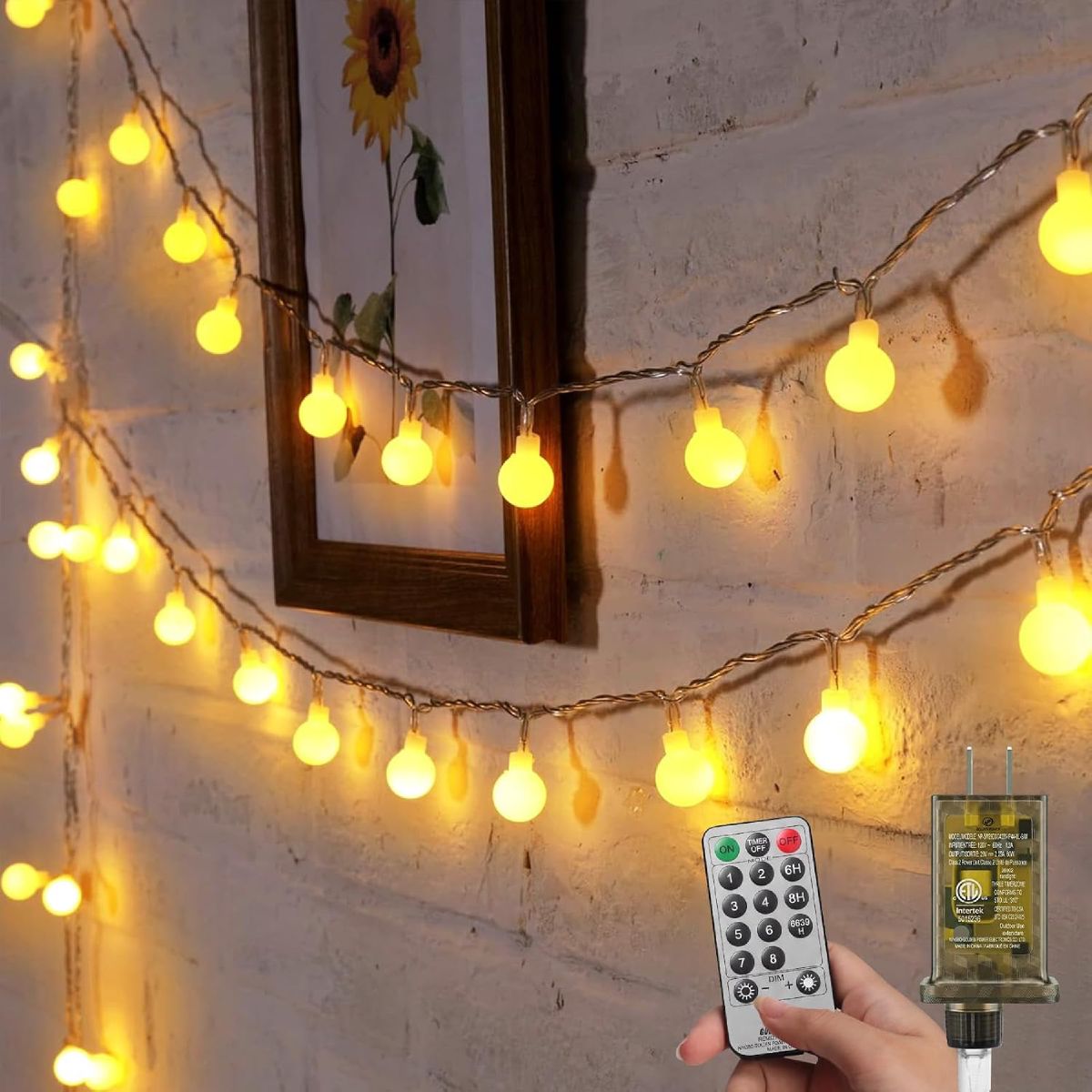
Plain string lights are the format I’d point a first-timer toward. They’re the most forgiving to install and the easiest to undo if you don’t like the look. Globe-style bulbs like the Minetom set below read a little more “finished” than bare LED string, which is why I lean toward globes for a bedside application specifically.
Best uses: draping across a headboard wall, wrapping a bedframe, or outlining a mirror or shelf.
Installation tip: adhesive hooks or clips hold better long-term than tape, which peels off paint within a season.
My pick: Minetom Globe String Lights, under $20. Warm white glow with a remote and timer, so you can dim toward bedtime without getting out of bed. It has held a 4.5-star average across close to 11,000 ratings, which is a real track record at this price point. Honest con: the globes add bulk and cast shadows differently than plain LED string. If you want something that disappears into the wall rather than being its own decor element, go with the copper wire pick instead.
 $15.99 price as of Oct 23
Buy the Minetom Globe String Lights on Amazon
2. Curtain Lights: for a genuine “wow” backdrop
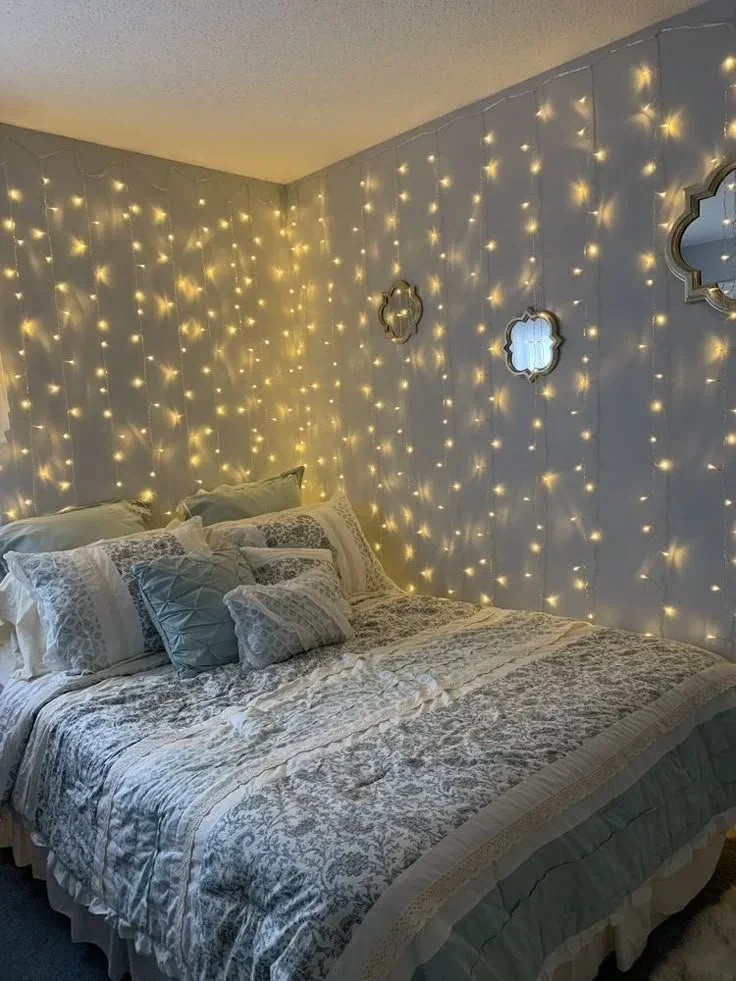
Curtain-style fairy lights are the pick I’d reach for if you want the Pinterest-style glowing-wall look rather than a subtle accent. They’re a grid of drops on a single run, not a single strand, so the effect reads as a backdrop rather than a highlight.
Curtain lights beat a plain strand any time you’re covering a full window or an entire headboard wall. A single string stretched across that much space looks thin and sparse; the same run in curtain format reads as one deliberate lit surface. If you’re only accenting a mirror frame or a narrow strip of wall, a plain string or copper wire pick (below) is the better fit; curtain lights need real width to look intentional rather than half-finished.
Best uses: behind a bed as a headboard substitute, over a full window, or layered behind sheer curtains for a diffused effect.
Installation tip: a tension rod gives a cleaner line than hooks if you’re covering a full window.
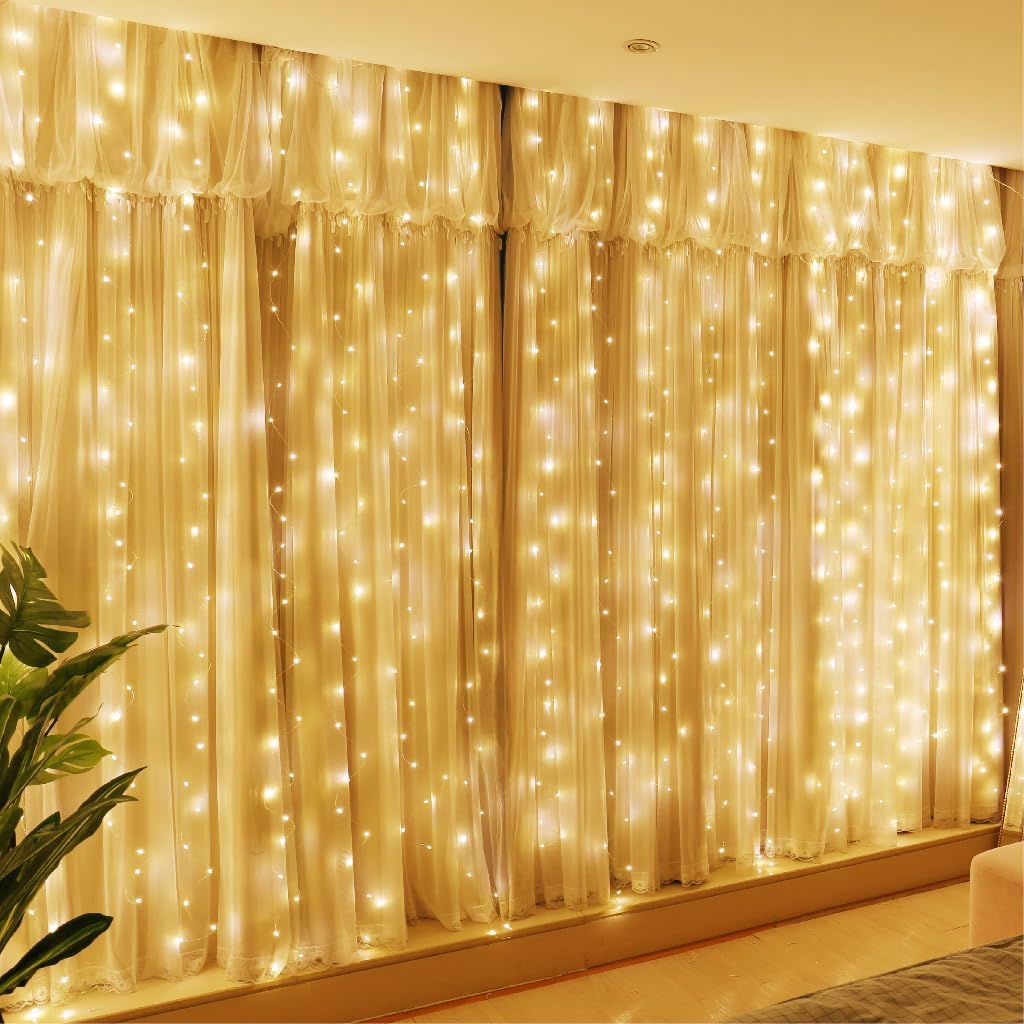
My pick: HXWEIYE 300LED Fairy Curtain Lights, under $10. Multiple modes (twinkle, steady, fade) so you can match the mood to the moment. Honest con: this only looks intentional across a full run. Half a curtain of lights on a partial wall looks unfinished rather than styled, so measure your space before you buy.
If curtain-style is the format you actually want, rather than a single pick alongside string and copper wire, I’ve got a dedicated round-up with a full size and power-source spread: my best curtain lights guide covers a large-window option, a battery-only pick, and a color-changing splurge.
 $7.99 price as of Oct 25
Buy the HXWEIYE Fairy Curtain Lights on Amazon
3. Smart Fairy Lights: for color-changing scenes
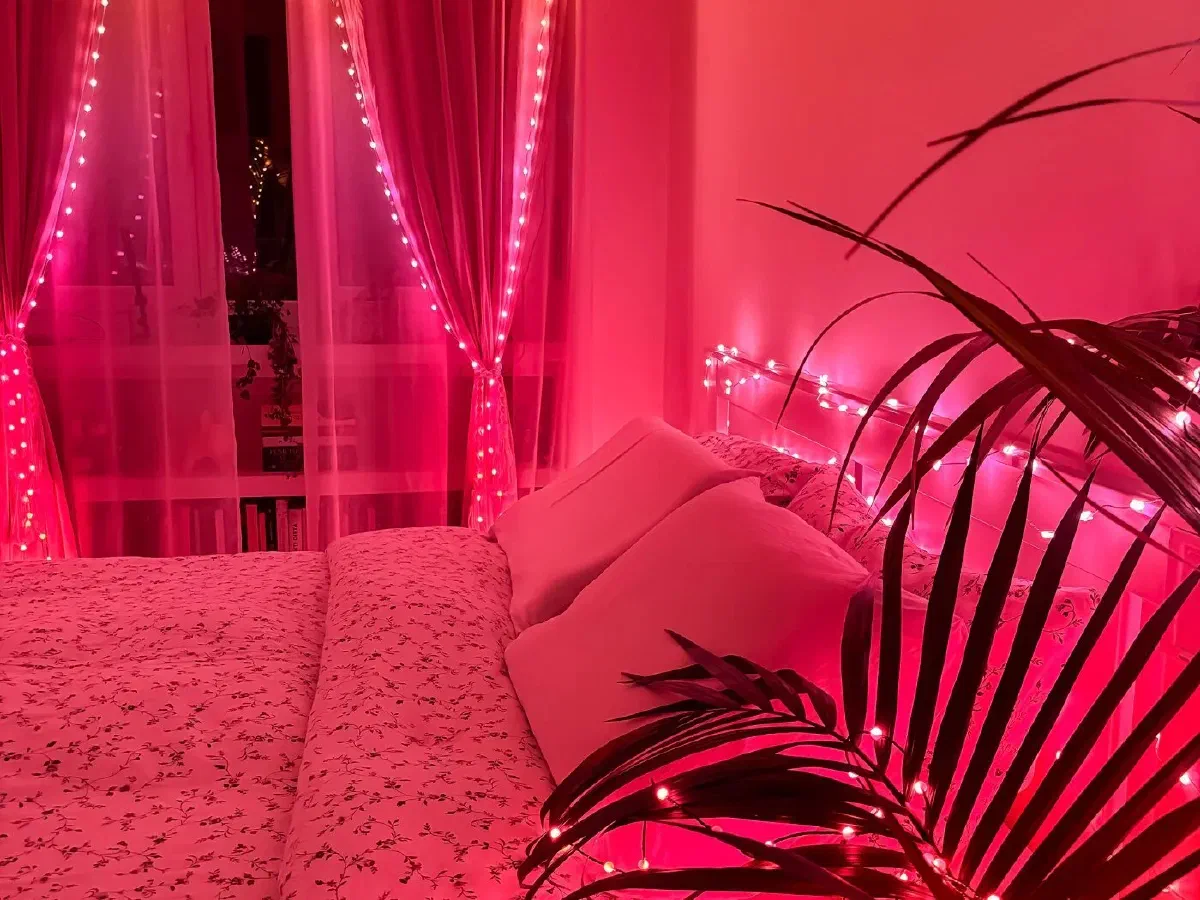
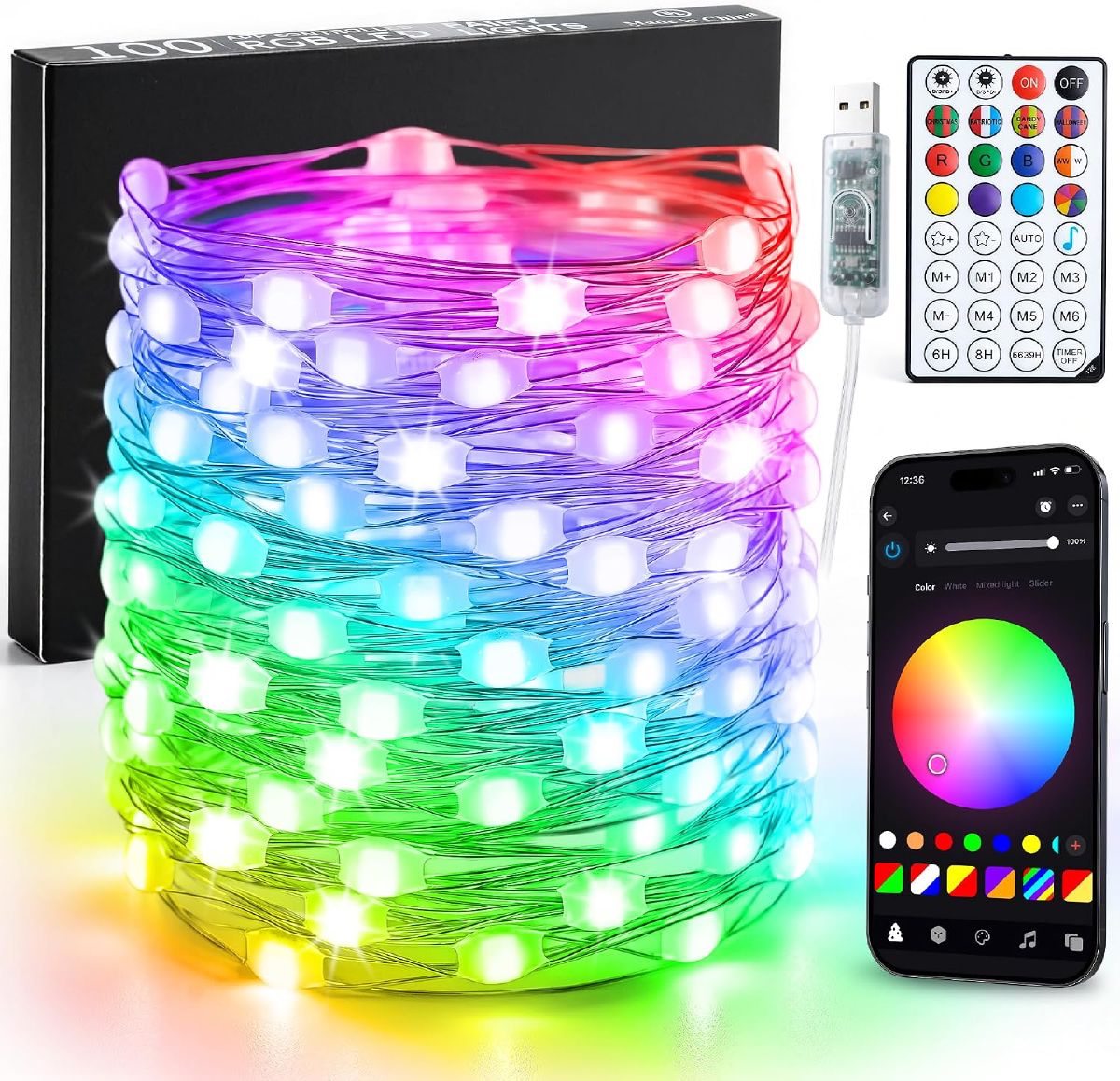
Smart, app-controlled fairy lights are worth the extra setup step if you already run other smart-home lighting and want your bedroom to sync into the same scenes: color, brightness, and schedule all live in the app instead of a physical remote.
Best uses: mood lighting that changes with the time of day, syncing to music, or accenting a tech-forward setup.
Installation tip: pair the app to the lights and run through the color modes before you commit to hanging them; a smart set that’s fussy to pair is more hassle than a dumb one that just works.
My pick: JMEXSUSS Smart RGB Fairy Lights, under $16. A 33-foot, 100-LED copper-wire run with 16 million color options, controllable through the app, the included remote, or voice through Alexa/Google Assistant. Honest con: it’s newer to the market than my other picks and sits at 198 ratings rather than the thousands the string- and curtain-light picks above have, so weigh that against how much you actually value the smart features. If you just want reliable color-changing without the app layer, a plain remote-controlled RGB set is the simpler buy.
 $16.14 price as of Oct 23
Buy the JMEXSUSS Smart RGB Fairy Lights on Amazon
4. Mason Jar / Battery Lights: for a cordless accent
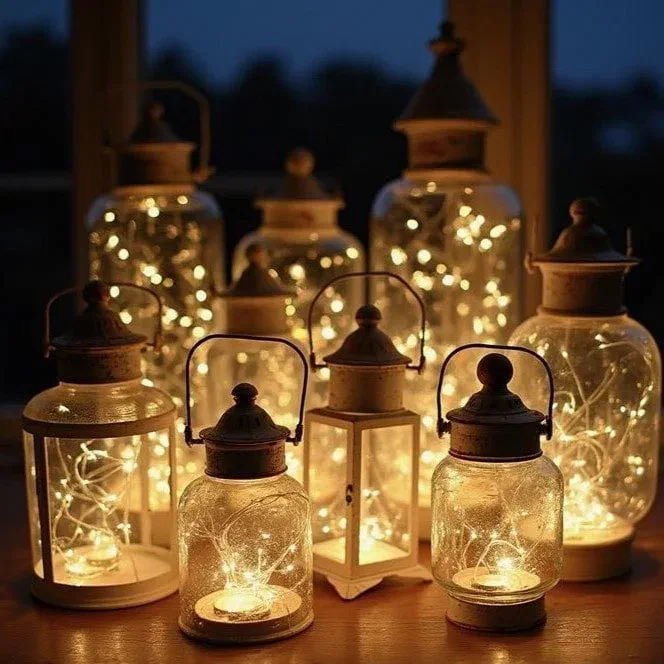
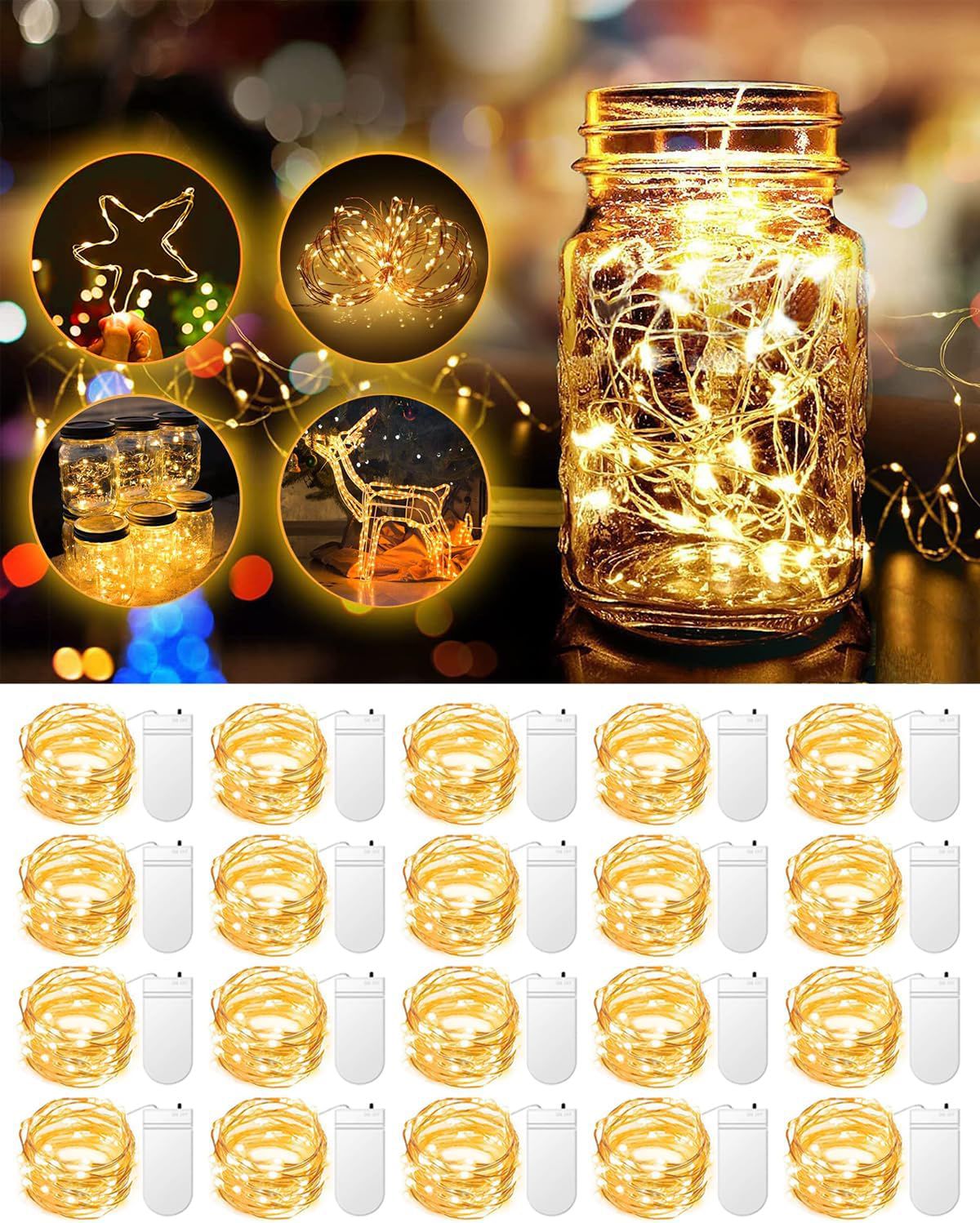
Battery-powered fairy lights in mason jars solve the one problem the other picks don’t: no outlet, no visible cord. That makes them the pick for a nightstand, windowsill, or shelf where running a cable would look messy.
Best uses: nightstand accent, windowsill decor, or a cluster of jars as a low-effort centerpiece.
Installation tip: no installation, which is the whole point, but keep spare batteries nearby if you plan to run them nightly.
My pick: Wire Firefly Starry Lights for Mason Jars, under $15. Compact and warm-toned, genuinely made for jar use rather than a generic string squeezed in, and it’s sitting at 4.7 stars across over 5,000 ratings. Honest con: batteries are the trade-off for the cordless convenience. Expect to swap them every few weeks with nightly use, which plug-in sets never ask of you.
 $13.98 price as of Oct 23
Buy the Wire Firefly Starry Lights on Amazon
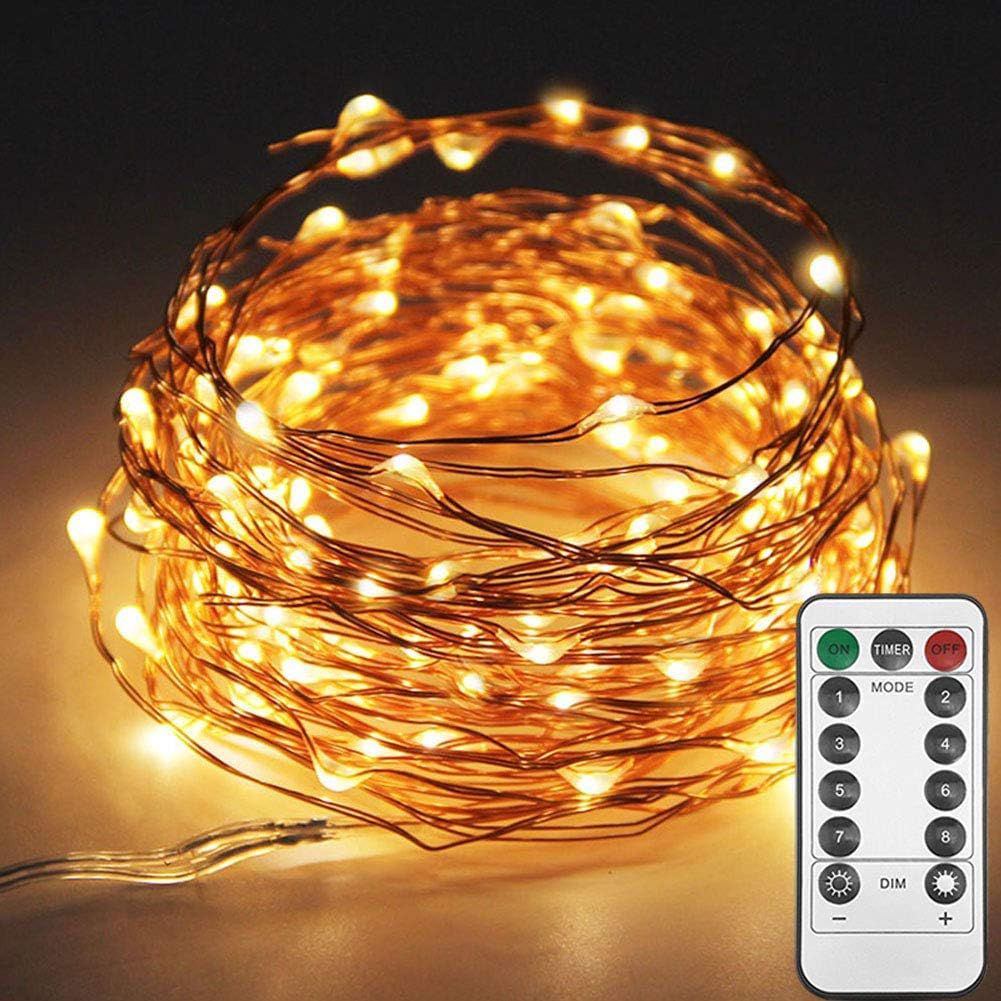
5. Copper Wire Lights: for shaping and DIY
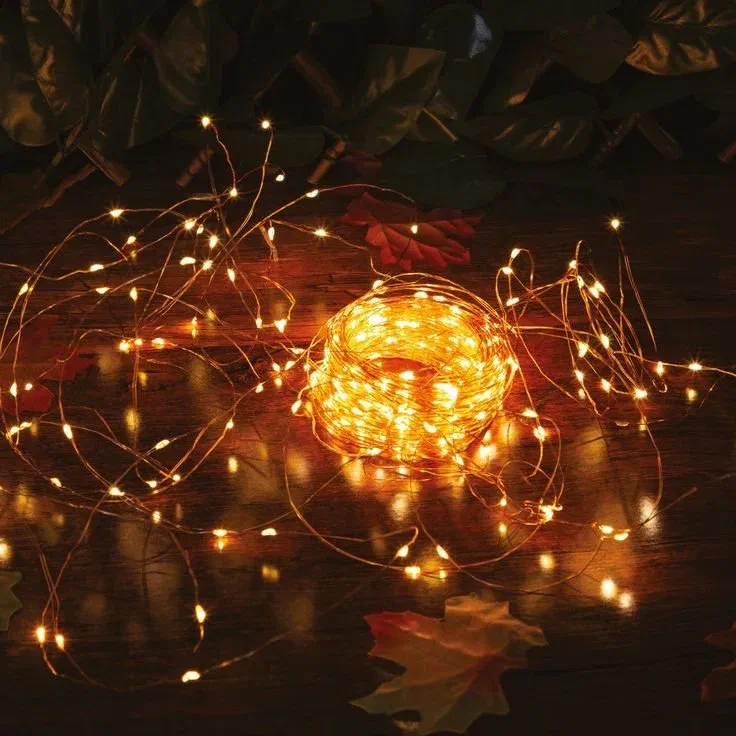
Copper wire fairy lights are the most flexible format on this list. The wire itself is bendable, so you can shape it around a mirror frame, spell out a word, or wrap it invisibly around furniture in a way a rigid string can’t.
Best uses: wrapping mirrors or headboards, DIY letter/word shapes, or accenting houseplants.
Installation tip: transparent tape or small clips hold the thin wire without the visible hardware a thicker string would need.
My pick: Twinkle Star Copper Wire Fairy String Lights, under $15. Comes in warm white or multicolor, and the wire itself is nearly invisible once lit. It’s the best-reviewed pick in this whole guide, with 36,000-plus ratings holding a 4.5-star average. Honest con: copper wire holds whatever shape you bend it into, which is great once. Reshape it too many times, though, and it kinks and weakens at the fold, so decide on a layout before you commit.
 $10.96 price as of Oct 23
Buy the Twinkle Star Copper Wire Lights on Amazon
Warm White, Cool White, or Multicolor: Which Fairy Light Color for a Bedroom?
Warm fairy lights (meaning warm-white LEDs, roughly 2700-3000K on the color-temperature scale) are the right default for a bedroom, and it’s not a style preference so much as how the color actually reads at night. That range is the same warm-yellow glow as an old incandescent bulb, and it’s the tone your eyes associate with wind-down rather than work.
Cool white (4000K and up) looks closer to office or bathroom lighting: crisp and slightly blue-white. It’s not wrong, exactly, but it works against the cozy effect most people buy fairy lights for in the first place; I’d only reach for it in a workspace nook inside a bedroom, not over a headboard. Multicolor or RGB sets are genuinely fun for a kids’ room, a party night, or a gaming-corner accent, but they’re a different use case from everyday ambiance. Don’t buy a color-changing set expecting it to double as your calm, warm-glow nightly lighting.
One practical snag: most fairy-light listings don’t state a Kelvin number at all; they just say “warm white” or “cool white” in the title or bullet points. Take the listing photo with a grain of salt too, since product photography often shoots noticeably brighter and whiter than the light actually looks once it’s dimmed in a real room. If a listing doesn’t specify warm white anywhere and the photos look bluish, assume it’s cool white and look elsewhere.
Putting Fairy Lights on a Bedroom Ceiling or Wall
For a ceiling, use removable clips or adhesive hooks and run the strand in loose swags or a straight line along the edge, with the plug end near the outlet. For a wall, anchor the line every foot or so and keep it level with the headboard or window frame. Either way, hang the lights before you plug them in, and test the full run at the outlet first so you are not rehanging a dead section.
On a ceiling, I’d plug in rather than use batteries. A ceiling run is awkward to reach, and a battery pack that dies means a ladder every few weeks. Choose a set with a plug-in adapter and a timer, then tuck the cord into a corner or along the wall edge so it reads as part of the design. Keep batteries for walls, shelves and spots where a cord would show, such as the mason jar and battery pick above.
Curtain lights suit a wall well, since the drops hang straight from one header wire. Plain string or copper wire is easier to swag across a ceiling because it has no drops to tangle. Allow about 100 LEDs for an accent line along one wall edge, and 200 to 300 for a full backdrop. For adhesive, tape and pin methods and the damage risks of each, see my Super Easy Guide to Hanging Fairy Lights.
How to Choose Between Them
If I had to boil this down to one decision tree: renting or don’t want cords showing? Go battery/mason-jar. Want a statement wall or headboard backdrop? Go curtain lights. Already have smart-home lighting elsewhere? Go app-controlled. Everyone else (the majority of bedrooms) is well served by plain warm-white string or globe lights on a remote; it’s the format with the best price-to-impact ratio and the fewest things that can go wrong.
Beyond format, weigh:
- Power source: plug-in for permanent installs, battery for flexibility and renter-friendliness.
- Length: measure the run first; a set that’s too short looks sparse, and excess length just means more visible slack to hide.
- Lighting modes: a simple on/dim/off remote is plenty for most bedrooms; only pay for app control if you’ll use it.
- Color temperature: see the warm-white-vs-cool-white breakdown above; when in doubt, warm white is the safer default for a bedroom.
Fairy Light FAQs
Are fairy lights safe to leave on overnight in a bedroom? LED fairy lights run cool enough that leaving a plug-in set on overnight is low-risk, and it’s what most owners actually do. My own rule: use a set with a built-in timer (most of the picks above have one) so lights dim off automatically rather than relying on you remembering, and always check for a frayed cord or a warm plug before leaving anything running unattended.
How many fairy lights do I need for a bedroom wall or headboard? For a genuine “backdrop” look (the kind curtain lights are built for), plan on roughly 200-300 LEDs per standard headboard width or single window. For an accent rather than a backdrop (wrapped around a mirror, draped along one wall edge), 50-100 LEDs reads as intentional without needing a curtain-style set at all.
Battery vs. plug-in: which is better for a bedroom? Plug-in wins on cost-per-hour and never needing a battery swap, so it’s my default for anything you’ll run nightly, like a headboard backdrop. Battery wins on placement flexibility (a mason jar on a shelf with no nearby outlet, or a rental where you don’t want a visible cord) at the cost of periodic battery changes.
How long do fairy lights actually last? LED fairy lights are rated for 20,000-50,000 hours of use depending on the set, which at a few hours a night works out to years of regular use before the LEDs themselves dim meaningfully. In practice, the wire or connector fails before the bulbs do, which is the actual reason to buy a set with real review volume behind it rather than the cheapest unbranded listing.
What color temperature should bedroom string lights be: warm or cool white? Warm white (2700-3000K) is the right call for nearly every bedroom. It’s the same yellow-toned glow as an old incandescent bulb, and it reads as cozy rather than clinical once the room lights go off. Cool white (4000K+) looks closer to office lighting, which works against the wind-down effect fairy lights are usually bought for; save it for a desk nook, not a headboard. Multicolor or RGB sets are worth it only if you actually want a party or kids’-room look; for everyday ambiance, warm white wins every time.
Are indoor string lights the same thing as fairy lights and curtain lights? Indoor string lights and fairy lights are the same product under two different names; the terminology split is mostly regional and retailer-driven, not a real product difference. Curtain lights are a genuine sub-type rather than another name: instead of one strand, they’re a grid of shorter drops hanging off a single header wire, built to cover a full window or wall rather than trace a line, which is why I treat the pick separately above.
Bringing It Together
Fairy lights are one of the few bedroom upgrades that costs under $20 and changes how the whole room feels by evening. My honest steer: start with warm-white string or globe lights if you’re unsure, upgrade to curtain lights if you want a genuine backdrop, and only reach for smart/app control if you’ll actually use the extra features; otherwise you’re paying for complexity a plain remote handles just as well. For the install itself, see my Super Easy Guide to Hanging Fairy Lights, and for the full whole-home lighting picture, my Ultimate Guide to Lighting Design. Come the holidays, the same warm-white sets do double duty woven through mantel garland; I cover that alongside the rest of the modern Christmas decorating picks, and for the tree, roofline and hedge picks a bedroom guide doesn’t cover, see my dedicated best Christmas string lights guide.