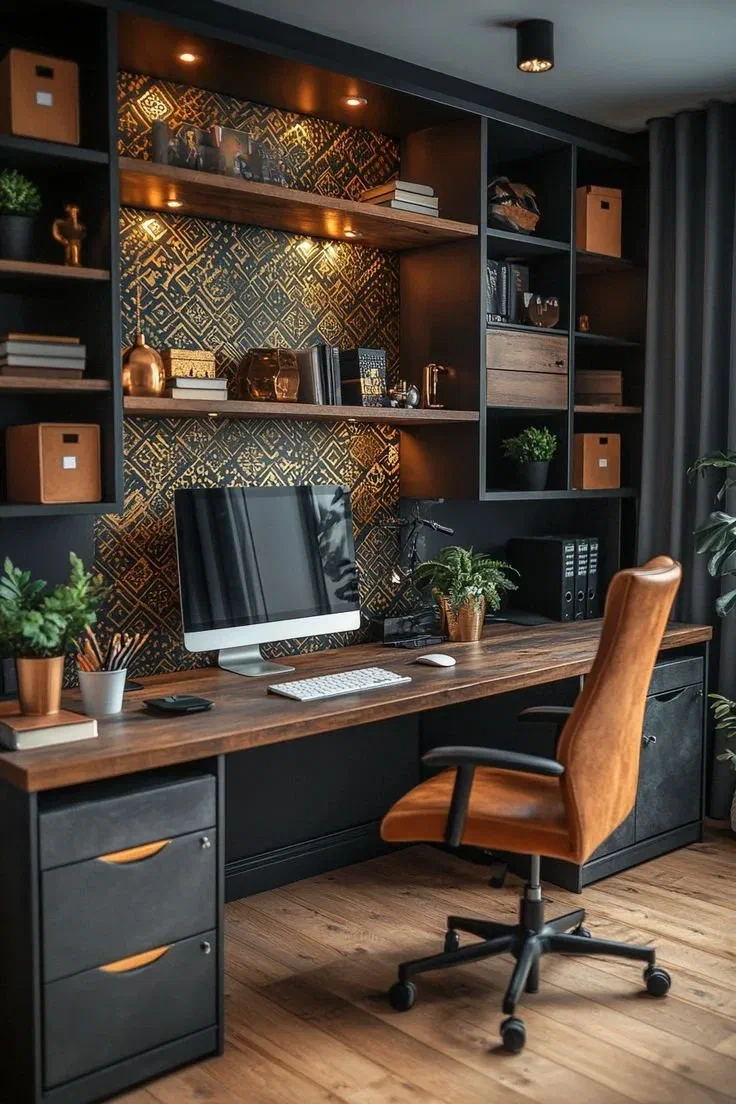
The best home office lighting layers three sources: an ambient ceiling or overhead fixture, a task light aimed at your desk, and a cooler 4000-5000K colour temperature that keeps you alert through an afternoon slump. I’ve seen more home offices ruined by a single dim overhead bulb than by any style choice, and it’s the cheapest problem on this list to fix. This guide covers the setups I’d actually use, plus the specific fixtures worth buying. For a full guide on how to light your whole home read the Modish Haven Ultimate Guide to Lighting Design.
Why Home Office Lighting Matters
Lighting affects how a workday feels. Poor light causes headaches, fatigue, and difficulty concentrating, while a well-lit workspace improves focus, cuts glare on screens, and is simply more comfortable to sit in.
Getting there means combining different types of lighting sources that work together.
Types of Home Office Lighting
A good setup uses three types of lighting:
1. Ambient Lighting (General Lighting)
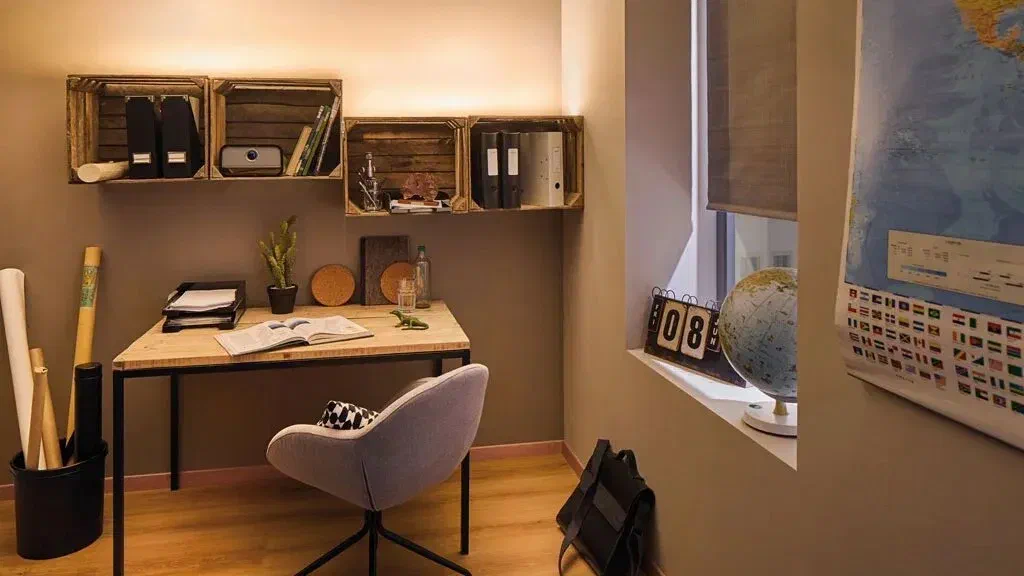
Ambient lighting provides overall illumination to your office space. This can include ceiling lighting, recessed lights, or LED panels. For an in-depth guide read our blog on home office ceiling lighting!
Best options:
- Ceiling lighting for home office spaces
- Overhead home office lighting
- LED home office lighting solutions
If your office doesn’t already have a decent overhead fixture, I’d start here rather than with a desk lamp; it’s the base layer everything else sits on top of. The hykolity 12" flat panel flush mount is a Best Seller with over 2,600 ratings at 4.6 stars, and the switchable 3000K/4000K/5000K temperature means you can dial in “alert” white without buying a second fixture. The con: it’s a hardwired fixture into a standard ceiling junction box, not a plug-and-play swap, so budget an electrician’s visit (or a confident DIY afternoon) if you don’t already have one there.
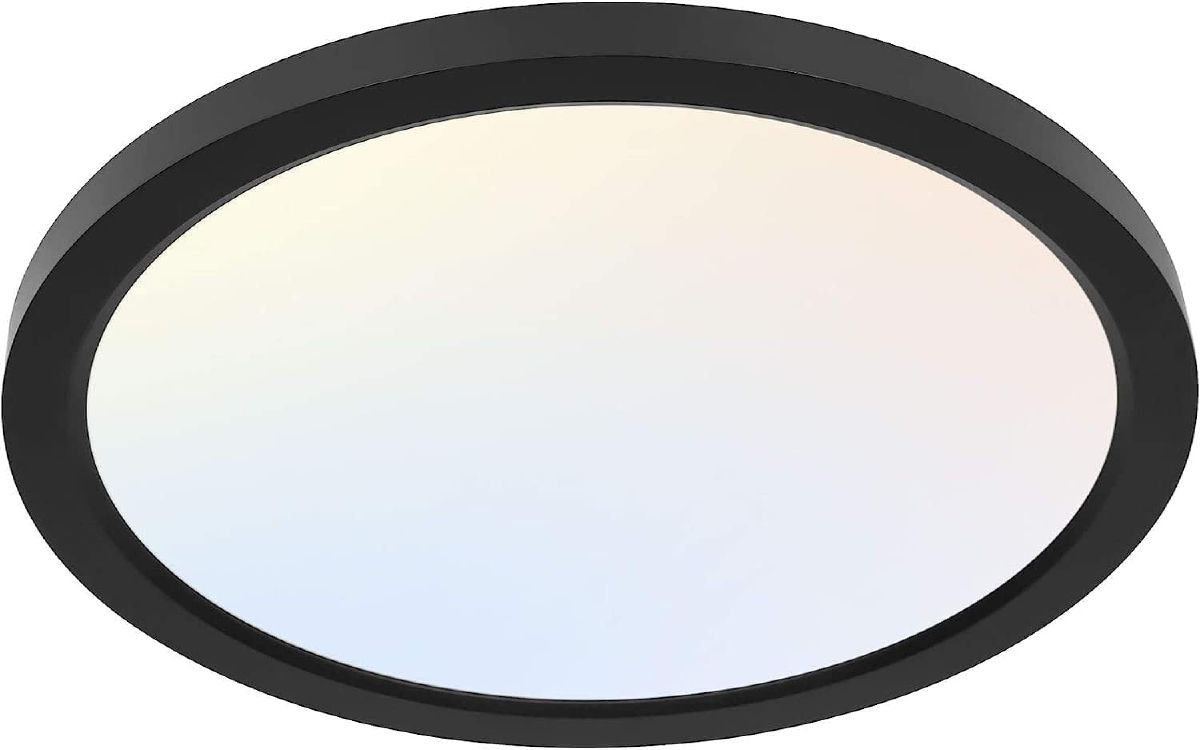 $17.99 price as of Oct 17
Buy the Flush Mount Ceiling Light on Amazon
2. Task Lighting
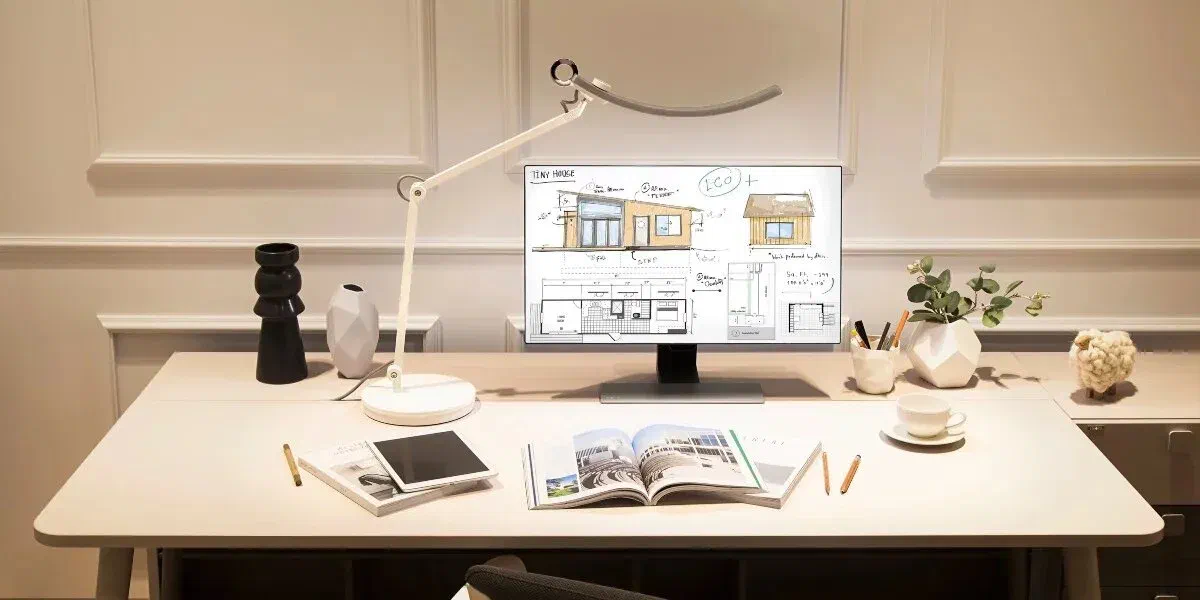
Task lighting focuses light where you need it most, such as your desk or reading area. It helps reduce eye strain and improves visibility while working on a computer or reading documents. If you’re struggling to choose between task and ambient lighting, we have a blog to help you understand the difference between task lighting vs ambient lighting and how to use them together
Best options:
- Desk lamps with adjustable brightness
- Best home office lighting for computer work
- Best home office lighting for eyes
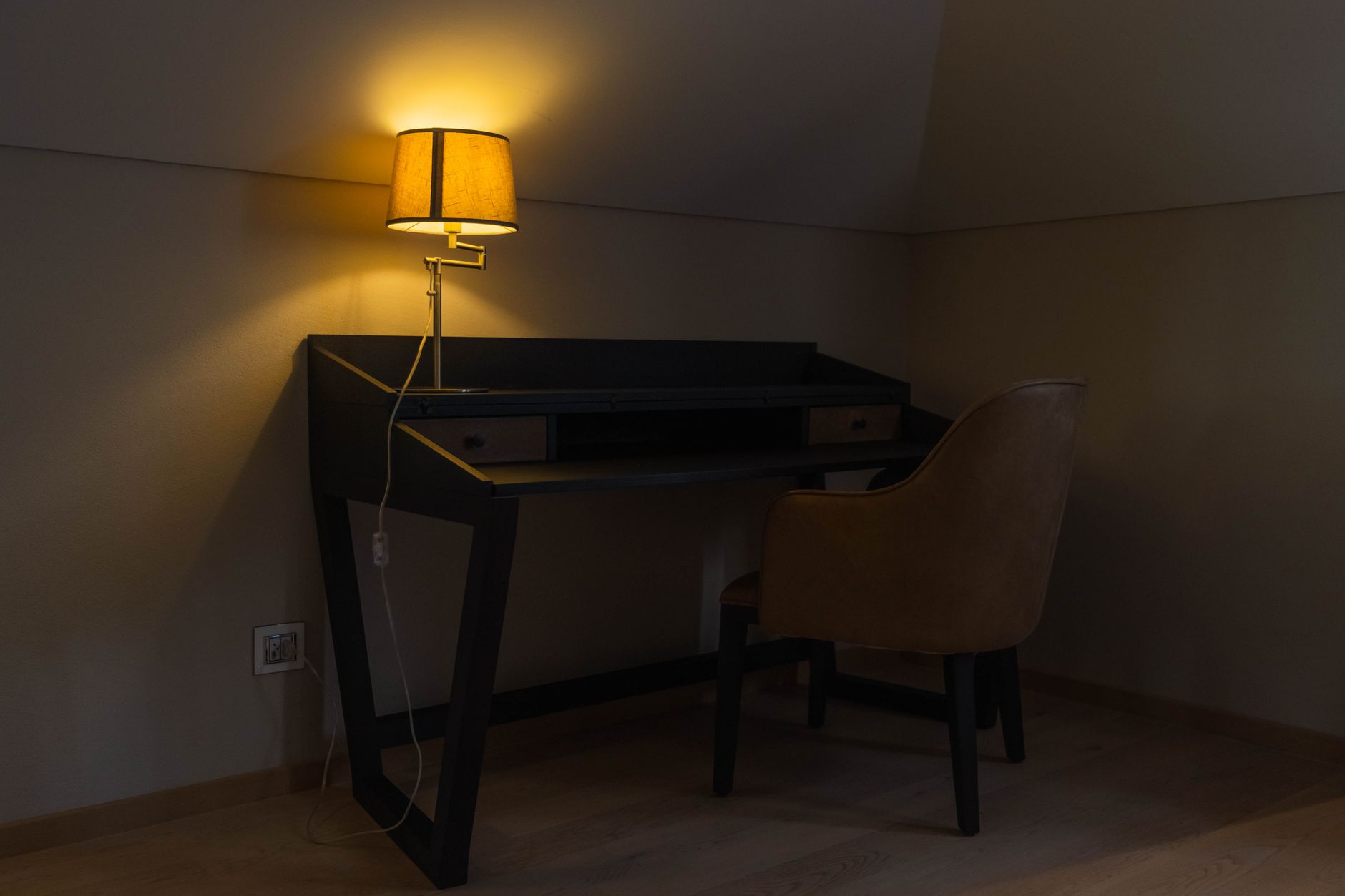
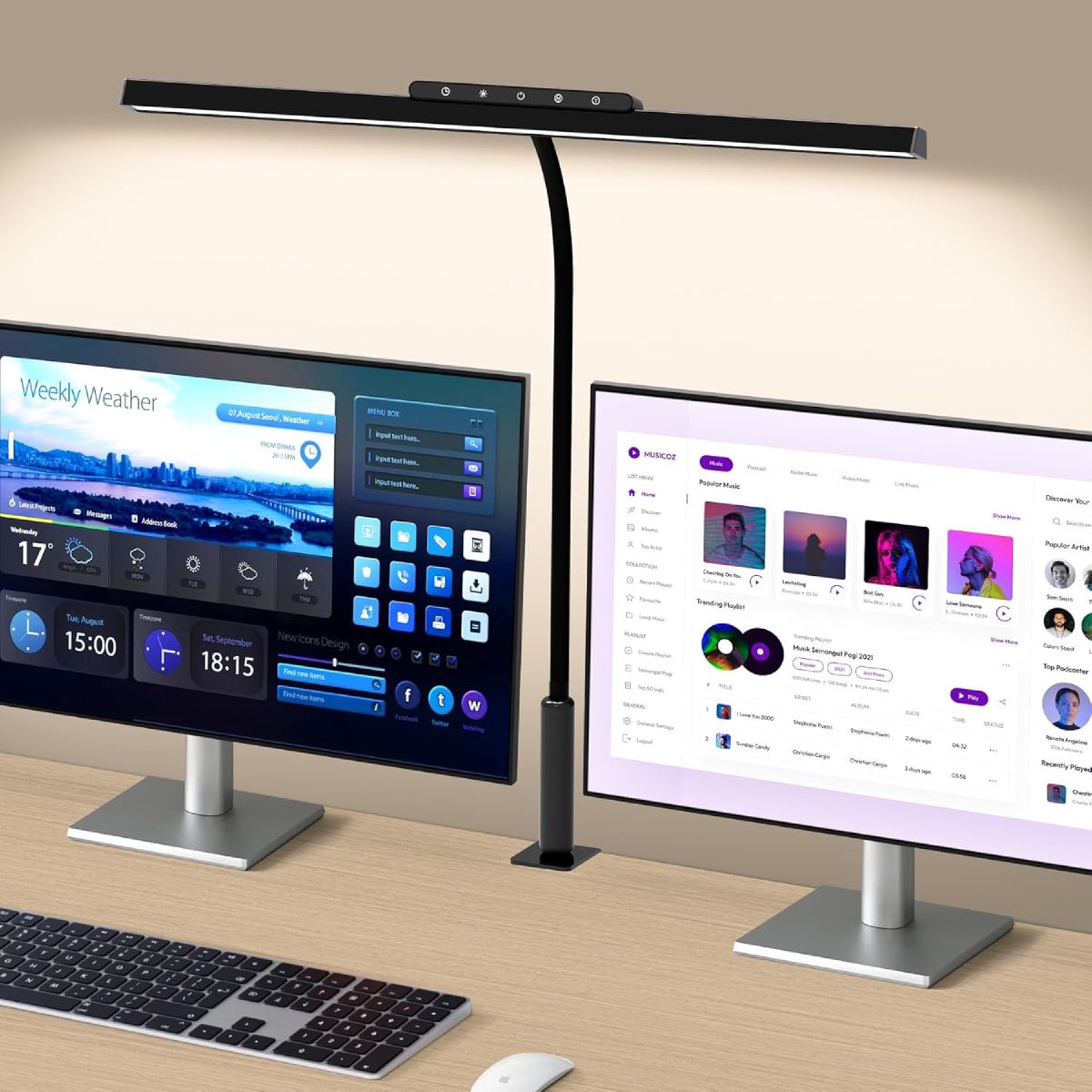
My desk-lamp rule: clamp-mount over a weighted base, so it doesn’t eat desk real estate you need for keyboard and notes. The gooseneck clamp desk lamp is Amazon’s Choice with a 4.7 rating, and the CRI≥95 spec is genuinely worth having if you do anything colour-sensitive on paper alongside the screen. Con: at 29.5 inches of gooseneck reach, it needs a fairly deep desk to sit comfortably out of your eyeline, so measure first if your desk is a narrow one.
 $23.99 price as of Oct 17
Buy the LED Desk Lamp on Amazon
3. Accent Lighting
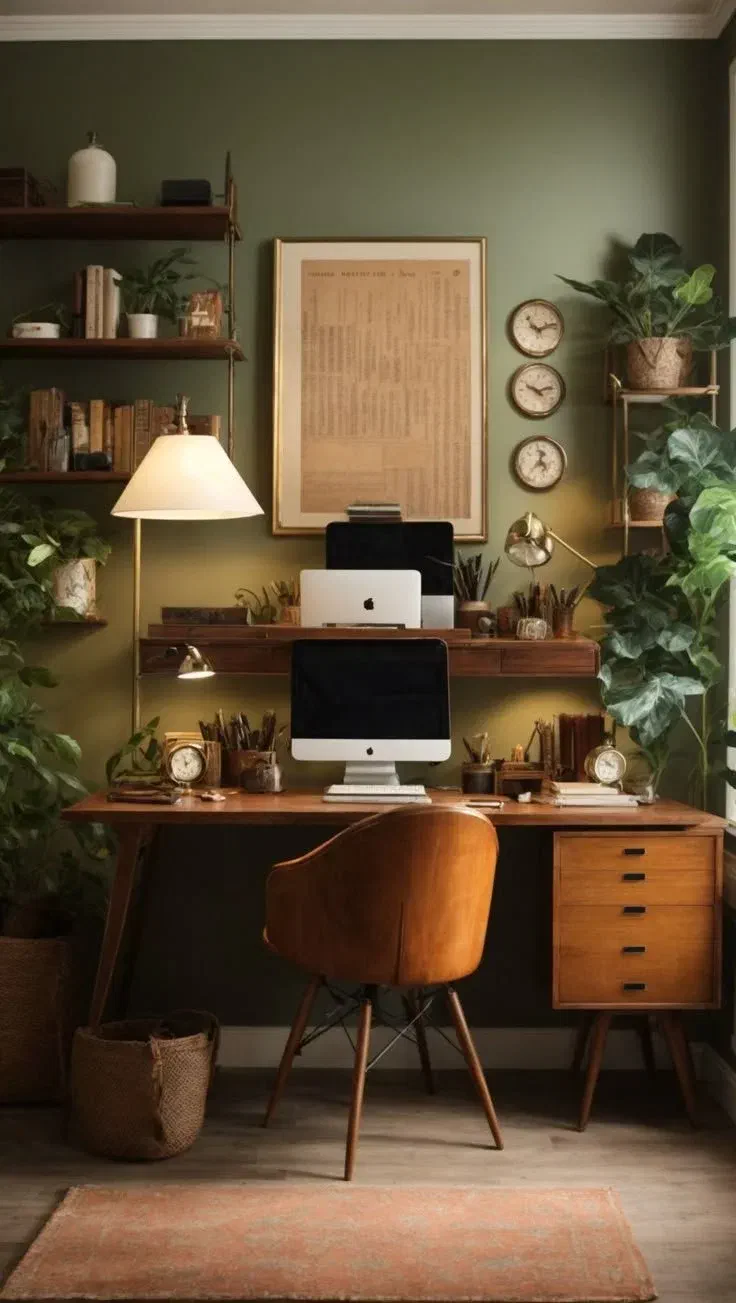
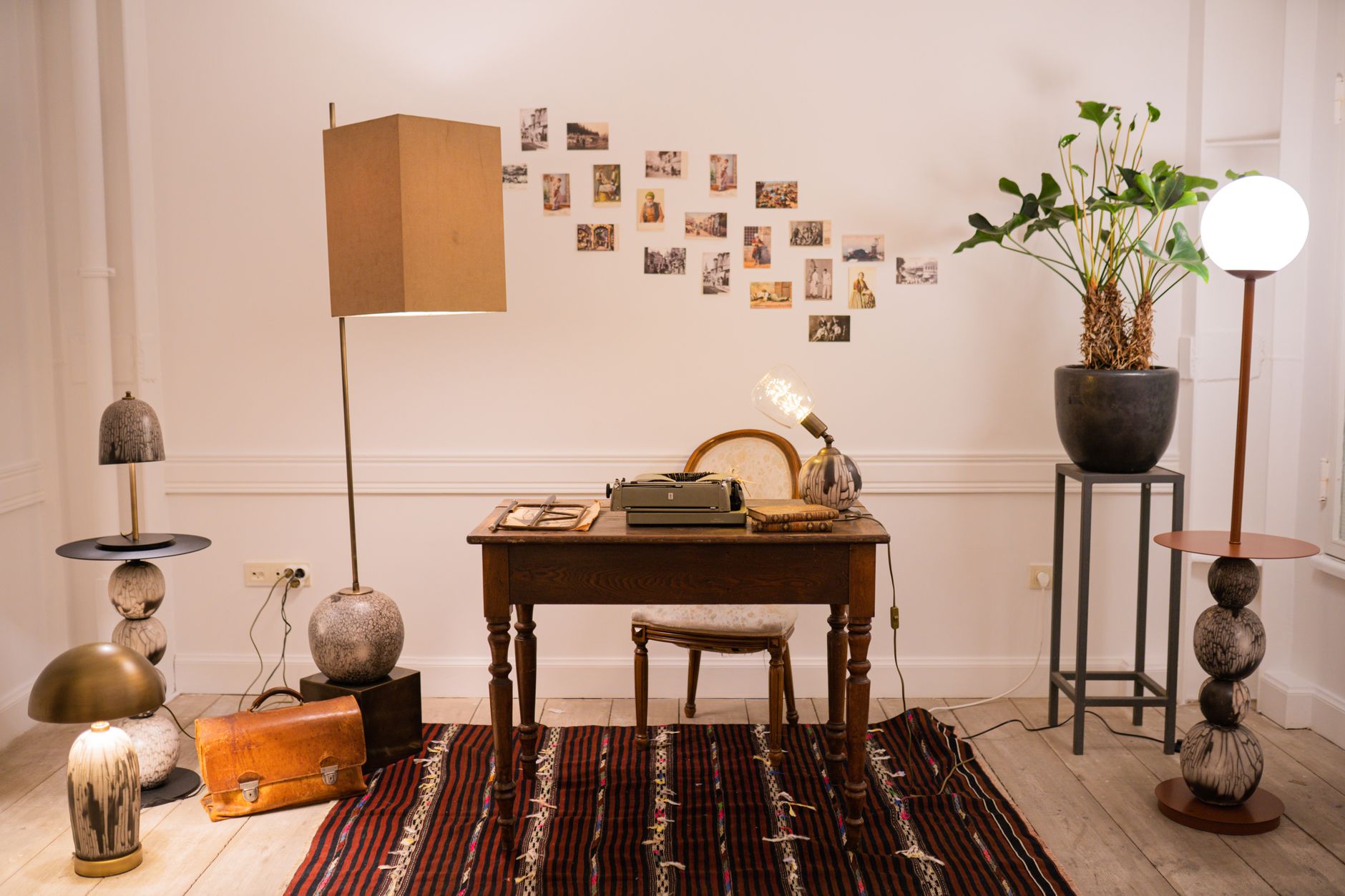
Accent lighting adds warmth and personality to a home office. It can highlight decor, make the room cozier after dark, or make video calls look more professional; see my dedicated guide to lighting for video calls for the full setup.
Best options:
- Modern home office lighting ideas
- Cool home office lighting ideas
- LED strips and wall sconces
Home Office Lighting Design Tips
Which fixtures you buy matters less than how you use them. Some working rules:
1. Layer Your Lighting
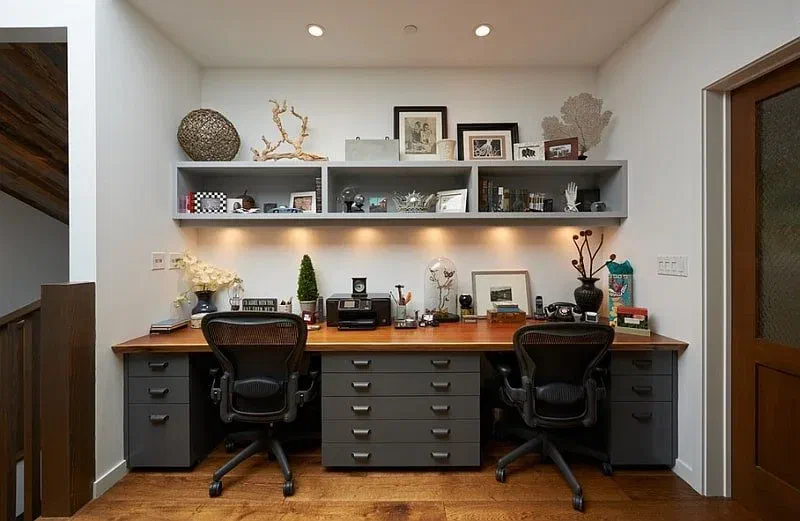
Ambient, task, and accent lighting together make a room balanced and comfortable in a way no single fixture can. Pair a ceiling light with a focused desk lamp and subtle LED strips and you get function and looks from the same setup.
2. Position Your Lights Strategically
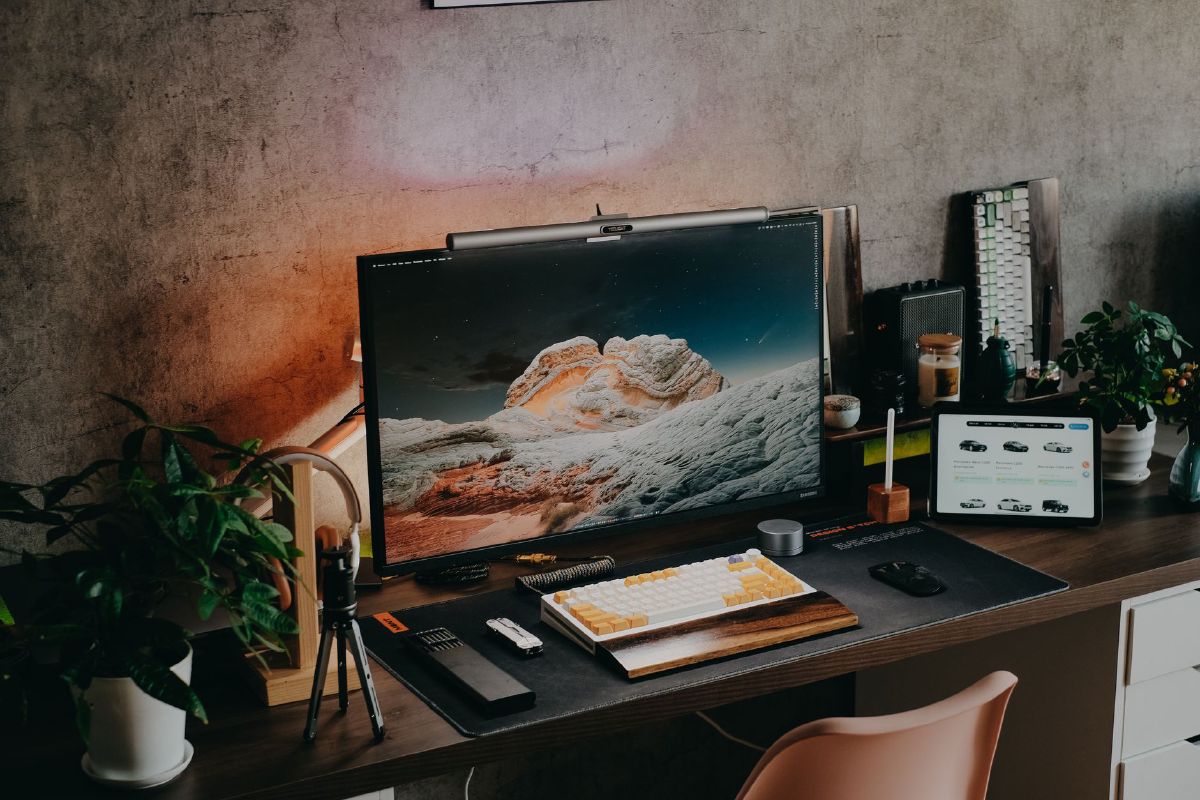
Avoid placing lights directly behind or in front of your computer screen to minimize glare and eye strain. Instead, opt for indirect lighting or side-positioned lamps. For a full guide on how to layer your lighting and set up your desk read our Layered Lighting Guide!
3. Choose the Right Color Temperature
The best color temperature for home office lighting is between 4000K and 5000K (cool white to daylight). This range mimics natural daylight, which keeps you alert and holds off fatigue. For more information we also have a complete guide on the Best Color Temperature for a Home Office.
4. Optimize Natural Light
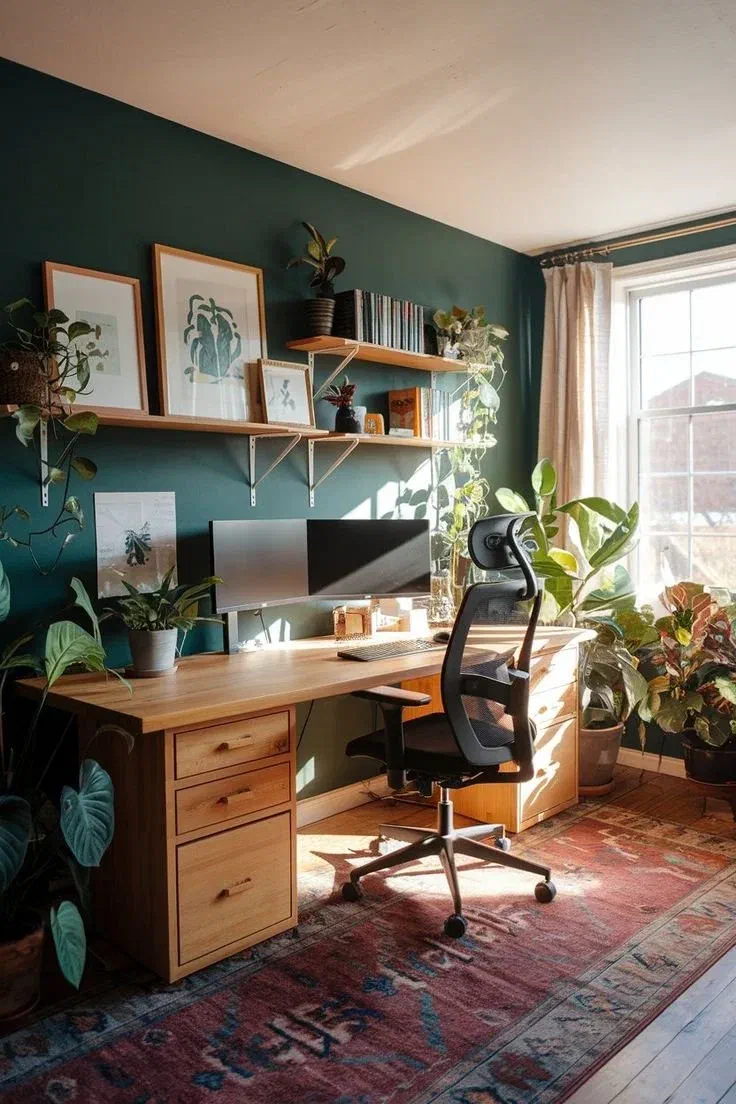
If possible, position your desk near a window to take advantage of natural daylight. Use sheer curtains or blinds to control brightness levels throughout the day. For more information read our complete guide to Natural Lighting in Your Home Office.
5. Consider Smart Lighting Solutions
Smart bulbs and dimmable LED lights let you adjust brightness and color temperature through the day, and voice control, scheduling, and automation add convenience on top. The bulb-first upgrade is the one I’d actually make here: any lamp or ceiling fixture with an E26 socket becomes a smart, tunable one the moment you screw in the Linkind tunable white smart bulb 4-pack, which runs from an energising 6500K down to a mellow 2700K and holds a 4.5-star average across 500-plus ratings. Bear in mind your phone or voice assistant becomes the light switch (there’s no physical control option), which not everyone loves living with. Check out our guide to Smart Lighting in Your Home Office.
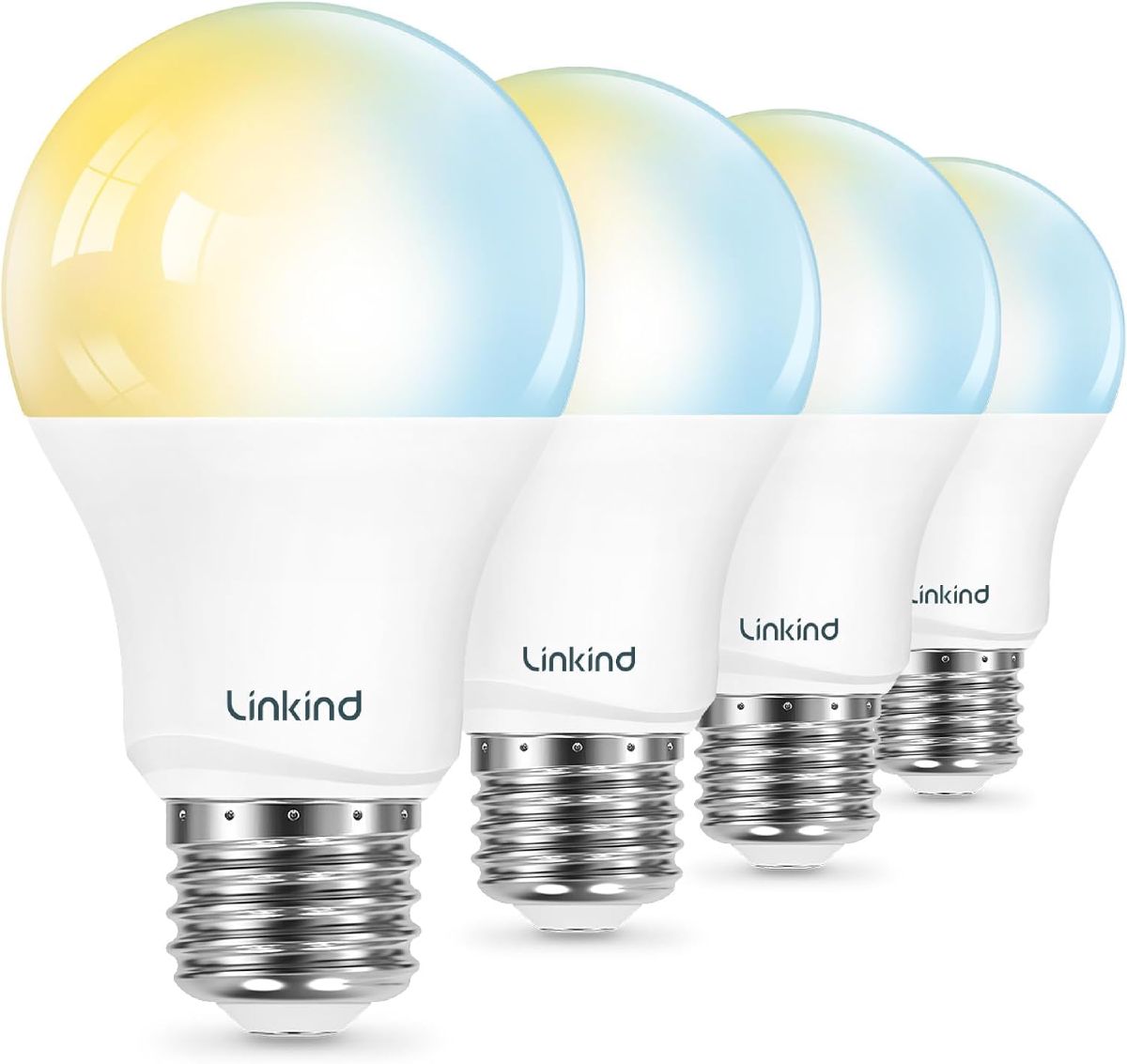 $19.99 price as of Oct 23
Buy the Linkind Smart Bulb 4-Pack on Amazon
Best Home Office Lighting Ideas for Different Setups
Small Home Office Lighting Ideas
In a compact workspace, every inch of desk counts, so the lighting shouldn’t take any of it. Wall-mounted lights positioned above the desk give direct task lighting without cluttering the work area. LED strips are easy to install along desk edges or shelves and offer adjustable brightness and color temperature. Under-shelf lighting works well too: it lights the desk evenly while leaving the surface free for everything else. All three keep a small office visible and looking sleek.
Have a small office? We also have a dedicated guide to lighting small offices.
Modern Home Office Lighting
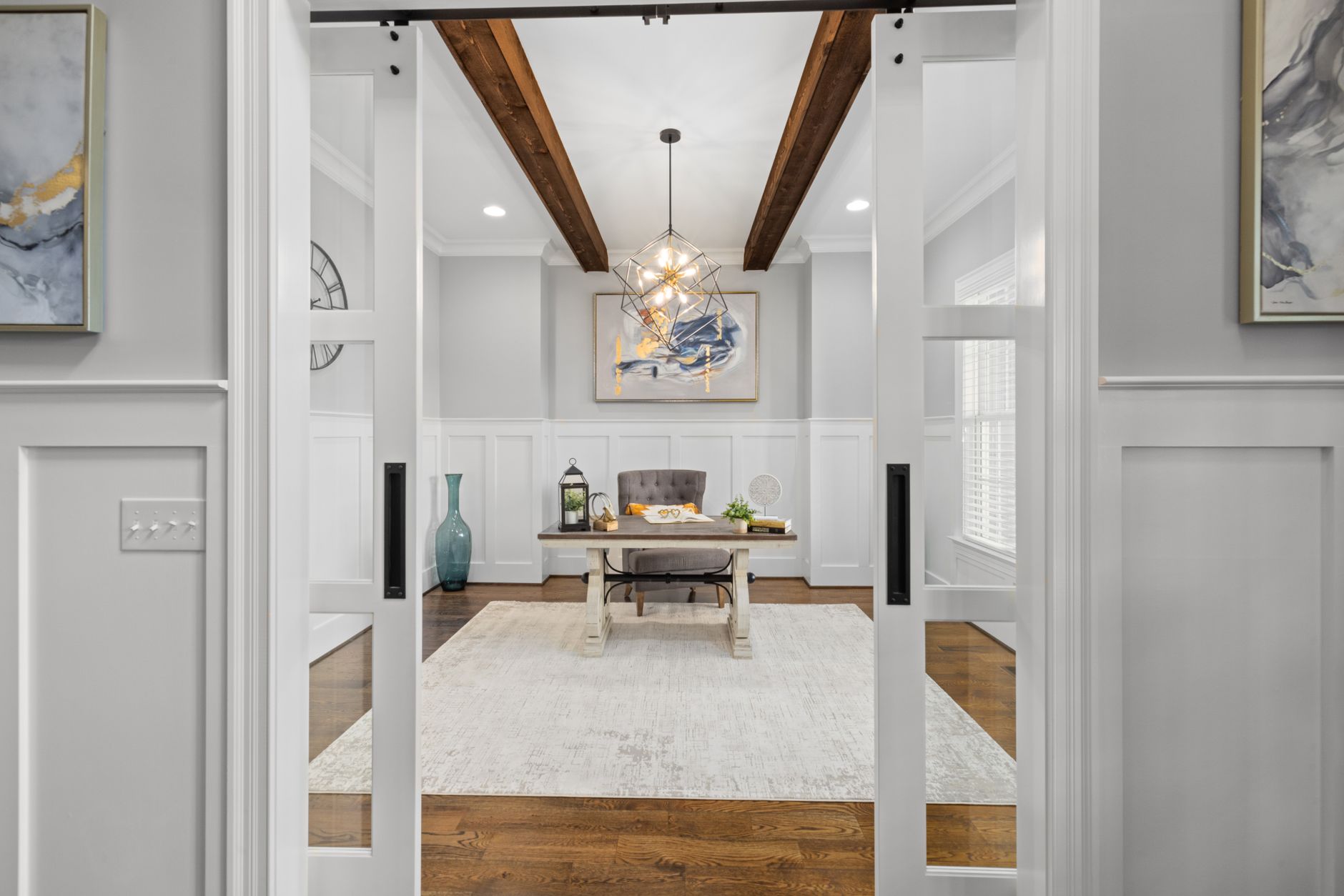
For a modern, clean look in your home office, opt for sleek and minimalist lighting designs. Pendant lights, for instance, add a stylish focal point above your desk, offering both functionality and design. Choose fixtures with a simple, streamlined design in materials like matte metal or glass to complement a contemporary workspace. Geometric LED fixtures are another popular trend: energy-efficient, and available in squares, circles, or abstract forms that give the workspace a modern edge.
Ceiling Lighting for Home Office Spaces
Ceiling lighting sets the baseline for the whole room, especially over long hours. Recessed LED panels are a top choice for a sleek, low-profile look that delivers even light across the entire room. Flush mount fixtures suit lower ceilings, giving a bright, unobtrusive source without hanging into your workspace. If you want a bit of personality, pendant lighting is the eye-catching option; choose a fixture that fits the scale of your room and coordinates with your decor. All of these light the space without costing you any desk area.
How Many Lumens for Home Office Lighting?
When selecting lighting for your home office, it’s important to consider the lumen output, which indicates the brightness of your light sources. For general lighting, aim for 300-500 lumens per square meter to achieve a comfortable level of illumination across your entire office. For an average-sized home office, this equates to roughly 4000-6000 lumens in total. However, you may need higher lumen levels for specific tasks such as reading, writing, or detailed design work. Adjust your lighting plan to accommodate these needs by incorporating task lighting (such as a desk lamp) in addition to your overhead lighting to prevent eye strain and maintain productivity.
Final Thoughts
If I had to fix one thing in most home offices, it’s the missing overhead layer. A single desk lamp fighting a dim room strains your eyes faster than a bright screen ever will. Layer ambient, task, and colour temperature together and the rest (style, smart features, natural light) is easy to add on top.
For more home office design tips, check out our Home Office Ideas for a broader starting point, or my Task Lighting vs Ambient Lighting guide if you’re still deciding which layer to prioritise first.