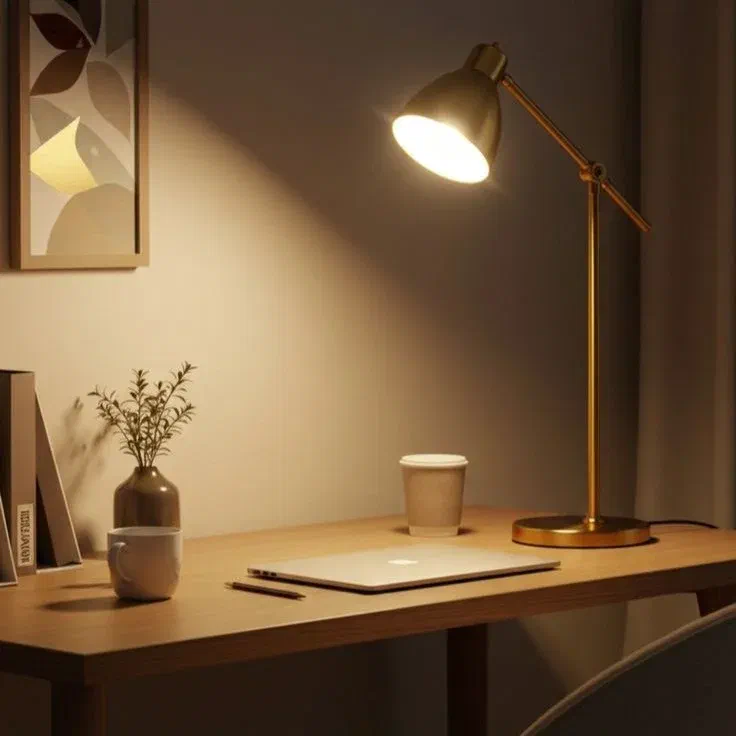
The desk lamp features that actually protect your eyes are CRI 90+, flicker-free LED drivers, an adjustable arm so the light doesn’t hit your screen, and enough brightness (300-500 lux on your desk) that your eyes aren’t straining against a bright monitor in a dim room. Everything else (style, mount type, extra ports) is personal preference once those four boxes are checked.
A good desk lamp does more than brighten your work surface. The right one helps you focus, reduces eye strain, and sets the tone of your workspace, and all of that feeds into how comfortable and productive you are. I think of good home office lighting as a balance of brightness, color temperature, and placement: your eyes shouldn’t be working overtime, and the light should keep you alert when you need it and let you unwind when you don’t.
Lighting research consistently links color temperature, brightness, and light quality to cognitive performance and mood. The difference between feeling energized or fatigued at your desk often comes down to something this simple.
Why Your Desk Lamp Matters for Productivity, Mood, and Eye Comfort
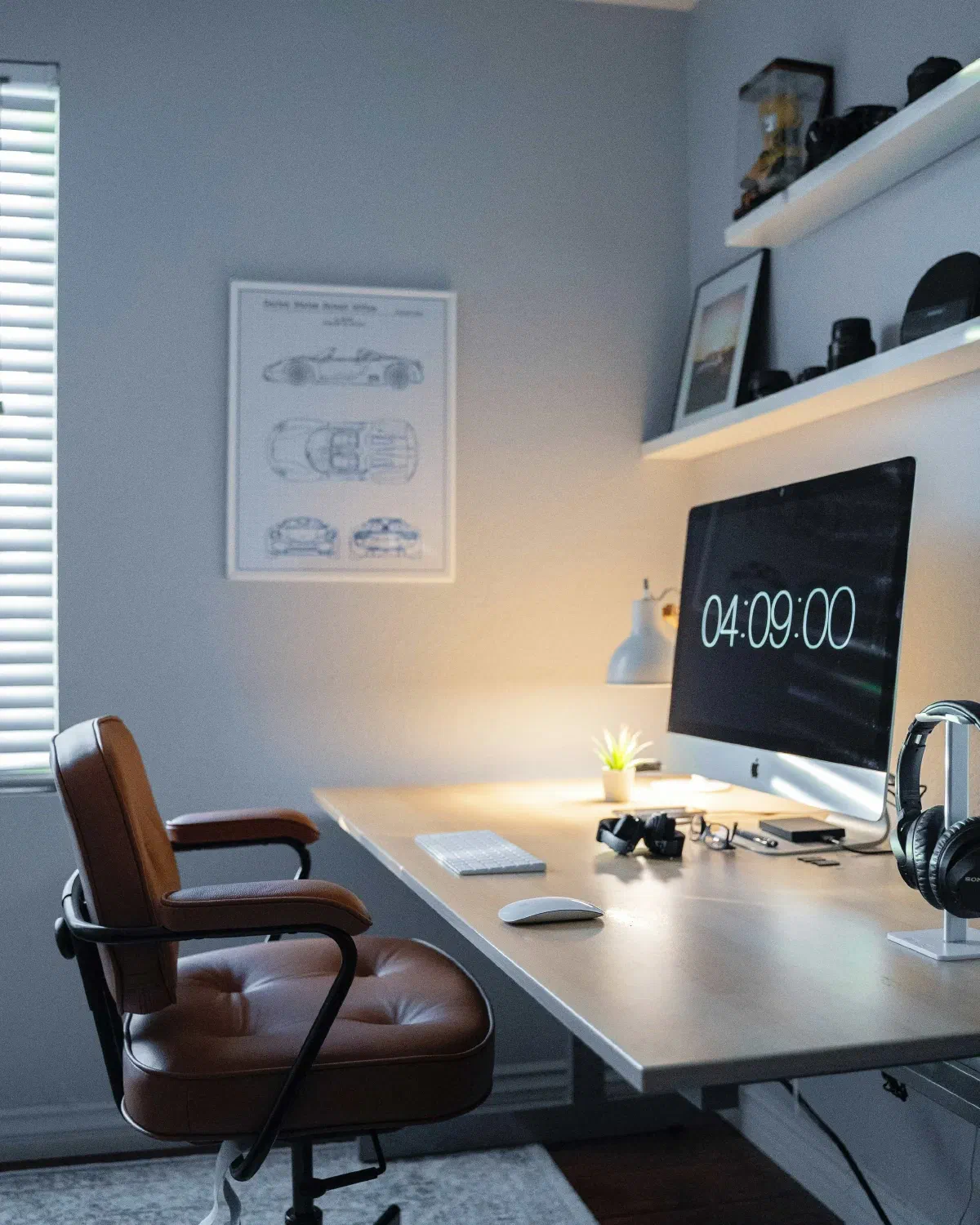
Cooler, higher color temperatures during the day can make you feel more alert and improve concentration, which helps most with mentally demanding work. A properly positioned lamp also reduces the contrast between your screen and the surrounding area, and that gap is what causes most digital eye strain during long computer sessions.
Timing matters too. Bright, blue-enriched light during the day supports alertness, while warmer light in the evening helps you wind down and prepare for rest.
What to Look for in a Desk Lamp
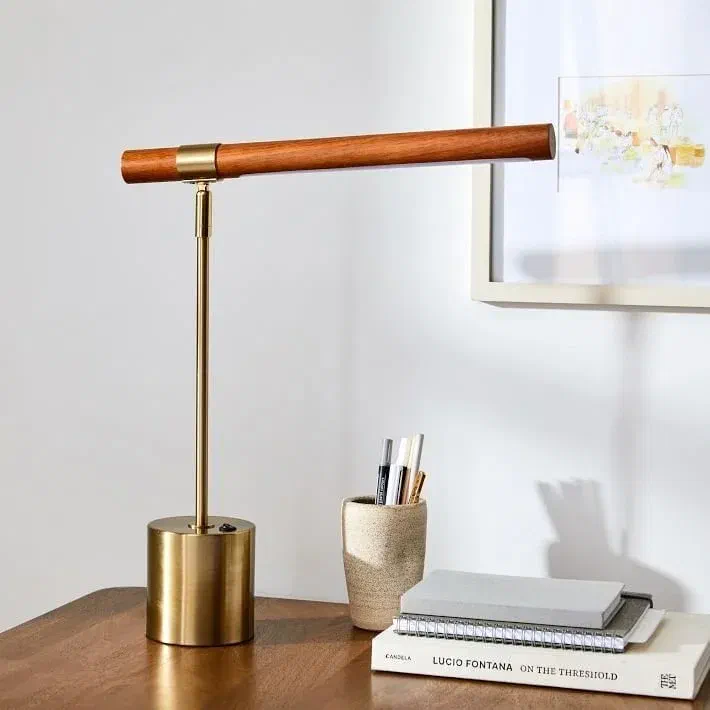
When shopping for a desk lamp, these are the features I’d check, roughly in order. If you’d like specific recommendations, check out our 10 Best Desk Lamps for Home Offices.
1. Brightness (Lumens) and Desk Illuminance (Lux)
Lumens measure total light output, while lux measures how much light reaches your desk. Aim for 300-500 lux for most computer and paperwork tasks, and up to 750 lux for detailed, precision work. A dimmable lamp lets you adjust to different needs.
2. Color Temperature (Kelvin)
Desk lamp color temperature matters because the light it emits affects your mood, alertness, and focus.
- Warm (2700-3500K) is cozy and relaxing, good for evening use.
- Neutral (3500-4000K) is balanced for general work.
- Cool (4000-6500K) is crisp and energizing, best for daytime focus.
3. Color Rendering Index (CRI)
A higher CRI means colors look more natural, and it’s the spec I’d prioritize if I only had one number to check. Aim for CRI 80+, and if you work with design or color-sensitive tasks, go for CRI 90+. This is the lamp I’d point to as a real example of “eye-caring” done properly, not just printed on the box:
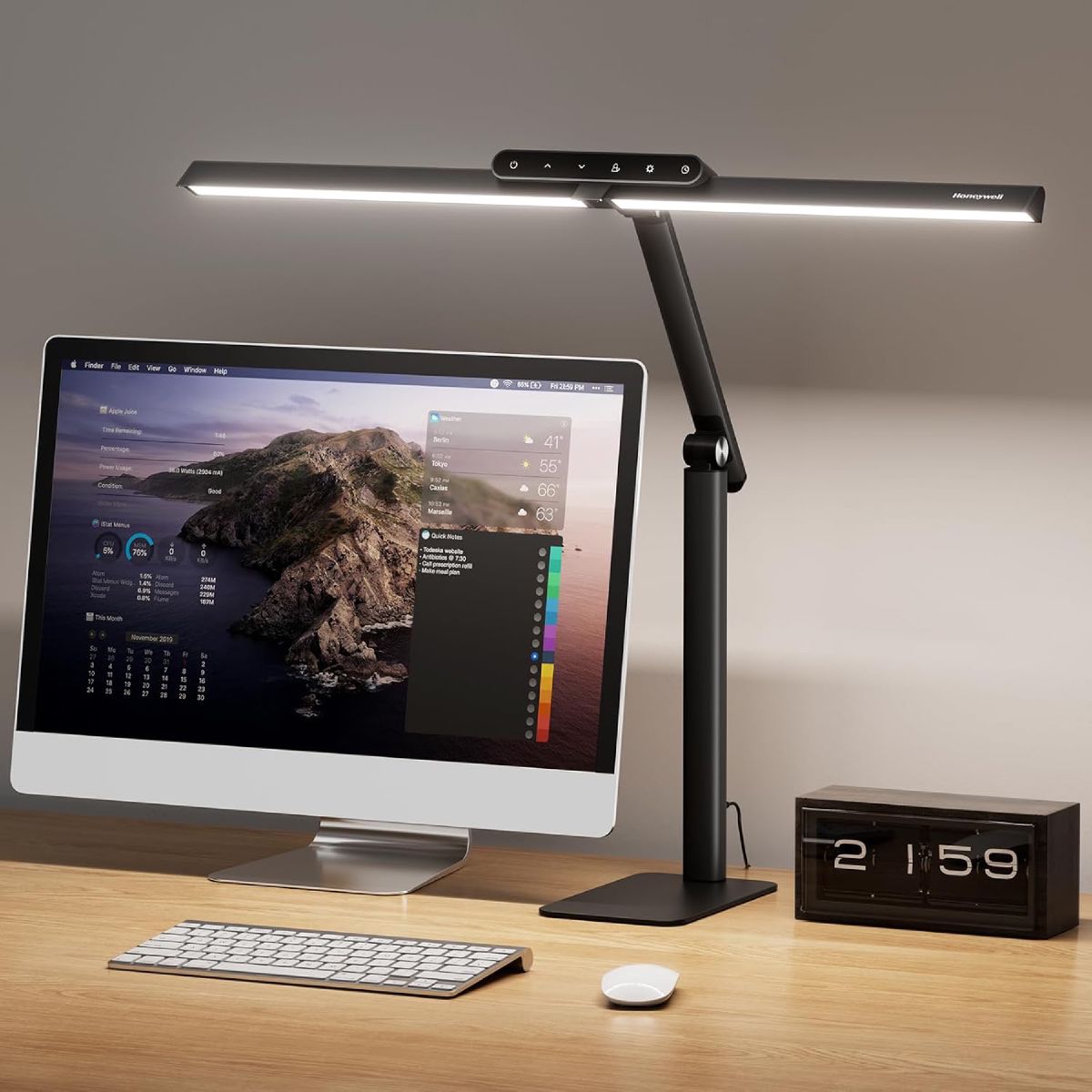 $84.99 $105.99 20% off price as of Aug 26
Honeywell HJ1BK Eye-Caring Desk Lamp: CRI ≥97, flicker-free, 4 preset color temperatures with a memory function, and a 31-inch dual-section head wide enough for a two-monitor desk. 4.7 stars across 164+ ratings. The honest con: it’s priced like a specialty task lamp, well north of the $50 mark, not a budget one. Worth it if you actually work with color (design, photo editing) or spend 8+ hours a day at the screen, overkill if you just need general desk light.
Buy the Honeywell CRI 97 Desk Lamp on Amazon
4. Adjustability
An adjustable arm or head lets you direct light exactly where you need it, reduce shadows, and cut glare. This is where I’d spend money before I’d spend it on extra brightness. A lamp aimed correctly beats a brighter lamp aimed badly every time.
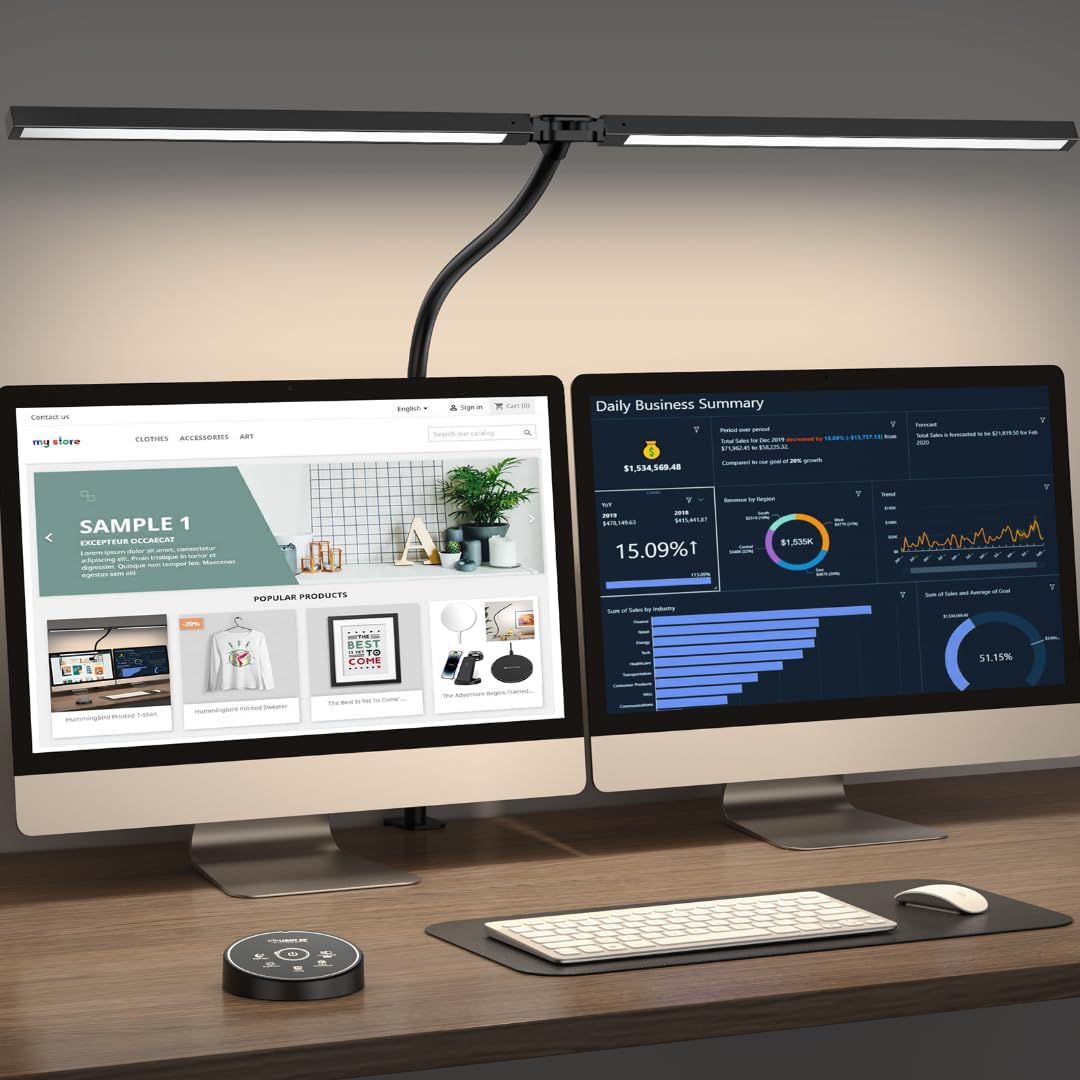 $49.99 $69.49 28% off price as of Aug 26
Clamp-Mount Architect Desk Lamp: an Amazon’s Choice pick at 4.7 stars across 3,500+ ratings, which is a large review base for this category and a real trust signal. It has a 360° swing arm, 5 color temperatures, remote control, and a clamp that frees up desk space entirely. The honest con: it’s a utilitarian, workshop-style look. Great for function, not the pick if you want something that reads as decor.
Buy the Clamp-Mount Architect Desk Lamp on Amazon
5. Dimming and Controls
Smooth (continuous) dimming offers finer control than stepped settings. Some lamps have memory functions or sensors that adjust light automatically.
6. Glare Reduction and Diffusion
Look for shades, diffusers, or indirect light designs that prevent harsh reflections on your monitor or glossy surfaces.
7. Mounting Style
A clamp mount saves desk space, which makes it the pick for small workstations. A weighted base is portable and easy to reposition.
8. Extra Features
USB or wireless charging ports, cordless operation, and LED efficiency all add convenience. None of them protect your eyes, so treat them as tiebreakers, not reasons to buy.
Lighting Tips for Using Desk Lamps Effectively
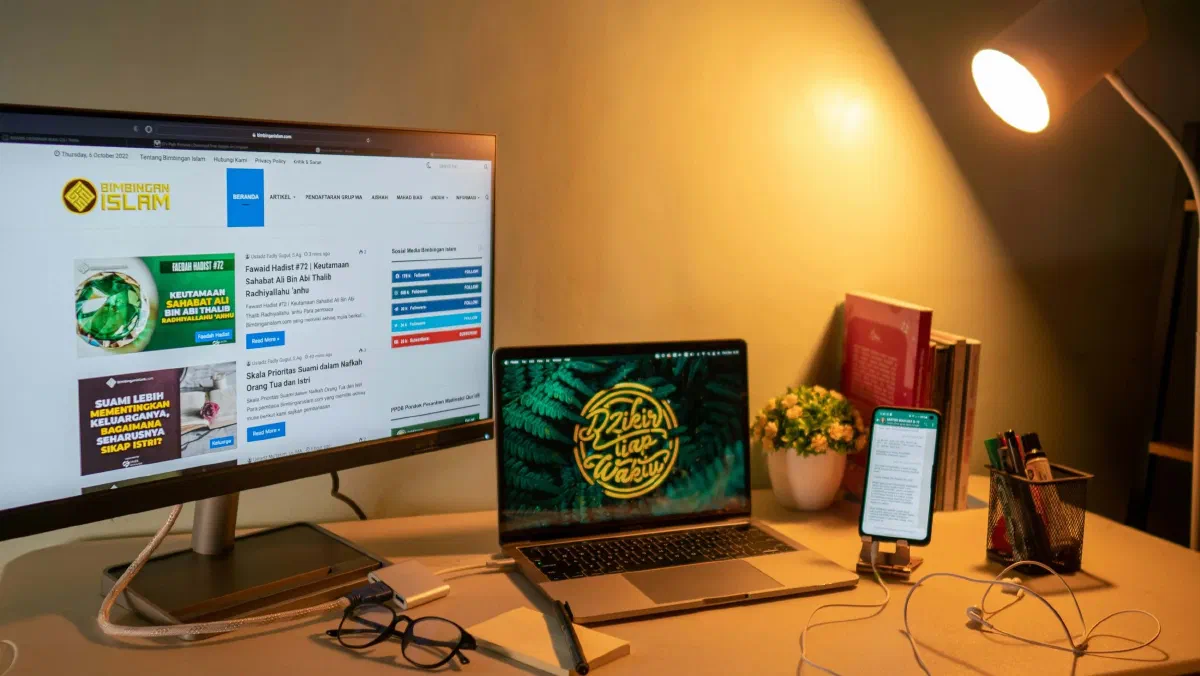
Position the lamp to your side: on the left if you’re right-handed, on the right if you’re left-handed. This reduces shadows while writing.
Layer your lighting. Combine ambient lighting (like ceiling or wall lights) with your desk lamp to reduce contrast between your screen and surroundings, which helps prevent eye strain. For more ideas, see our full guide to home office layered lighting.
Angle the beam so it lights your work area without reflecting on your screen, and switch to a warmer color temperature or lower brightness later in the day to help your body wind down.
Pairing Your Desk Lamp with the Right Layout

Even the best desk lamp can’t perform well if your desk layout is working against it. Position your desk to take advantage of natural light, but use blinds or curtains to control glare. Make sure your lamp complements your monitor placement and other task lighting.
For more on arranging your space for comfort and productivity, check out our guide to the Best Lighting Layout for a Home Office.
Common FAQs
What color temperature is best for a desk lamp?
Cool white (4000-5000K) is ideal for daytime focus, while warm white (2700-3500K) is better for evening relaxation.
How bright should my desk lamp be?
Aim for 300-500 lux on your work surface for most tasks, with higher brightness for detailed work.
Does a desk lamp help reduce eye strain?
Yes. When positioned correctly, a desk lamp reduces contrast and glare, easing strain on your eyes.
What features should I look for in a desk lamp for eye protection?
In order of how much I’d weight them: a CRI of 90+ (the Honeywell pick above hits 97), a flicker-free LED driver, an adjustable arm so you can angle light away from your screen rather than at it, and dimming so you can match brightness to the room instead of running one fixed setting all day. Brightness alone isn’t the eye-protection lever most people assume: a badly aimed bright lamp causes more glare, not less.
Which is better: clamp or base?
Clamp mounts save space; weighted bases are easier to move. Choose based on desk size and flexibility needs.
Are LED desk lamps better?
LEDs last longer, use less energy, and produce consistent light, which makes them the most practical choice for most home offices.
My final take: if you only fix one thing this week, fix the CRI and the aim of your current lamp before you buy a new one. You’ll be surprised how much of “my eyes are tired” is actually “my lamp is pointed at my screen, not my desk.”