Working from home has its perks, but a cramped, poorly lit workspace isn’t one of them. Your office might be a dedicated room, a converted closet, or a corner of the living room; either way, the right lighting matters. Good lighting does more than let you see: it supports your productivity, reduces eye strain, and even improves your mood. In a small space, effective small home office lighting counts double, because it can make the difference between a functional workspace and a claustrophobic corner.
This guide covers the principles and the practical fixes for a bright, comfortable, stylish home office at any size. For a more comprehensive overview of all things illumination, check out our Ultimate Guide to Home Office Lighting.
The Power of Layering: Ambient, Task, and Accent Lighting
The secret to great lighting in any space, especially a small one, is layering. Instead of relying on a single overhead fixture, you should incorporate three distinct layers of light.
- Ambient lighting is your primary, general illumination, the foundation of the plan. It provides overall brightness and lets you move safely and comfortably through the space. In a small office, this might be a single ceiling fixture, recessed lighting, or a discreet flush-mount.
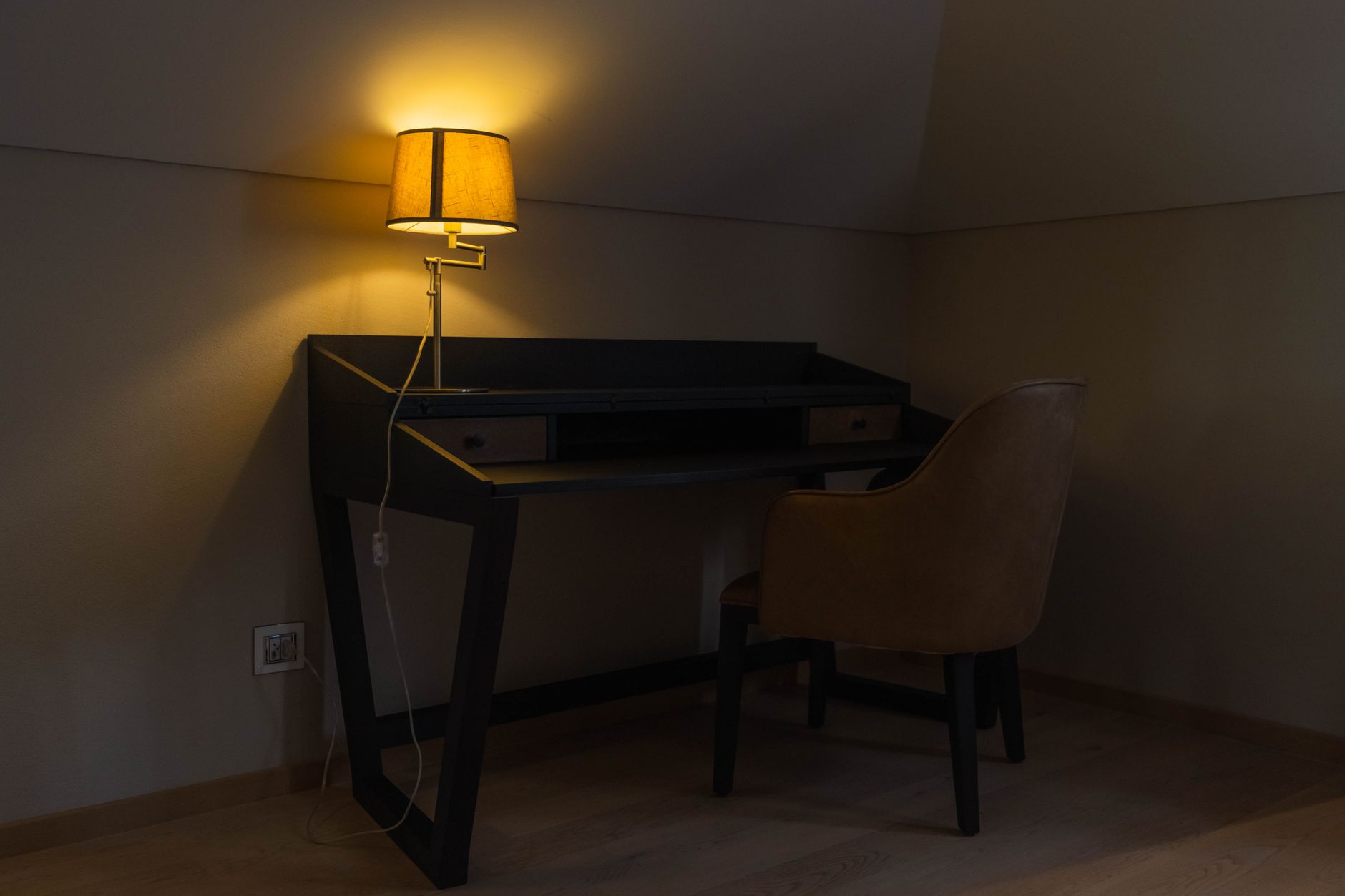
- Task lighting is focused, direct light for specific activities. A desk lamp is the classic example, and it’s what saves your eyes when you’re reading, writing, or doing detail work.
- Accent lighting adds visual interest and highlights specific features, like a piece of art or a plant. It creates depth so the room doesn’t feel flat, and in a small office it’s a subtle way to add personality without clutter.
For more detail on how these layers work together, see our article on Task Lighting vs Ambient Lighting: What Your Home Office Really Needs.
Space-Saving Fixtures for Your Small Home Office
One of the biggest challenges in a compact workspace is finding fixtures that don’t take up valuable real estate. Here are some of the best small home office lighting ideas that are both stylish and space-conscious.
Desk Lamps for Small Spaces
A good desk lamp is a non-negotiable for focused work. When space is at a premium, I always steer people toward a footprint that gets off the desk entirely rather than a base that sits on it. A clamp or a fold-flat design beats even a compact base lamp for a small desk. Slim, clamp-on lamps that attach directly to the desk edge work well, as does a wall-mounted swing arm lamp, which frees up your desktop completely.
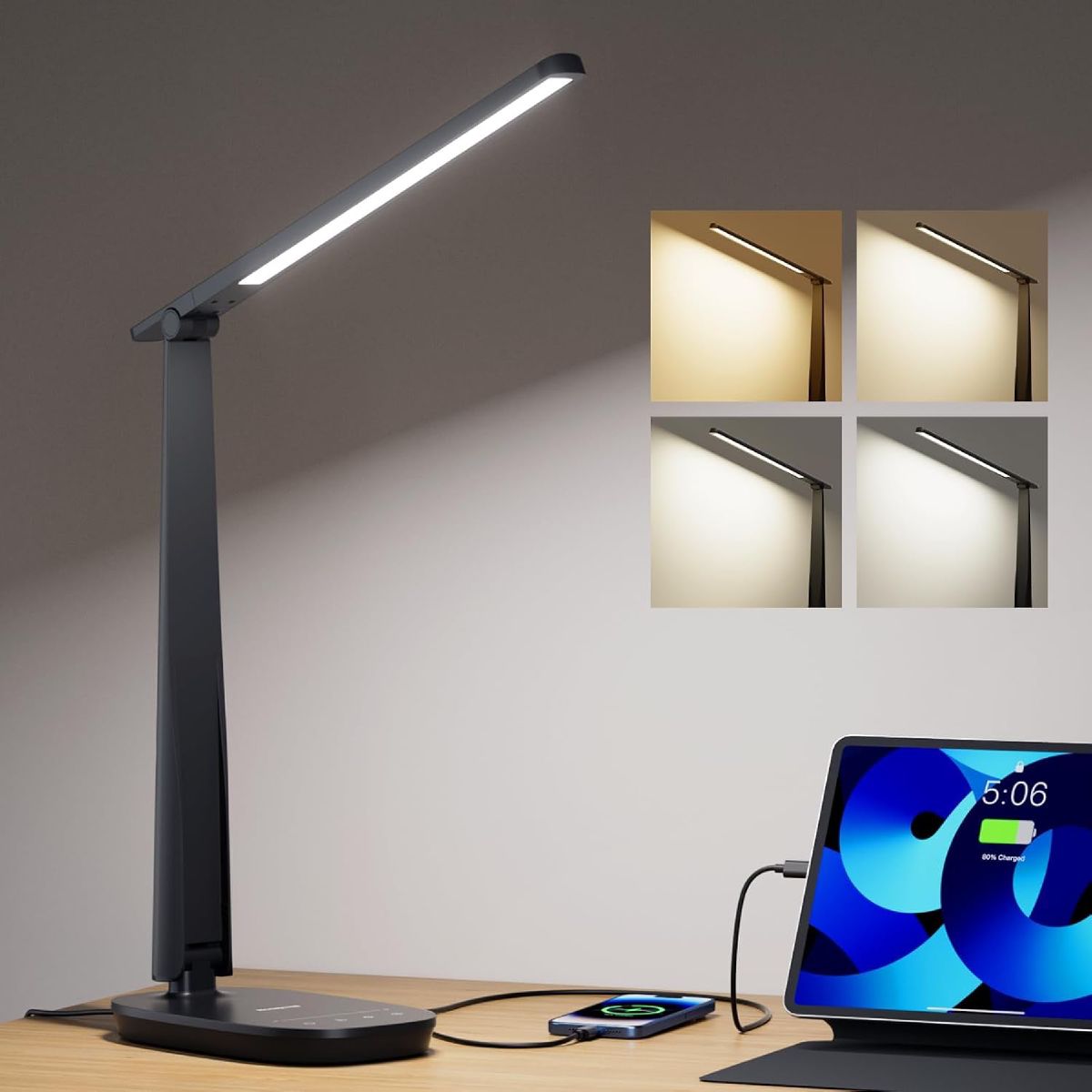
For a small desk specifically, my pointer is the Honeywell LED Desk Lamp: it grips the desk edge rather than costing you surface area, folds flat to the wall when it’s off duty, and runs four colour temperatures with smooth dimming. That’s handy when one corner has to be a bright daytime workstation and a soft evening nook in the same week. Reviewers put it at 4.7 stars over 873 ratings. Plan around a nearby socket, though. There’s no battery inside, so the cord decides which side of the desk it can live on.
 $30.59 price as of Oct 23
Buy the Honeywell LED Desk Lamp on Amazon for around $32.
For more options across desk sizes and budgets, my guide to the 10 Best Desk Lamps for Home Offices is worth a look.
Wall Sconces & Track Lights
Why put a light on the floor or a desk when you can put it on the wall or ceiling? Wall sconces provide excellent task or ambient light without taking up any floor or surface space. Track lighting or directional spotlights mounted on the ceiling do a similar job, and you can aim the light exactly where you need it, whether that’s your desk, a bookshelf, or a filing cabinet.
Pendants & Chandeliers
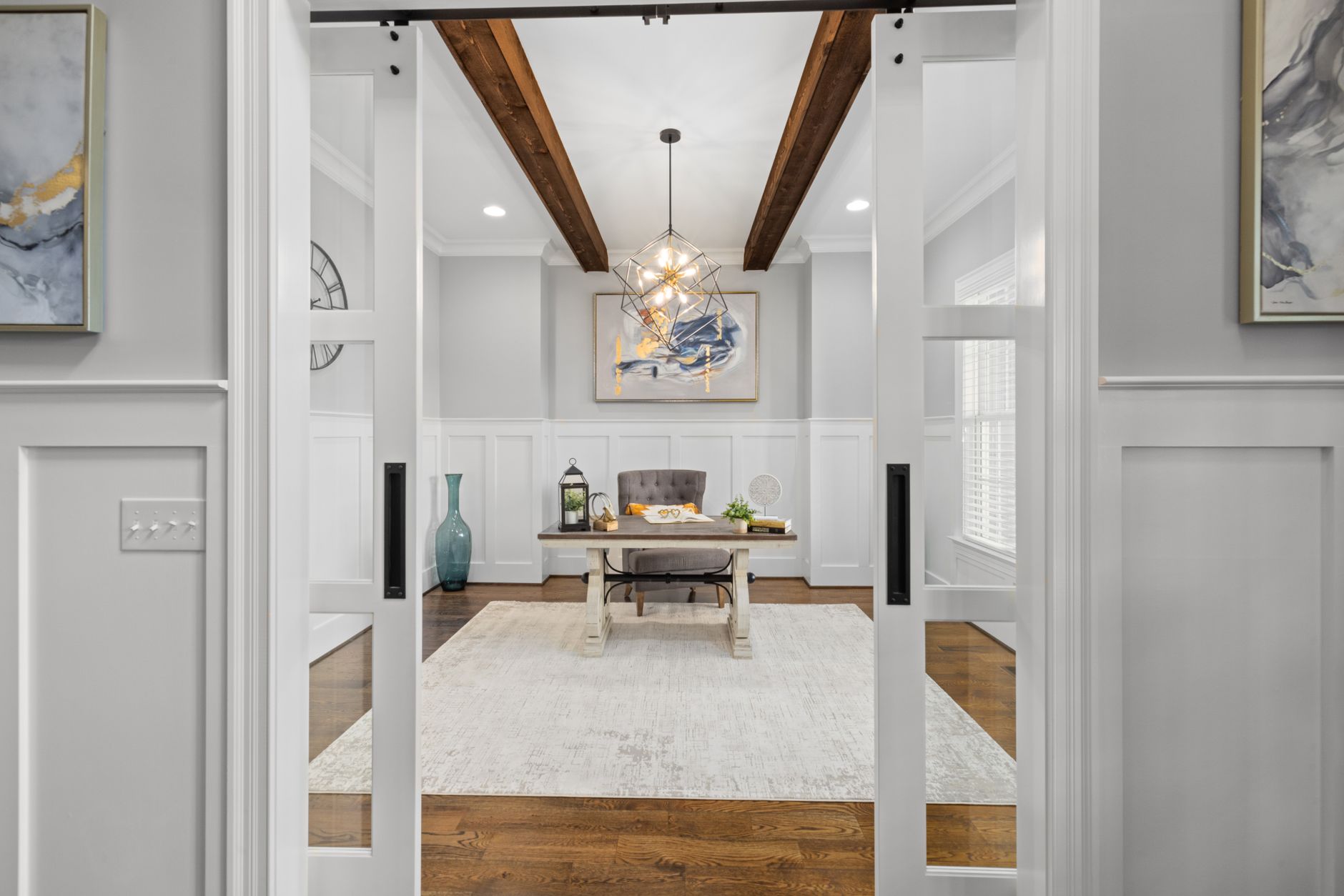
Don’t assume your office is too small for a statement light. A single, well-placed pendant light can be a beautiful focal point. Hang it directly over your desk as a stylish task light. Just be mindful of the scale: a large, heavy fixture will feel overwhelming, while a smaller, sleek pendant adds a touch of elegance.
LED Strips & Under-Shelf Lighting
For a modern, minimalist look, consider LED strip lights. They can be hidden almost anywhere: under shelves, cabinets, or even behind your monitor. They provide even illumination and can serve as both task and accent lighting.
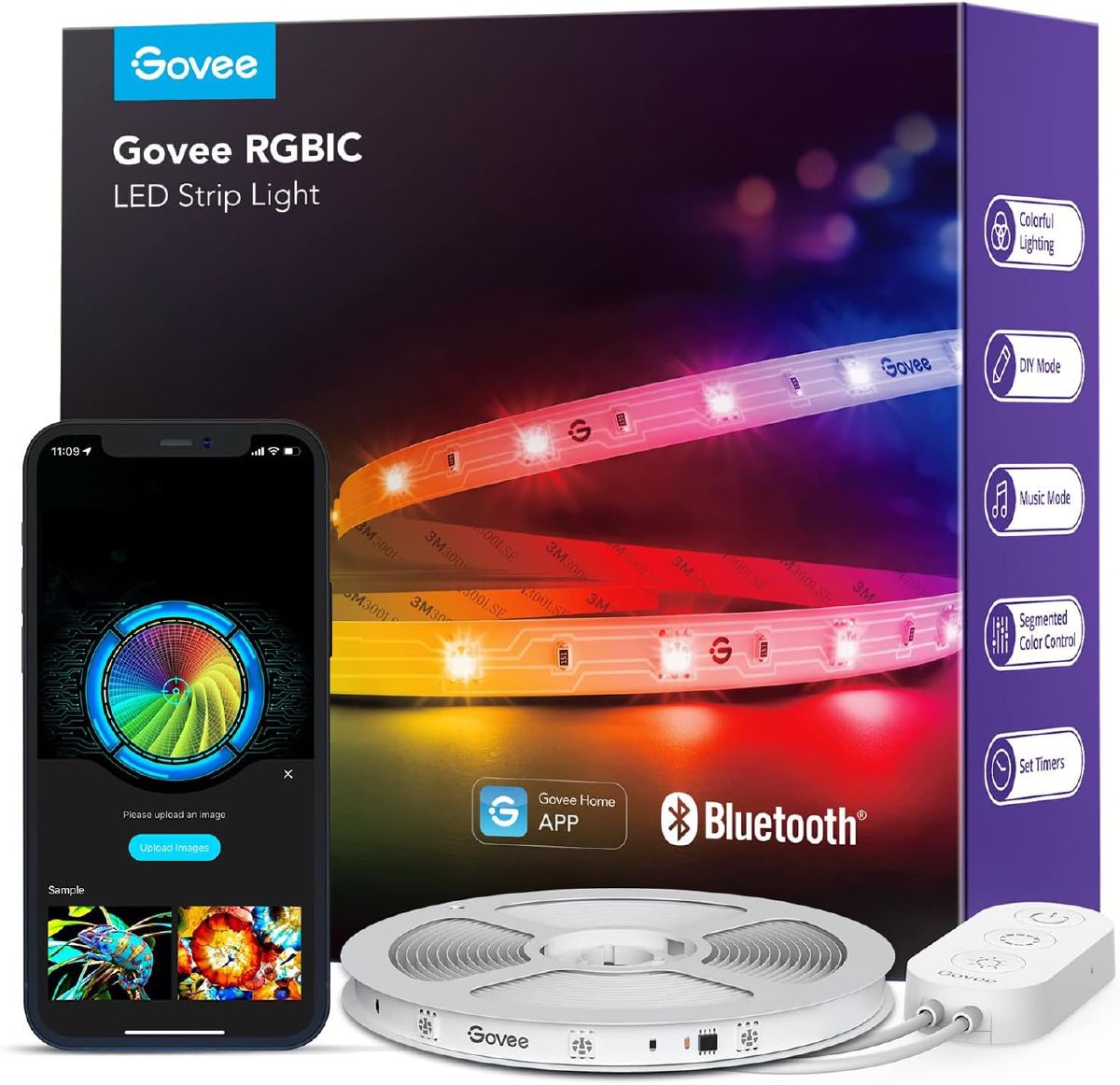
Govee’s RGBIC strip is the one I lean on for small offices. A single roll under a shelf or behind the monitor adds depth to a cramped room without claiming a square inch of desk, and phone control matters more than usual in a space where every surface is already spoken for. Its numbers do the vouching: 4.4 stars from a 26,000-strong review base, in a corner of Amazon littered with short-lived clones. One practical note before you stick it down: the adhesive holds best on a smooth shelf edge or cabinet lip, and on a rougher wall you should expect sagging corners within a few months.
 $14.99 price as of Oct 23
Buy the Govee LED Strip Lights on Amazon for around $12.
Recessed Lighting
This is the ultimate space-saver. Recessed or can lights are installed directly into the ceiling, providing a clean look with no visible fixtures. They offer great ambient light and can be arranged to focus on key areas. While this might require a small remodel, the payoff is an uncluttered ceiling that makes the room feel more spacious.
Layout & Ergonomics: How to Light a Small Home Office Effectively
Lighting is about more than the fixtures you choose; how you place them matters just as much. Getting the layout right can solve many common problems.
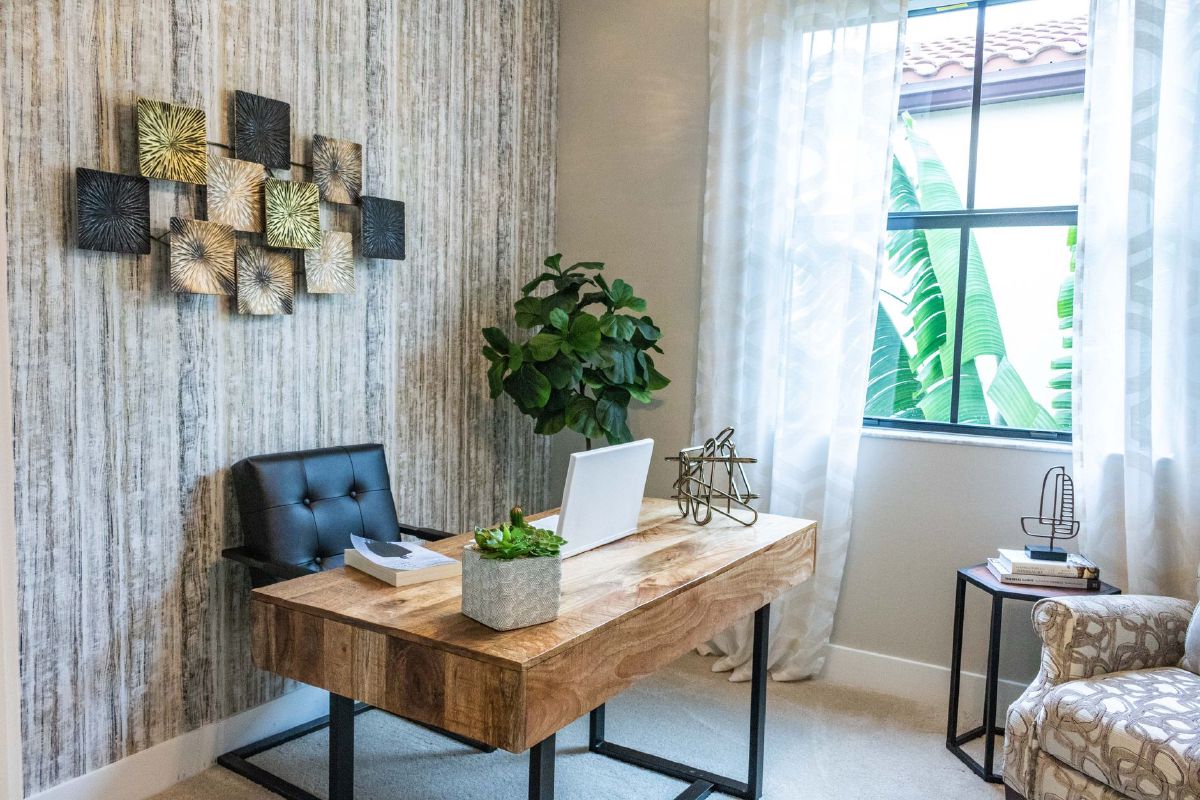
Minimize screen glare by positioning your desk perpendicular to the window, not facing it or with your back to it. This keeps harsh light off your monitor. If you can’t avoid it, sheer curtains will diffuse the light.
Place your desk so the primary light source comes from your side, not from directly behind or in front of you. That stops shadows falling across your work area. We have a full guide on the Best Desk Placement in Your Home Office.
For video calls, place a soft light source directly in front of you, slightly above eye level. This fills in shadows and makes your face look well-lit and professional. A small ring light or a clip-on light for your monitor does the job.
Quick Wins & Budget-Friendly Upgrades
You don’t need a full renovation to dramatically improve your home office lighting. Here are some quick, impactful changes you can make today.
A well-placed mirror can make a small room feel twice as big and bright by reflecting light.
Sheer curtains soften natural light and prevent harsh glare without blocking out the sun completely. To get more from your windows, check out our guide on Natural Lighting in Your Home Office: How to Maximize Sunlight.
Lighter paint colors reflect more light, making a room feel larger and brighter.
Sometimes changing the light bulbs is enough. Switch to bulbs with a higher lumen count for more brightness and a color temperature between 3000K-4000K for a neutral, comfortable light. If you’d rather not commit to one fixed temperature, a tunable smart bulb like the Linkind Smart Bulb sidesteps the decision entirely: it runs the full 2700K-6500K range from an app, so the same bulb can be warm for an evening wind-down and cooler for a focused afternoon. At 4.3 stars across 425 reviews and around $20, it’s a small outlay for a fix that would otherwise mean buying two different bulbs. For the full breakdown of lumens, Kelvin, and CRI, see my guide to choosing LED bulbs for a home office.
Buy the Linkind Smart Bulb on Amazon for around $20.
A simple, stick-on LED strip under a shelf or cabinet can instantly brighten your workspace and add a modern touch.
When to Upgrade: Considering a Small Remodel
If you’ve exhausted all the quick wins and still feel like your lighting is holding you back, it might be time for a minor remodel. Installing recessed lighting or a well-placed pendant changes what the room can do. It costs more effort and money up front, but the result is a beautifully lit, clutter-free workspace, and it’s a long-term investment in your productivity and the value of your home.
FAQs About Small Home Office Lighting
What’s the best light bulb color temperature for a home office?
For most home office tasks, a neutral to cool white light is best. Look for bulbs in the range of 3000K to 4000K. This temperature is great for concentration and accurately represents colors, which is important for design or art-related work.
How do I fix screen glare from windows?
The best way is to reposition your desk so it is perpendicular to the window. If that’s not possible, use light-diffusing sheer curtains or blinds to soften the incoming light.
What’s the best way to light myself for video calls?
Place a soft, diffused light source directly in front of you. A ring light or a desk lamp with a white lampshade is perfect. This provides even illumination and prevents harsh shadows.
Conclusion
Good small home office lighting comes down to strategy: layer your light sources, choose fixtures that stay off the desk, and set up the layout so glare and shadows never reach your screen. Start with the cheapest fix (the right bulb at 3000K-4000K) and work up from there.
For fixture ideas room by room, explore our range of lighting guides.