The short version: a smart bedroom lighting setup is really three pieces (tunable-white bulbs, a way to trigger them automatically by schedule or motion, and optionally a hub for reliability) and you can build a genuinely useful version of it for well under $100. Start with bulbs and a wake-up/wind-down schedule before you spend on sensors or a hub; that’s where most of the day-to-day benefit lives.
Your bedroom should be more than a place to sleep, and the right lighting changes how you wake up, wind down, and everything in between. Smart bedroom lighting in 2026 has moved past voice-controlled bulbs as the headline feature. The point now is lighting that understands your body’s natural rhythms and adapts throughout the day to support better sleep, higher energy, and genuine wellness.
If you’re researching smart lighting ideas for your bedroom in 2026, you’re probably looking for something that goes beyond novelty: compatibility across devices, simple automation that actually works, and lighting that makes a real difference in your daily life. This guide covers how to build a system that delivers on all three counts.
Why Smart Lighting for Bedrooms: Real Benefits Beyond the Hype
Smart bedroom lighting offers two categories of benefits that matter: practical convenience and genuine sleep hygiene improvements.
On the convenience side: no more fumbling for a light switch in the dark, lights that brighten gradually like a natural sunrise instead of a jarring alarm, every light in the room answering a voice command, or the lights dimming themselves when you start a movie. All of that is standard in 2026 smart lighting systems.
But the deeper benefit lies in how smart lighting can support your body’s natural circadian rhythm. Your circadian rhythm is your internal 24-hour clock that regulates when you feel alert and when you feel sleepy. This biological system is heavily influenced by light exposure, particularly the color temperature and intensity of light you experience throughout the day.
Research has shown that exposure to bright, blue-enriched light during daytime hours helps maintain alertness and regulates your sleep-wake cycle. Conversely, warm, dimmer lighting in the evening signals your body to produce melatonin, the sleep hormone that helps you wind down naturally. Traditional lighting keeps you exposed to the same color temperature all day and night, which can disrupt this natural cycle and make falling asleep more difficult.
Smart bedroom lighting with circadian features automatically adjusts color temperature and brightness throughout the day. Cool, energizing light in the morning helps you wake up naturally and feel alert. As evening approaches, your lights gradually shift to warmer tones that support melatonin production and prepare your body for restful sleep. For people struggling with sleep issues or feeling groggy in the morning, this circadian alignment can make a real difference. Understanding why dimmable lighting is essential for better sleep helps explain why the color temperature adjustment capability matters so much in a bedroom setting.
Essential Components: What You Actually Need
Building a smart bedroom lighting system requires understanding a few components. You don’t need everything at once. Start with the basics and expand as you discover what works for your routine.
Smart bulbs are the foundation of your system. The best smart bulbs for bedrooms in 2026 offer tunable white light (meaning you can adjust from warm to cool temperatures), dimming capabilities, and ideally some color options for mood lighting. When evaluating your options, our comprehensive roundup of the top smart bulbs for a connected bedroom breaks down the specific features and compatibility of leading models. Top choices include Philips Hue for premium quality and full ecosystem support, Govee for budget-friendly options with excellent features, LIFX for hub-free Wi-Fi connectivity, and Wyze for the best value in circadian-capable bulbs. When selecting smart bulbs, prioritize those that support both warm whites (around 2000-2700K) for evening and cool whites (4000-6500K) for morning.
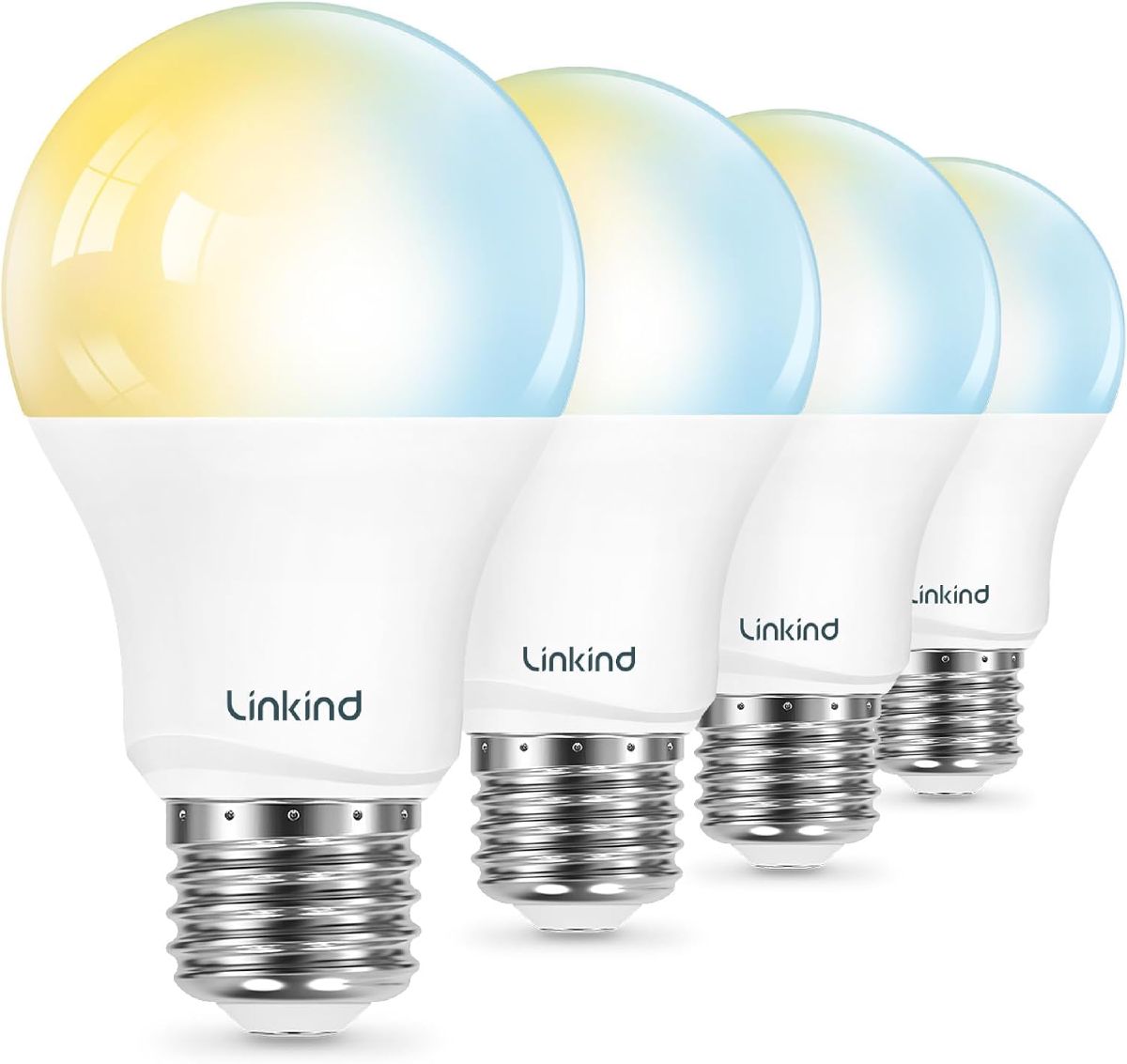
If you want to try the wake-up/wind-down routines below before committing to a premium ecosystem, the Linkind Tunable White Smart Bulb makes a low-stakes entry point: at roughly $20 a bulb instead of $50+, it still spans the 2700K-6500K sweep those automations depend on and answers to both Alexa and Google Home. The limitation is in the name. White is all it does. There’s no colour channel for the mood-lighting side of a smart bedroom, so treat it as the circadian workhorse and add a colour-capable bulb or strip later if scenes matter to you.
 $19.99 price as of Oct 23
Buy the Linkind Smart Bulb on Amazon
Smart switches and dimmers give you centralized control if you have overhead lighting or prefer not to replace every bulb. They’re particularly useful if you have multiple bulbs on one circuit. In 2026, look for switches that support local control (they work even when your internet is down) and integrate with your chosen ecosystem.
Hubs and controllers are optional for small setups: many smart bulbs now connect directly via Wi-Fi or Bluetooth. However, hubs like the Philips Hue Bridge or Matter-compatible controllers offer more reliable connectivity, faster response times, and advanced automation capabilities. If you’re building beyond just a few bulbs, a hub is worth considering.
Motion and ambient light sensors are optional but very useful for hands-free automation. Motion sensors can trigger gentle nightlights when you get up at night, while ambient light sensors prevent your smart bulbs from turning on when there’s already enough natural light in the room. Learning how motion sensor lighting can improve sleep and safety helps you decide whether adding sensors to your setup makes sense for your specific needs.
Setup Recipes: Automation That Actually Improves Your Life
The real payoff of smart bedroom lighting is automation: routines that run without requiring any input from you. Here are three automation recipes that deliver genuine quality-of-life improvements. For additional ideas beyond these basics, a beginner’s guide to automating bedroom lighting provides more advanced automation concepts once you’re comfortable with these fundamental recipes.
Recipe 1: The Gentle Wake-Up Routine
Instead of being jolted awake by a harsh alarm, this automation mimics a natural sunrise by gradually brightening your bedroom lights over 20-30 minutes before your wake-up time.
Step-by-step setup (Philips Hue example):
- Open the Philips Hue app and navigate to the Automations tab
- Tap the plus icon and select “Wake up with light”
- Choose your bedroom lights and set your desired wake-up time (for example, 7:00 AM)
- Set the fade duration. Start with 30 minutes, so lights begin brightening at 6:30 AM
- Select a scene that starts warm and gradually becomes cooler (the “Energize” preset works well)
- Adjust the final brightness level. 70% is bright enough to wake you without being harsh
- Choose which days this routine runs (weekdays only if you prefer sleeping in on weekends)
For Alexa users: In the Alexa app, go to Routines, select the alarm as your trigger, and enable the “Wake-up lighting” toggle. Select your smart lights and Alexa will gradually brighten them as your alarm time approaches.
For Google Home users: Create an automation triggered by your wake-up time, select your bedroom lights as the action, and set them to gradually turn on to your preferred brightness over your chosen duration.
This is the automation I’d set up first if you only do one: a gradual sunrise fade addresses the actual mechanism (light exposure telling your body it’s time to be alert) rather than just making the alarm louder, so it’s worth the ten minutes it takes to configure.
Recipe 2: The Sleep Wind-Down Scene
This automation helps signal your body that it’s time to prepare for sleep by automatically dimming and warming your bedroom lights in the evening.
Step-by-step setup:
- In your smart lighting app, create a new automation triggered by time (for example, 9:00 PM)
- Select all bedroom lights as the action
- Set them to transition to warm white (2000-2700K) at 30-40% brightness
- Choose a gradual transition over 15-30 minutes rather than an instant change
- Optional: Add a second automation at bedtime (10:30 PM) that dims lights to 10% or turns them off completely
Pro tip: If you watch TV or read in bed, create a “Reading Mode” scene you can activate manually that provides slightly brighter warm light focused near your bed, then have your sleep automation take over at your usual bedtime. Choosing the best bedside lamps for every bedroom style matters here because your bedside fixture needs to work harmoniously with your automated overhead or ambient smart lighting to create that perfect reading environment.
This automation works because it gives your body a consistent environmental cue that bedtime is approaching. The warm, dimmer light supports natural melatonin production, making it genuinely easier to feel sleepy when you want to sleep.
Recipe 3: Motion-Activated Night Lighting
The midnight bathroom trip doesn’t need to involve blinding overhead lights anymore. This automation uses a motion sensor to provide gentle, low-level lighting when you get up at night.
Step-by-step setup:
- Place a motion sensor (like Philips Hue Motion Sensor or Aqara Motion Sensor P1) in your bedroom doorway or hallway
- In your automation settings, create a trigger based on motion detection
- Add a time condition: only activate between 11 PM and 6 AM
- Set the action to turn on specific lights (hallway or bathroom pathway) to warm white at 5-10% brightness
- Add a timer to automatically turn lights off after 3-5 minutes of no motion
- Crucial: Set the lights to fade on gradually (2-3 seconds) to avoid startling anyone awake
For this automation, the best motion sensor night lights for bedrooms provide plug-and-play options that don’t require complex setup, though integrating motion detection into your full smart lighting system gives you more customization control over brightness levels and timing. This automation earns its place because it provides safety and convenience without disrupting your sleep state with bright light that would make it harder to fall back asleep.
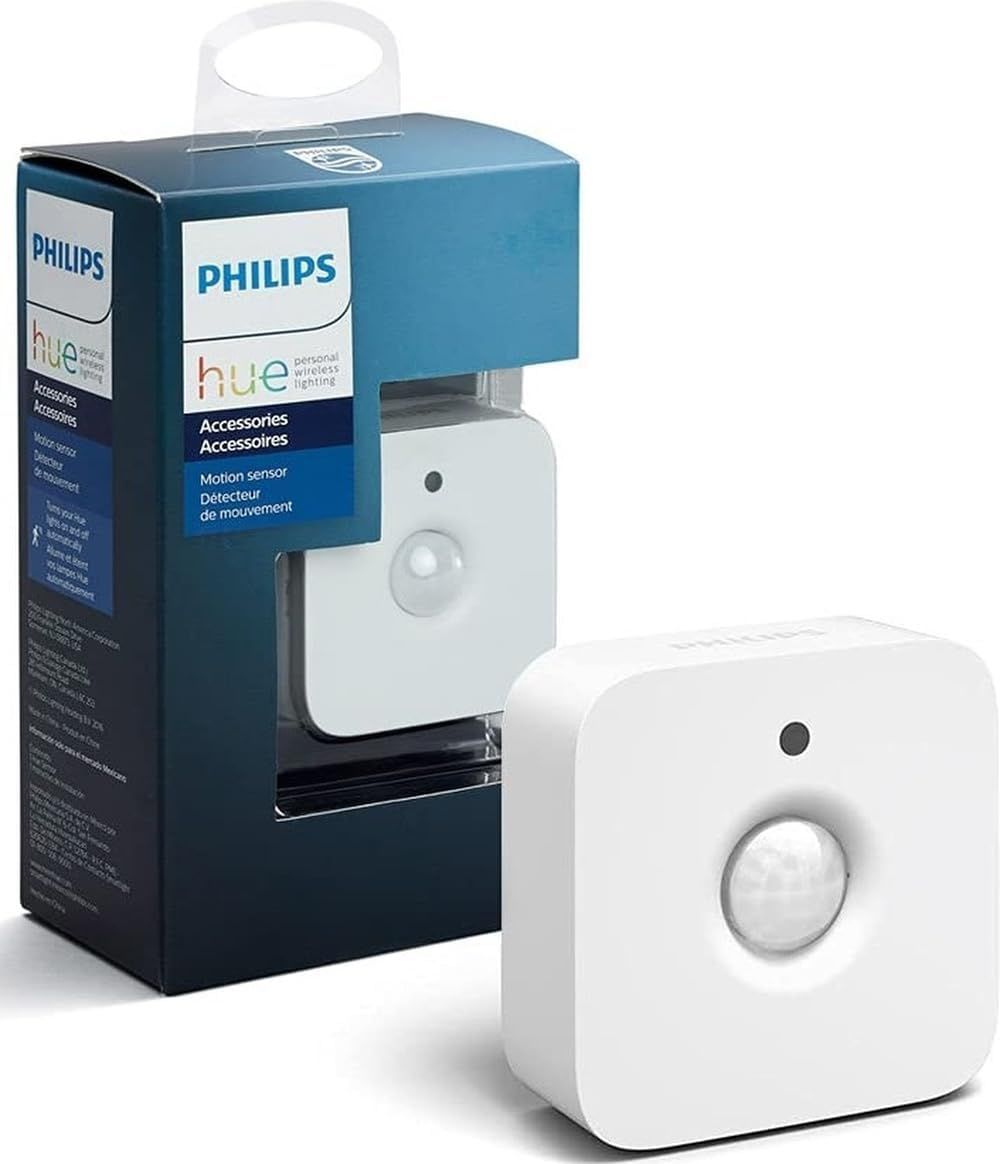
If you’re already on the Hue ecosystem, the Philips Hue Motion Sensor is the one named above, and it’s a genuinely good version of it: 1,025 ratings at 4.6 stars, a magnetic mount so it goes up in seconds, and full time-of-day personalization in the Hue app. The honest con: it only works with Hue lights and requires the Hue Bridge, so it’s a poor first purchase if you haven’t already bought into that ecosystem.
 $48.99 price as of Oct 20
Buy the Philips Hue Motion Sensor on Amazon
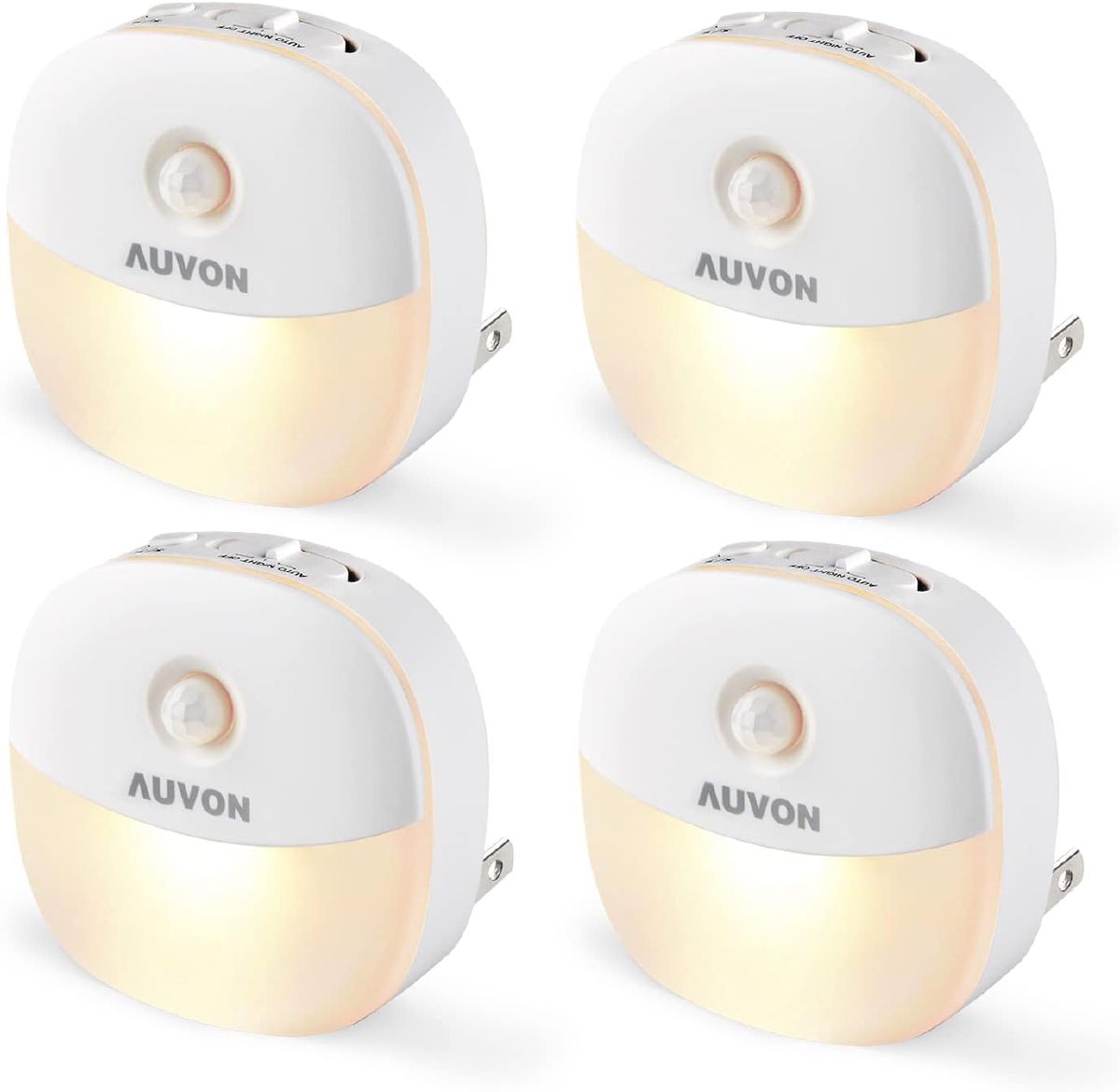
If you’d rather skip hub automation entirely, the AUVON Plug-In Motion Sensor Night Light (4-Pack) does the same job with zero setup: independent dusk-to-dawn and motion sensors, 4.7 stars across nearly 21,000 ratings, and one per hallway/bathroom/bedroom out of the box. The catch is that you lose the app-level control over timing and brightness curves that make the Hue version worth the extra cost, so treat this as the budget-and-simplicity pick, not a feature-for-feature swap.
 $22.99 $24.99 8% off price as of Oct 25
Buy the AUVON Motion Sensor Night Light 4-Pack on Amazon
Compatibility and Standards: Understanding Matter and Cross-Platform Support
One of the biggest frustrations with smart home devices has always been compatibility chaos. Will this bulb work with that hub? Can I use voice control with my preferred assistant? In 2026, the Matter standard is finally solving these problems.
Matter is a unified communication protocol supported by Apple, Google, Amazon, Samsung, and over 300 other companies. For smart bedroom lighting, Matter means you can buy a Matter-certified bulb and know it will work with Apple HomeKit, Google Home, Amazon Alexa, and Samsung SmartThings, without different apps or complicated workarounds.
Major lighting manufacturers including Philips Hue, IKEA, Nanoleaf, and Linkind have already released or announced Matter-compatible products for 2026. Philips has updated its entire Hue ecosystem to support Matter via software updates, while IKEA is launching over 20 new Matter-over-Thread devices in early 2026.
What this means for you: when shopping for smart bulbs in 2026, look for the Matter certification logo. This future-proofs your purchase and means you won’t be locked into a single ecosystem. You can start with Alexa control and later add Google Home control without replacing any hardware.
Matter and Thread, explained simply: Matter is the language smart devices use to communicate, while Thread is one of the connection methods (like Wi-Fi or Bluetooth). Thread creates a mesh network where devices talk to each other, making your smart home more reliable and responsive. Many Matter devices use Thread for better performance, but Matter also works over Wi-Fi.
On voice control: “Hey Google,” “Alexa,” and “Hey Siri” all work with Matter-certified smart bedroom lighting. You can even use multiple voice assistants simultaneously, Google Home for some automations and Alexa for others, all controlling the same lights.
Budget vs Premium Builds: What You Get at Each Price Point and Troubleshooting Tips
Building a smart bedroom lighting system can range from around $50 to several hundred dollars depending on your chosen approach. Understanding what you get at each tier helps you make informed decisions.
A budget build ($50-100) outfits your bedroom with 2-4 quality smart bulbs from brands like Wyze, Govee, or Sengled. These bulbs connect directly via Wi-Fi or Bluetooth, eliminating the need for a separate hub. You get essential features including color temperature adjustment, dimming, basic scheduling, and voice control. This is perfect for testing whether smart lighting works for your lifestyle before committing to a larger investment. The tradeoff is potentially slower response times and fewer advanced automation options compared to premium systems.
A mid-range build ($150-250) typically includes 4-6 premium bulbs or a starter kit with a hub (like the Philips Hue Starter Kit), plus perhaps a motion sensor or smart switch. You gain significantly more reliable performance, faster response times, and access to advanced features like detailed scheduling, geofencing (lights turn on when you arrive home), and integration with other smart home devices. The hub-based systems are noticeably more responsive and stable than Wi-Fi-only solutions.
A premium build ($300+) gets you comprehensive coverage with bulbs throughout your bedroom, smart switches, multiple sensors, and perhaps specialty lighting like LED strips for accent lighting. You get the full ecosystem experience with tight integration between all components, advanced scene creation, and professional-grade automation capabilities. Philips Hue, LIFX, and specialized systems like Lutron Ketra fall into this category. When planning a premium setup, it’s worth thinking about creative ways to use LED strips for a modern bedroom look, so ambient accent lighting layers in alongside your functional smart bulbs and the room gets both utility and atmosphere.
Common troubleshooting issues and solutions:
Lights not responding: the most common culprit is network connectivity. Ensure your Wi-Fi router is within reasonable range of your bulbs. If using a hub, verify it’s properly connected to your network. For Bluetooth connections, make sure you’re within range (about 30 feet). Try power cycling both the bulb (turn off for 10 seconds) and your hub if applicable.
Delayed response to voice commands: this usually indicates network congestion or bandwidth issues. Smart bulbs connected directly to Wi-Fi compete with all your other devices for bandwidth. Using a hub with Zigbee or Thread connections significantly reduces this problem. Also ensure your voice assistant device has a strong internet connection.
Automations not triggering: check that your phone remains connected to the internet (not airplane mode) if your automations depend on your phone’s app. For time-based automations, verify your timezone is set correctly in the app. If motion-based automations aren’t working, check the sensor’s battery level and positioning; sensors need an unobstructed view of the area they’re monitoring.
Bulbs offline after a power outage: most quality smart bulbs remember their connection settings and automatically reconnect after power restoration. If they don’t, try power cycling them three times (on for 3 seconds, off for 3 seconds, repeat) which usually triggers pairing mode. Then use your app to reconnect them to your network.
Color temperature not changing correctly: make sure the bulbs you purchased actually support tunable white or color changing, because some budget “smart bulbs” only offer dimming. If your bulbs are supposed to support color temperature adjustment but aren’t responding correctly, update the firmware through the manufacturer’s app and verify you’re not hitting minimum or maximum limits.
Smart bedroom lighting in 2026 is a genuine quality-of-life improvement rather than just another tech gadget. Choose compatible (Matter-certified) systems, set up the wake-up and wind-down automations first, and keep the troubleshooting list above handy. The result is a bedroom that actively supports better sleep and more energetic mornings.