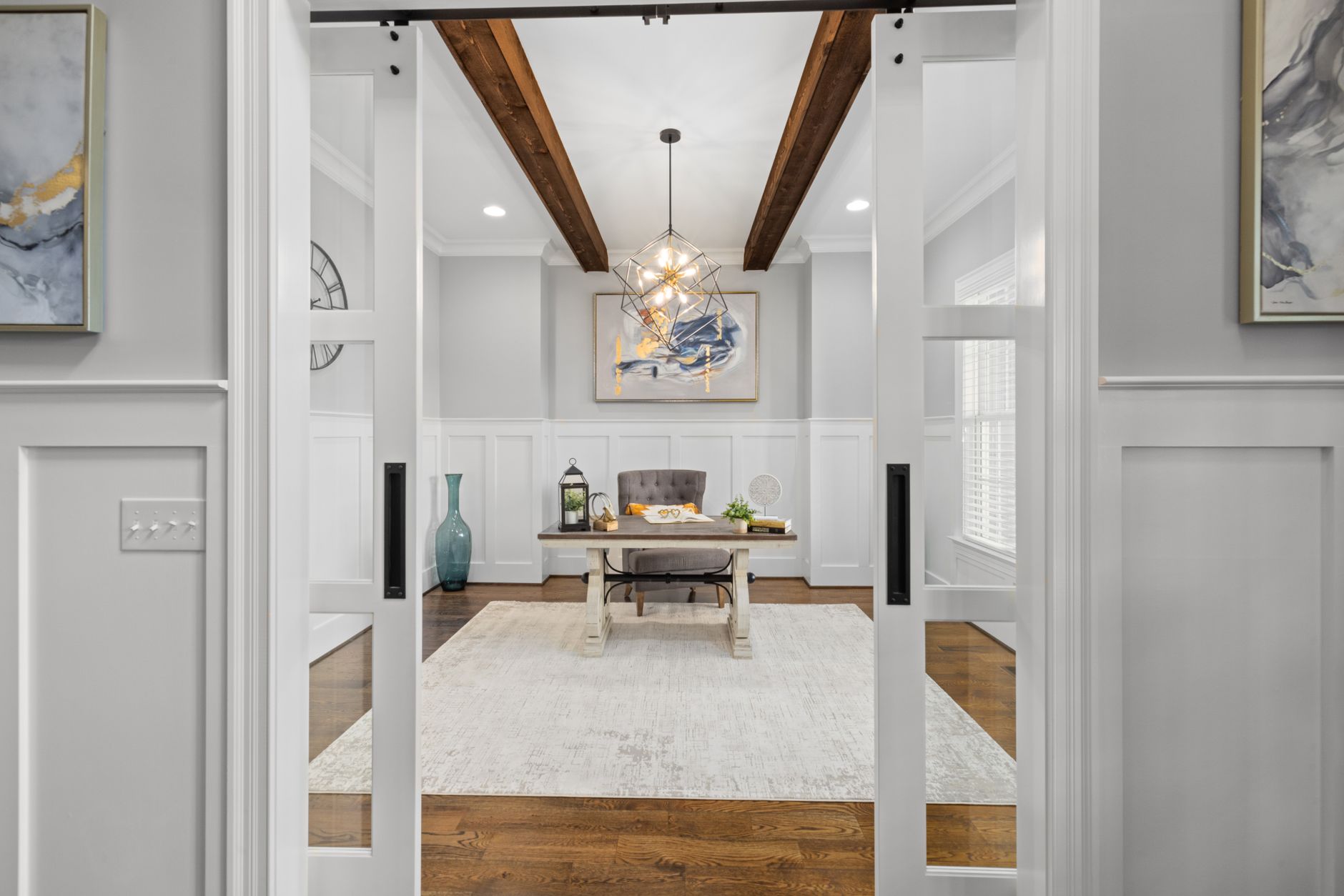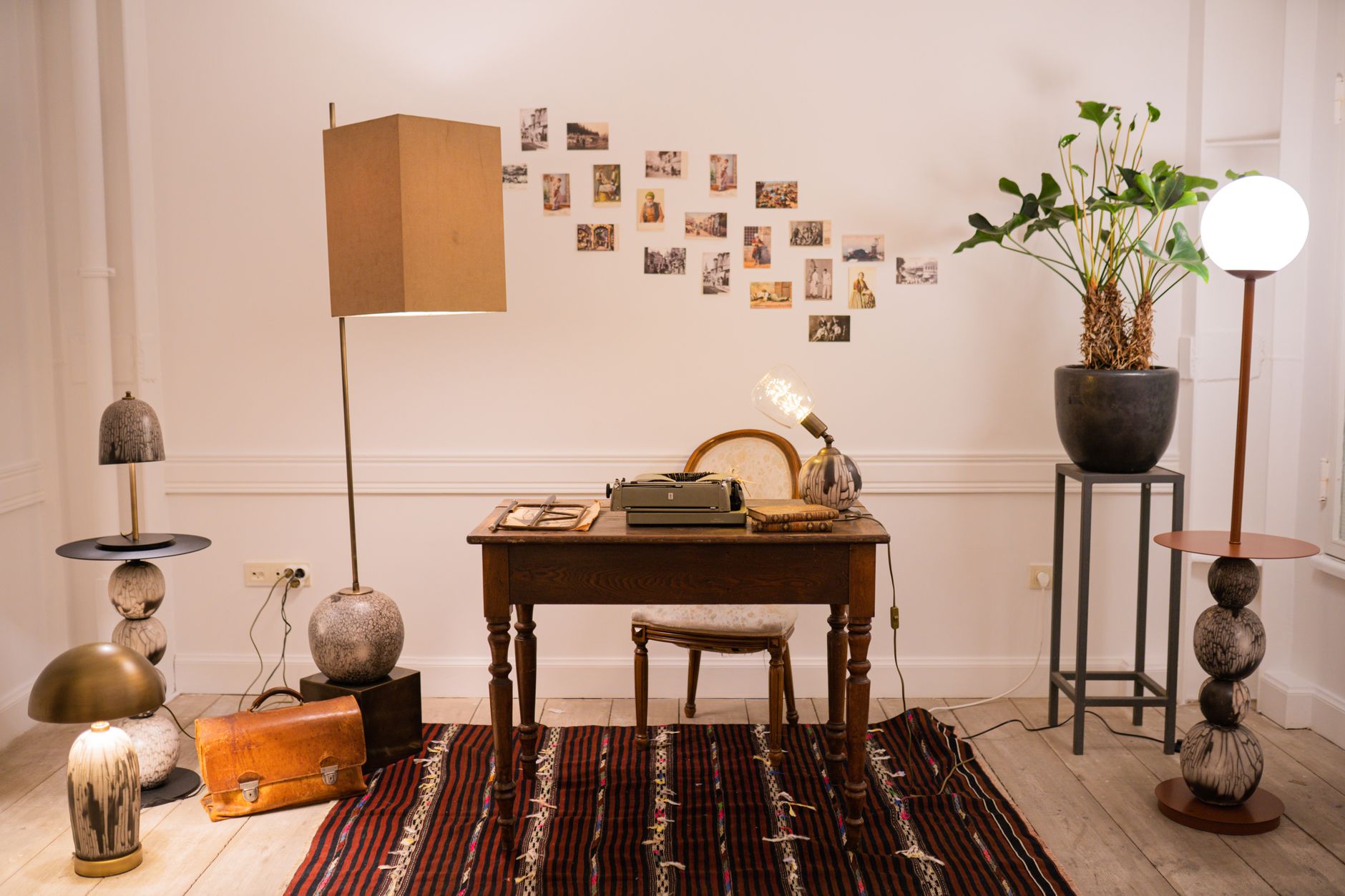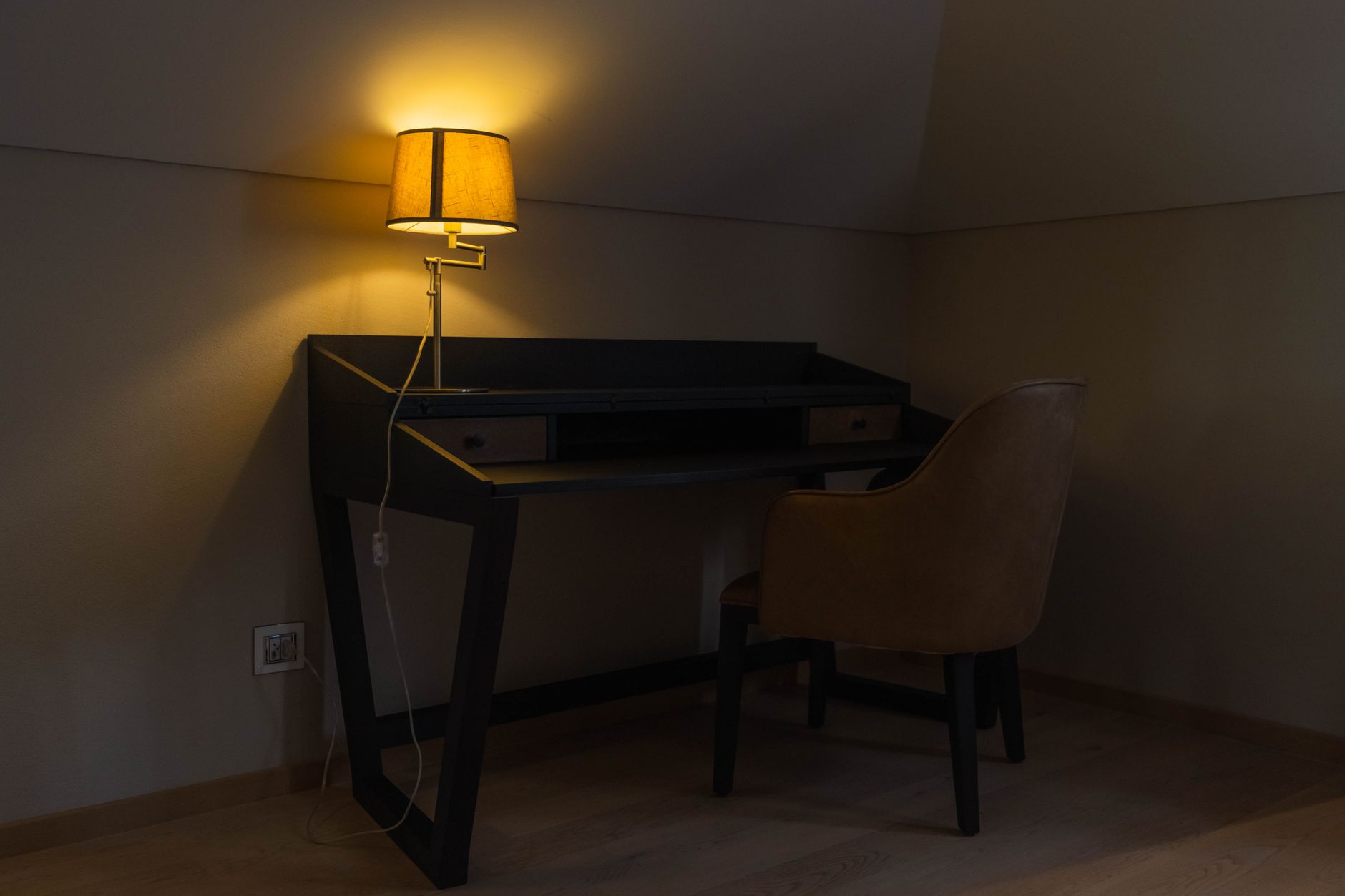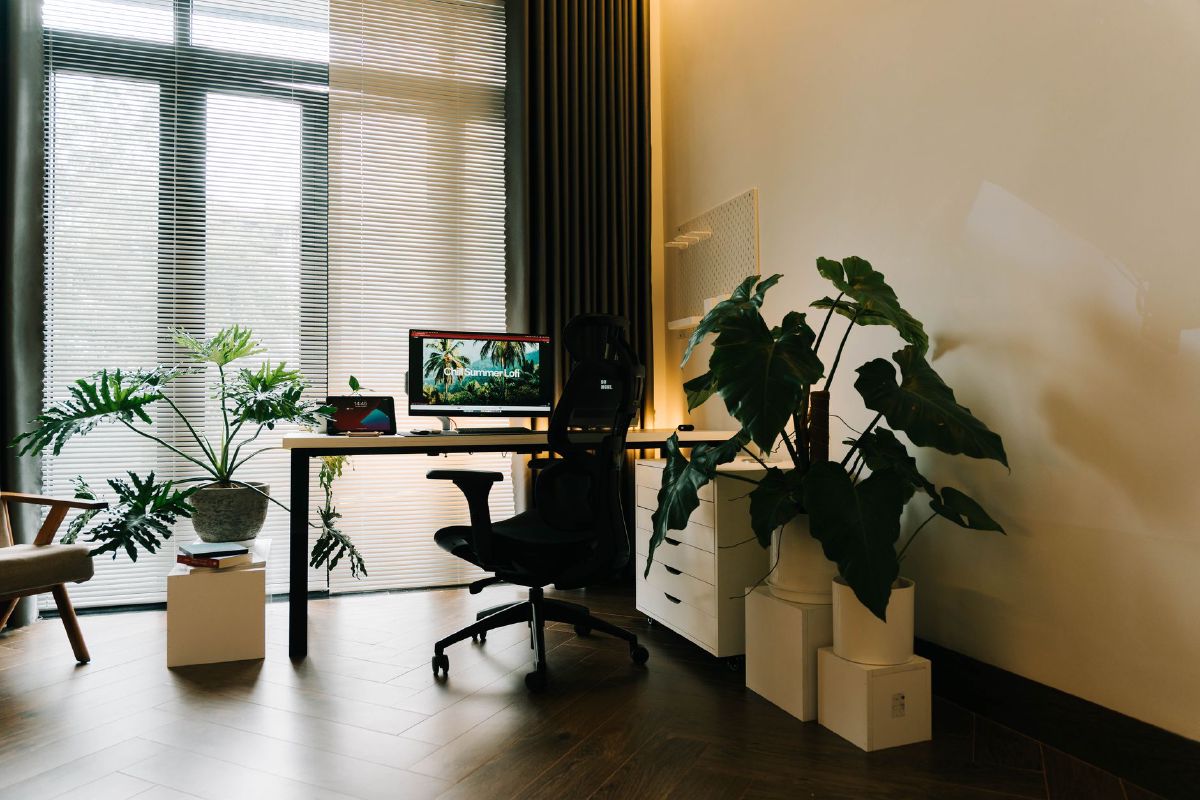
A good home office layout starts with light, not furniture: position your desk so daylight comes from the side rather than behind or in front of you, then layer ambient, task, and accent sources so the room still works after the sun goes down. Get that right and everything else (where the monitor goes, how the room reads on a video call) falls into place around it. I’ve laid out the room-by-room decisions below in the order I’d actually make them: window placement first, then the layered lighting that carries the room after dark, then the smaller fixes (glare, mirrors, video-call lighting) that polish a layout that’s already sound. For the fuller picture of home office lighting beyond layout specifically, see my Ultimate Guide to Home Office Lighting.
1. Choosing the Right Spot: Harnessing Natural Light
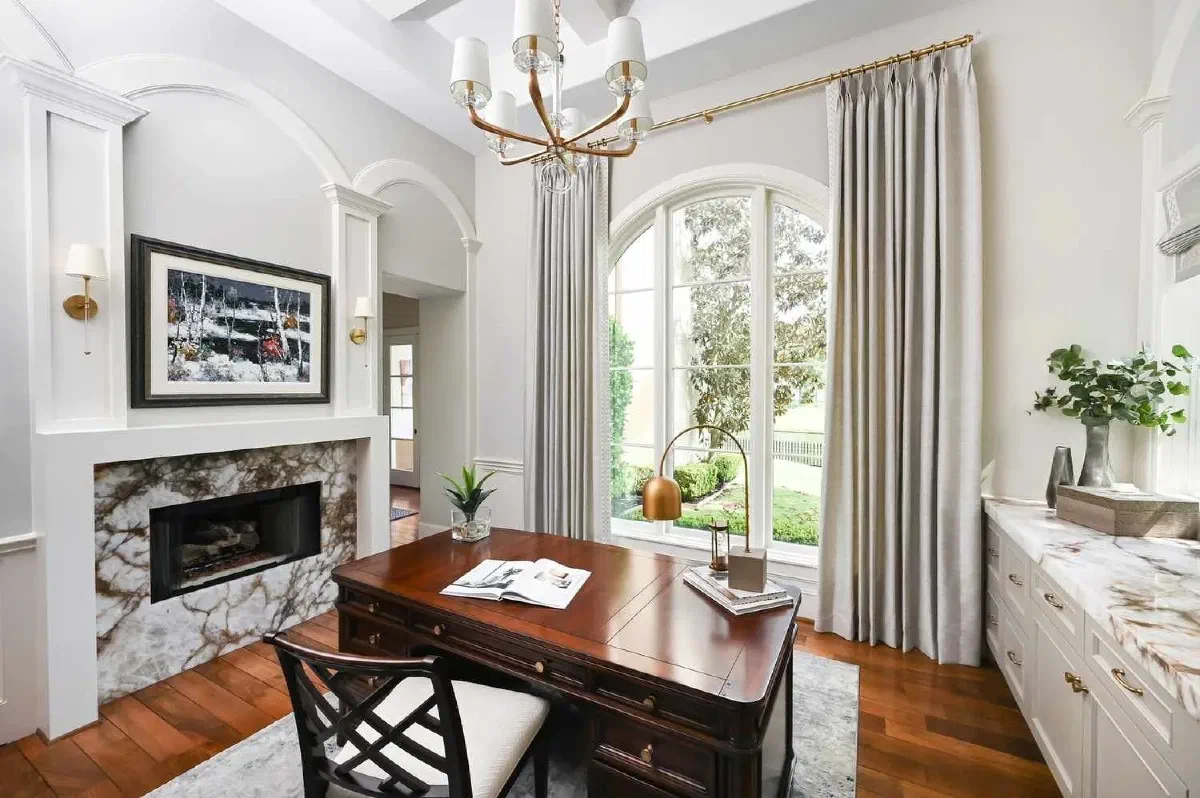
Natural light does more for productivity and well-being than any fixture you can buy. When planning your home office layout:
- Position your desk near windows: Place your desk perpendicular to windows to avoid glare on screens while maximizing daylight exposure.
- Avoid backlighting: Sitting with your back to a window can cause harsh shadows during video calls. Instead, face the window or have it to your side.
- Filter bright light: Use light-filtering blinds or curtains to soften intense sunlight without blocking it completely.
For more information read our complete guide to Natural Lighting in Your Home Office.
2. Layered Lighting: A Balanced Approach
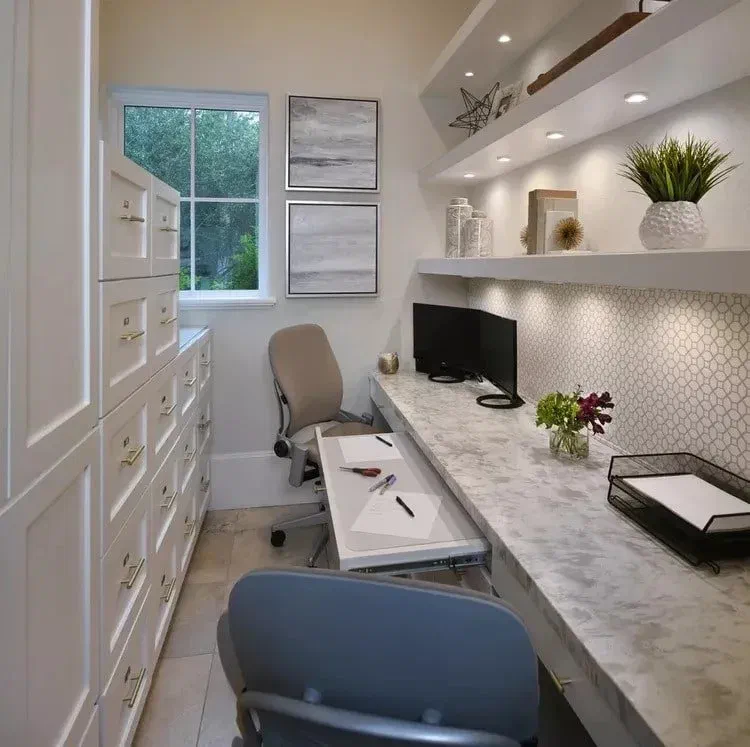
Relying solely on natural light isn’t practical, especially during cloudy days or late hours. A layered lighting approach ensures your workspace is well-lit at all times. I go deeper on this exact system in my guide to layering lighting in a home office.
Ambient Lighting
This is your main source of light. Ceiling lights or wall-mounted fixtures can provide consistent illumination:
- Opt for LED ceiling lights with adjustable brightness.
- Use dimmer switches for flexibility based on the time of day.
Task Lighting
Focused lighting is what actually keeps you from squinting at a screen for eight hours. I want two things from a task lamp: a colour temperature I can shift between roughly 4000K-5000K depending on the hour, and a base that gets off my desk entirely.
- Desk lamps with adjustable arms: Choose lamps with a color temperature between 4000K-5000K for a daylight-like effect.
- Clamp-on lamps: Ideal for small desks as they save space while providing targeted light.
For a smaller desk in whatever layout you land on, the Honeywell LED Desk Lamp is the space-saver I’d choose: it mounts along the desk edge, folds flat once the workday ends, and its four temperature settings (2700K-5700K) with touch dimming let one fixture play bright daytime task light and warm evening lamp in turn. A 4.7-star average built across 873 reviews is deep validation at this price. Its limit shows up when the layout itself changes: with no cordless mode, an “office” that migrates from desk to kitchen table to sofa will leave it behind.
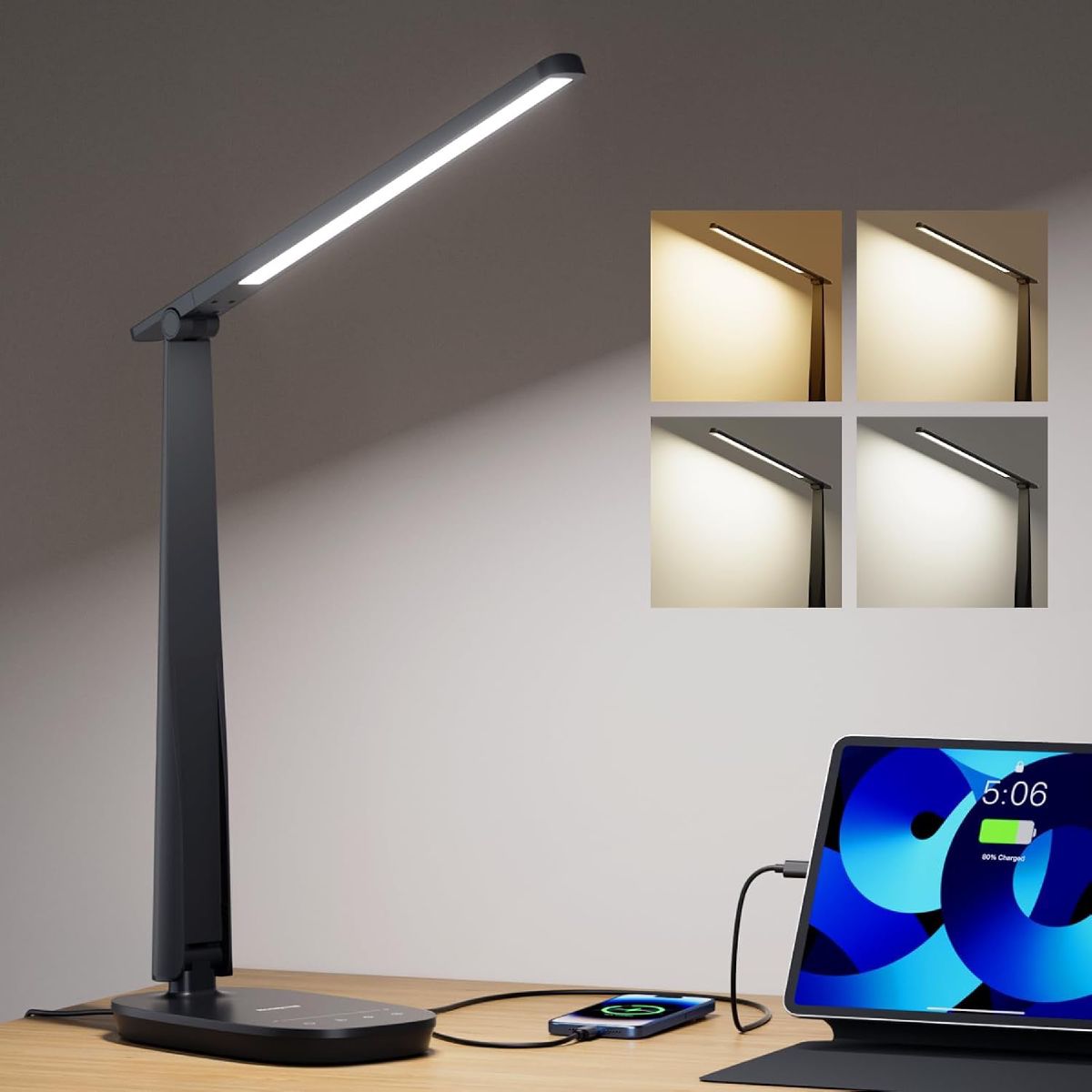 $32.29 $33.99 5% off price as of Aug 26
Buy the Honeywell LED Desk Lamp on Amazon for around $32.
For the full round-up with nine more options across every desk size and budget, read my guide to The Best Desk Lamps for Your Home Office.
Accent Lighting
Accent light adds depth once the basics are covered:
- LED strips under shelves or behind monitors add a professional touch.
- Floor lamps in dark corners can brighten the room without being too harsh.
3. Avoiding Shadows and Glare
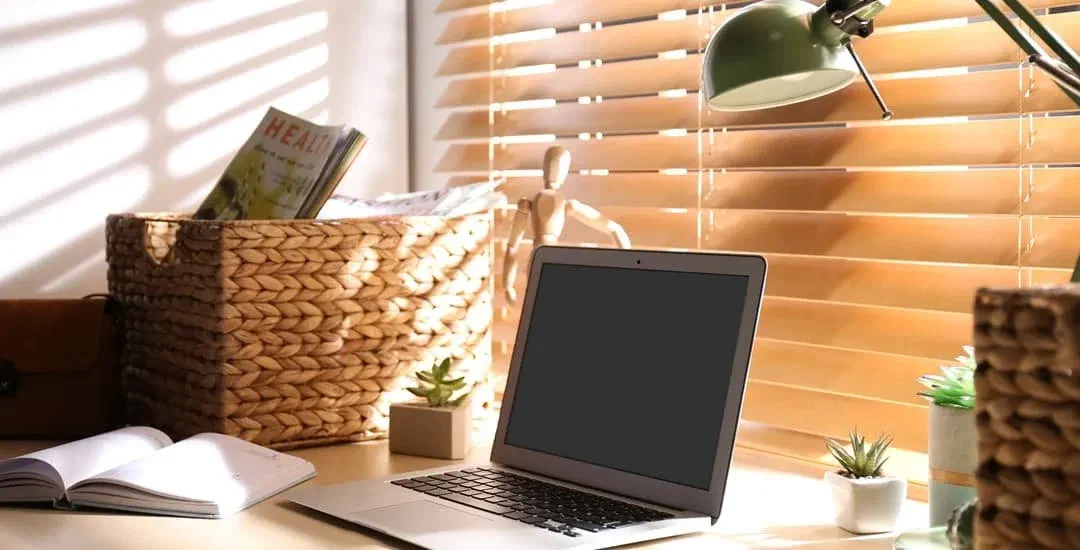
Nothing disrupts productivity like glare on your screen or harsh shadows. To minimize these:
- Use indirect lighting: Bounce light off walls rather than directing it straight onto surfaces.
- Anti-glare screens: An affordable way to reduce reflections from windows or lights.
- Diffused lighting: Choose lamps with frosted covers to soften light.
4. Using Mirrors and Light Colors to Amplify Light
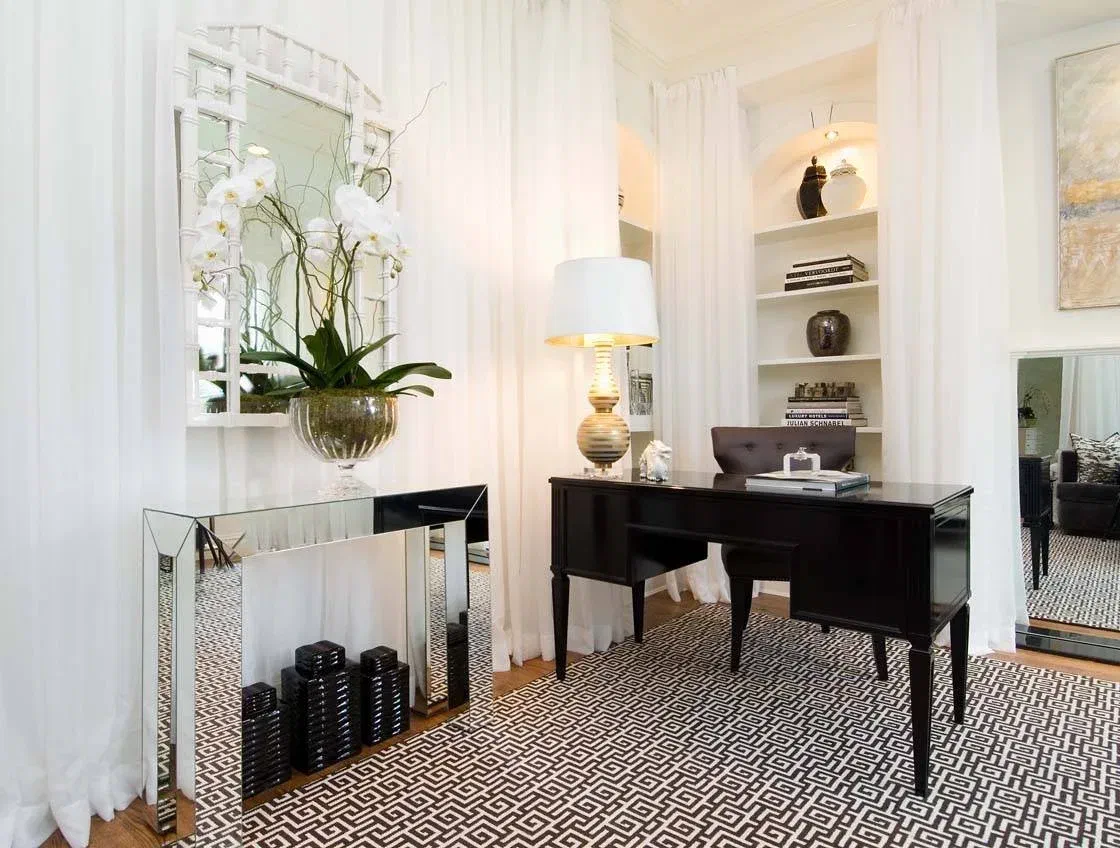
For offices with limited natural light, strategic decor can make a difference:
- Mirrors: Position them to reflect window light deeper into the room.
- Light-colored walls: Whites, pastels, and soft grays bounce light back into the room.
- Glossy surfaces: Desks or decor with a subtle sheen can reflect light without causing glare.
5. Lighting for Video Calls: Looking Professional on Camera
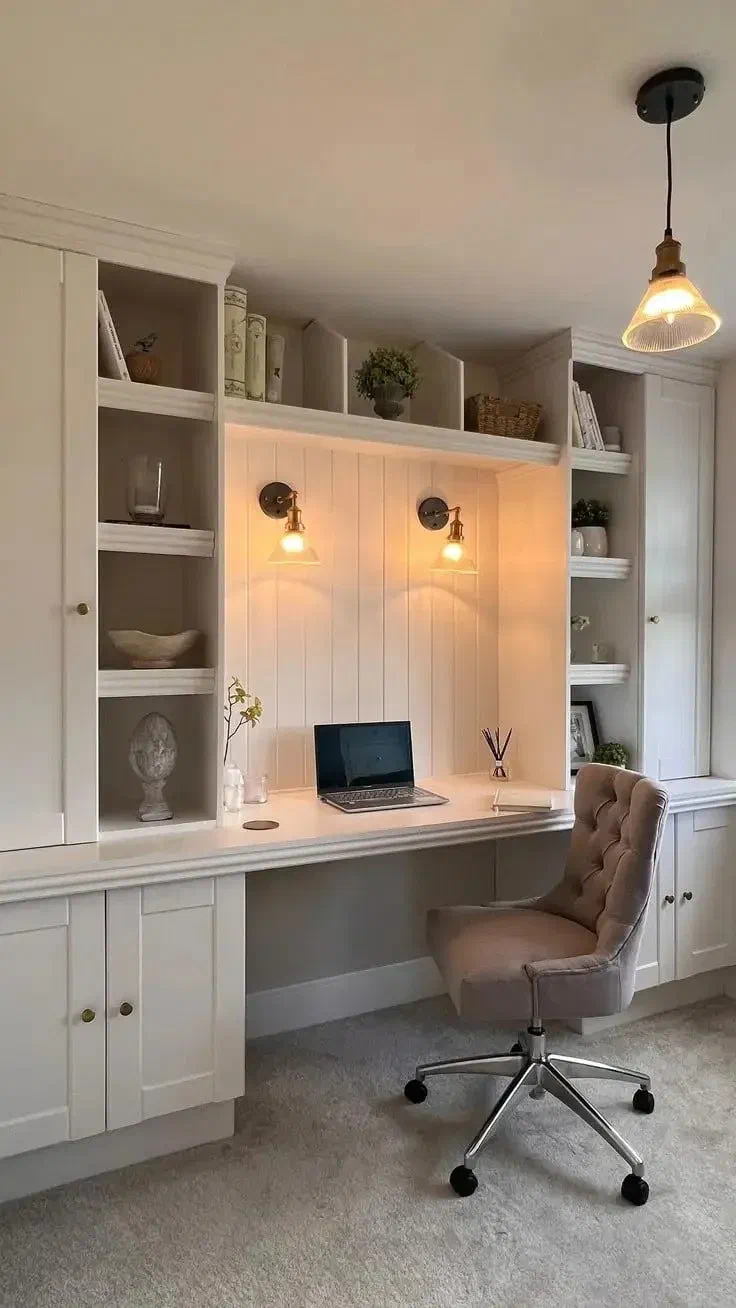
I’d rather fix video-call lighting with a dedicated fixture than fuss with lamp angles every time a meeting starts. A shadowed, washed-out face on camera is almost always a lighting-position problem, not a webcam problem:
- Ring lights: Popular for video calls, they provide even lighting and reduce shadows.
- Three-point lighting: Use a combination of key, fill, and backlighting for a well-lit look.
- Natural light: If using window light, a sheer curtain can diffuse harsh sunlight for a softer appearance.
When the goal is looking decent on camera specifically, a clamp-on ring beats repositioning a desk lamp before every meeting: circling the lens with light is what erases the half-lit look a side lamp creates. This 10-inch clamp-on model covers the essentials: warm-to-cool colour modes, ten brightness steps, an integrated phone mount for phone-first callers. Go in with clear eyes on the review record, though: 4.1 stars over 706 reviews is middling by Amazon standards, and a clamp that loosens unless fully tightened is the complaint that comes up most.
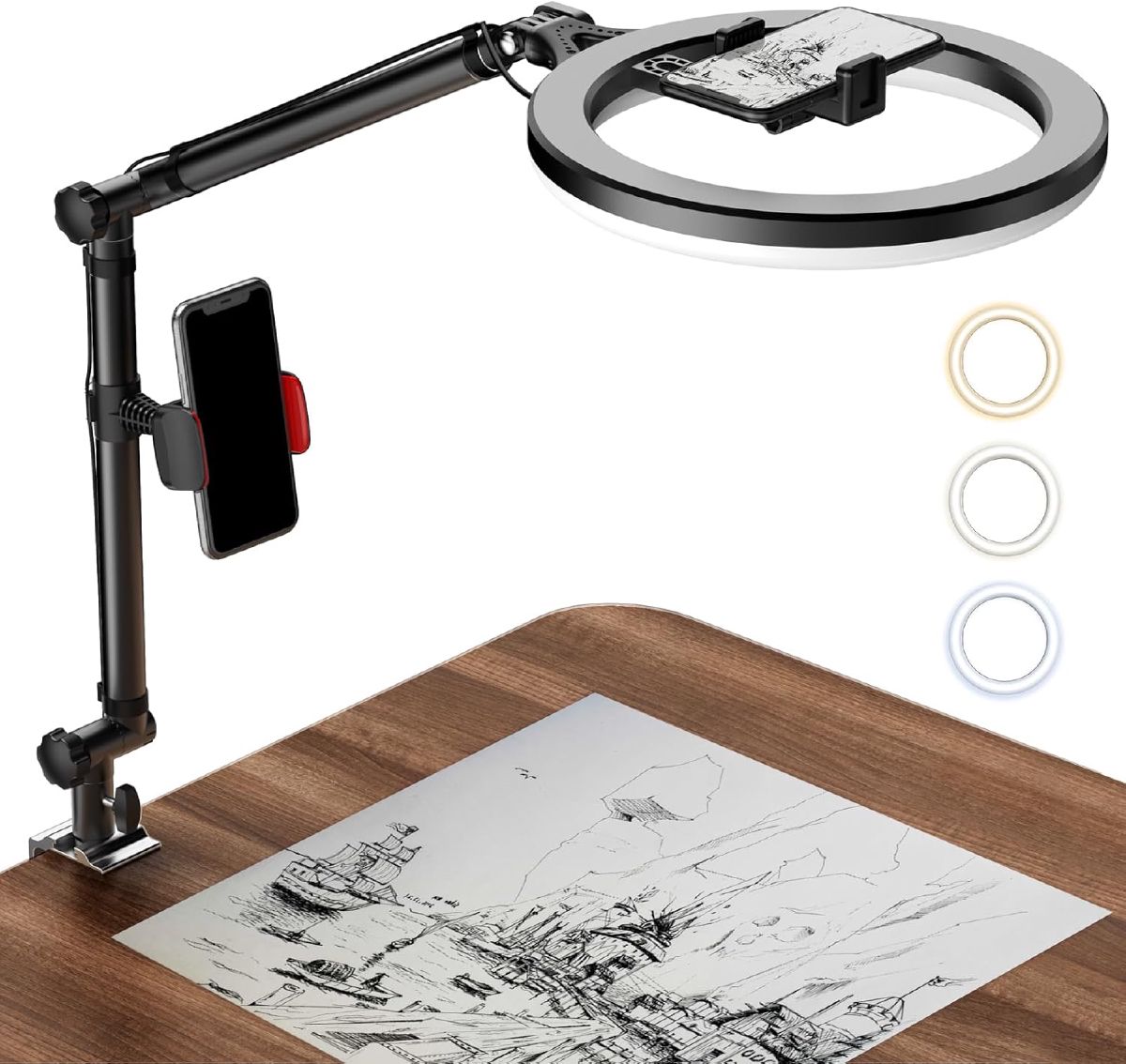 $42.99 price as of Aug 26
Buy the Ring Light with Stand on Amazon for around $43. For more setups built specifically around camera lighting, see my guide to Lighting for Video Calls.
6. Best Lighting Options for Windowless Offices
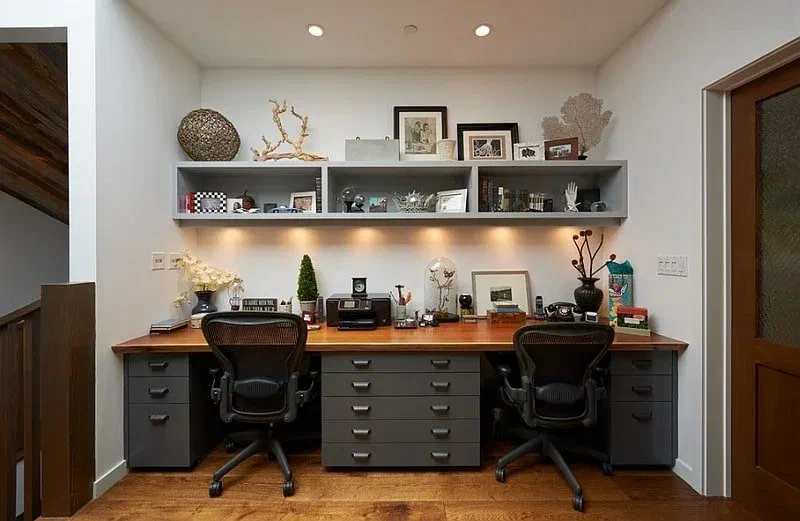
If you’re working in a room without windows, lighting has to do all the work:
- Full-spectrum LED lights: Mimic natural daylight to reduce eye strain.
- Smart lighting systems: Allow you to adjust color temperature and brightness based on the time of day.
- Wall-mounted sconces: Save desk space and spread light evenly across the room.
7. Practical Tips for Desk Placement and Productivity
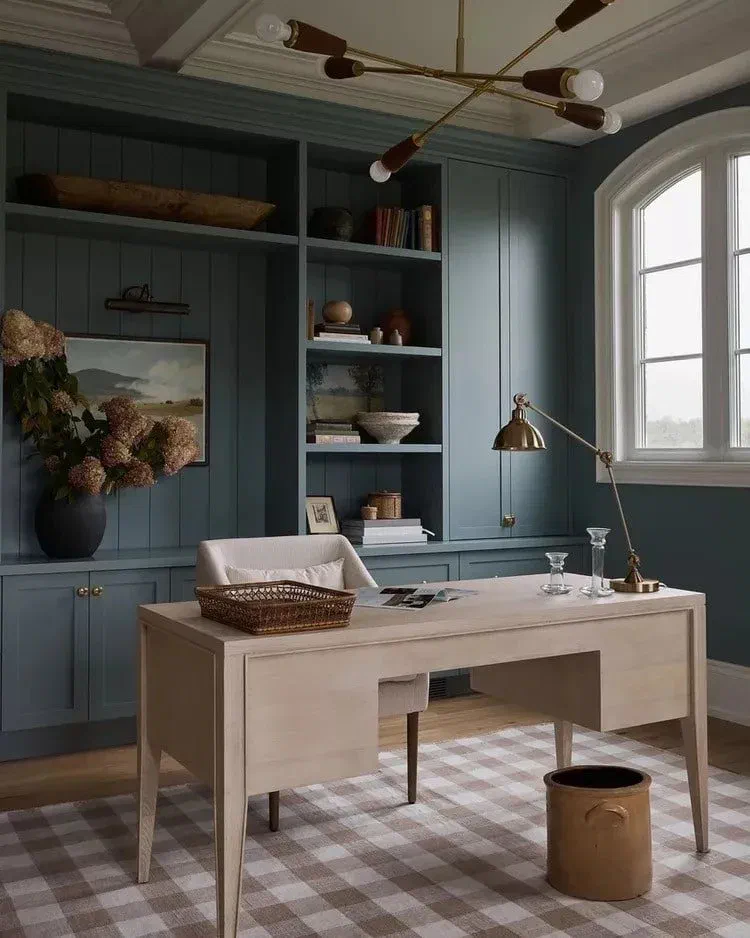
Your desk position affects both lighting and productivity:
- Face or side-light: Sitting perpendicular to light sources minimizes glare.
- Corner desks: Utilize multiple light sources by positioning them in well-lit corners.
- Clear the area around windows: Heavy furniture can block light flow.
Key Takeaways
- Blend natural and artificial lighting: A mix of ambient, task, and accent lighting creates a balanced environment.
- Strategic desk placement: Optimize for natural light without causing glare.
- Invest in versatile lighting: Adjustable brightness and color temperature let one setup carry the whole day.
Plan the layout around light first, desk side-on to the window and three layers for after dark, and most of the furniture decisions make themselves.