To light a room with no overhead lighting, use at least three light sources at different heights: floor and table lamps, something wall-mounted like plug-in sconces, and as much natural light as you can pull in. Layered like that, a room with no ceiling light can look and feel better than one with a single bright fixture in the middle of the ceiling, and none of it needs an electrician.
It’s one of the most common lighting complaints I hear. Older homes, builder-grade new-builds, and open-concept apartments are all notorious for skipping ceiling fixtures entirely. Here’s how to layer light instead of just switching it on.
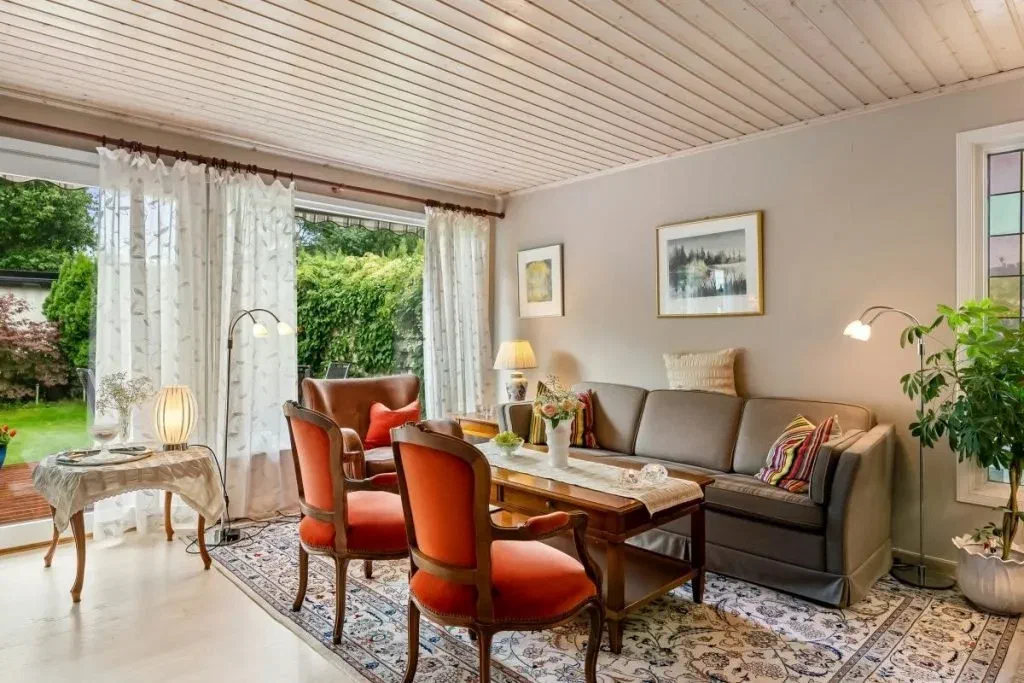
The three types of lighting
The secret to a well-lit room without overhead fixtures lies in layering your lighting rather than relying on one source to do everything.
A room without a ceiling light is actually an opportunity: it forces you into a mix of floor lamps, table lamps and sconces that adds far more depth and personality than a single flush-mount ever could. Instead of flat, uniform brightness, vary the height of your fixtures and mix contrasting styles across the three types of lighting:
Ambient lighting is your general illumination, the overall brightness of the room.
Task lighting is focused light for specific activities like reading, cooking, or working.
Accent lighting highlights art and design, or works as a decorative piece in its own right, adding visual interest and mood.
Accent lighting can be as simple as a pair of wall sconces for a soft, warm glow, or a small table lamp on a bookshelf that picks out a favourite piece of art or a good corner.
A renter-friendly hack: even without a nearby outlet, battery-operated lamps and pucks have come a long way. They’re useful when your furniture is floating away from the walls and running a cord isn’t an option.
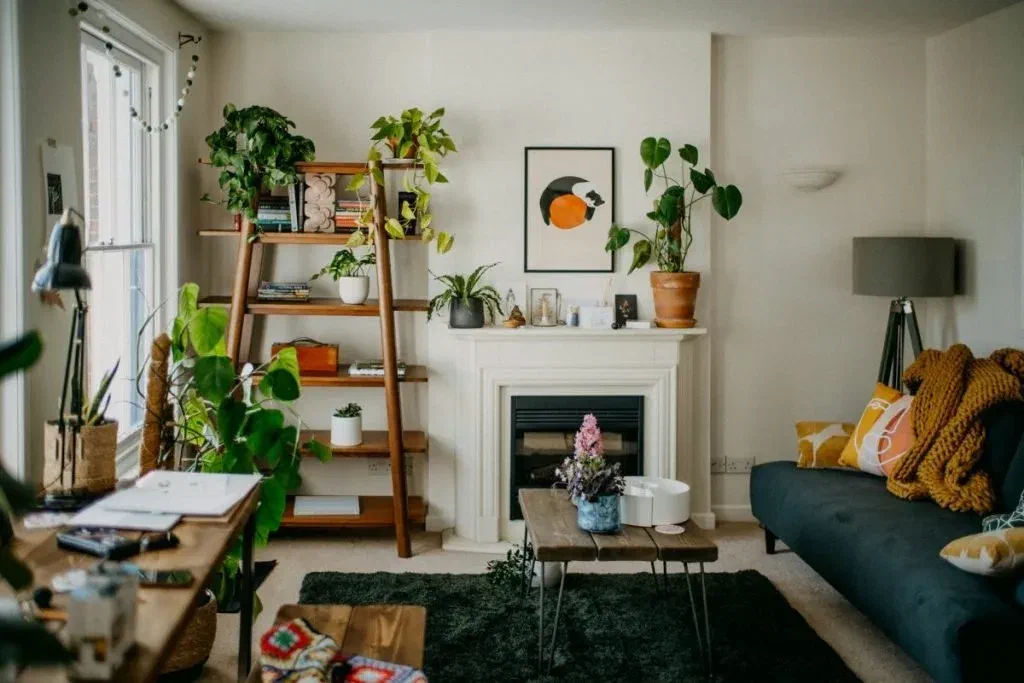
Lighting options for when overhead lights aren’t available
Many homes, especially older ones, builder-grade structures, or spaces with open-concept layouts, don’t have ceiling fixtures. But good lighting design doesn’t come from one bright source of light. It comes from combining several smaller ones to add depth, dimension, and function (this is the layered lighting technique again, and it holds true whether or not you have a ceiling rose to work with).
My rule of thumb: aim for at least three light sources in any room. If overhead lighting isn’t on the table, that means floor and table lamps, something wall-mounted, and as much natural light as you can pull in.
1. Floor lamps
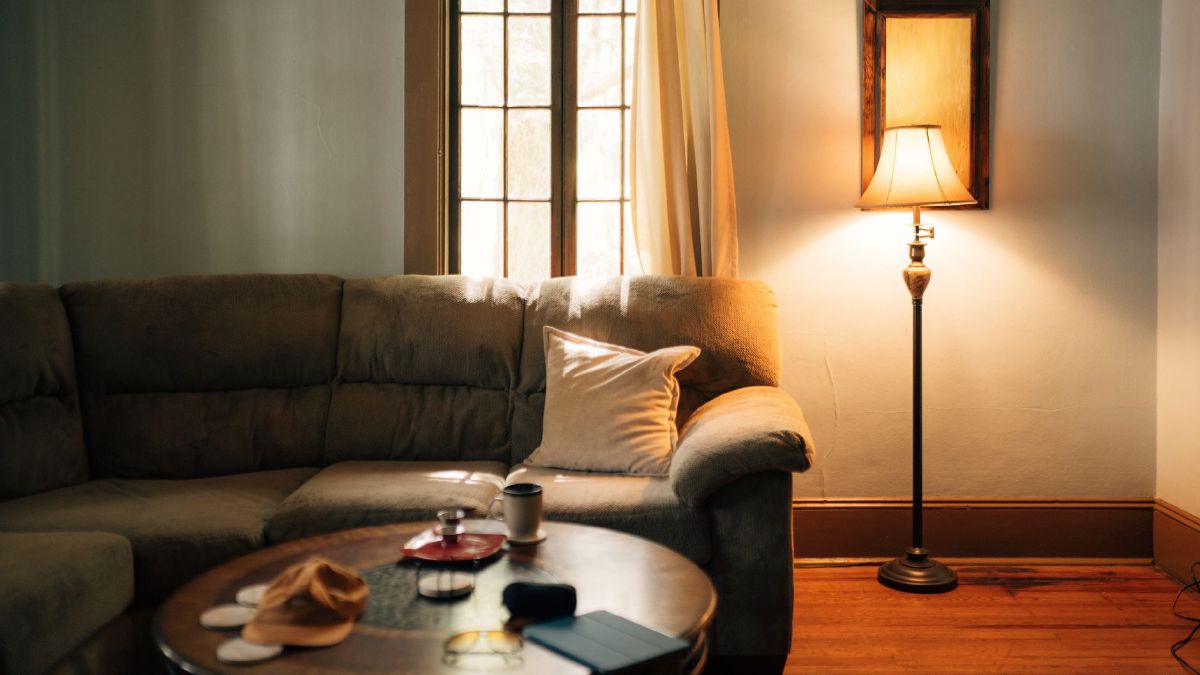
Floor lamps are your best friend when overhead lighting is absent. A floor lamp with an adjustable head does double duty as both task and ambient lighting, which makes it one of the hardest-working pieces you can buy for a room like this.
Mix warm LED bulbs with an amber-toned shade for a cozy, golden-hour glow, or run LED strip lights behind furniture for something more modern and understated.
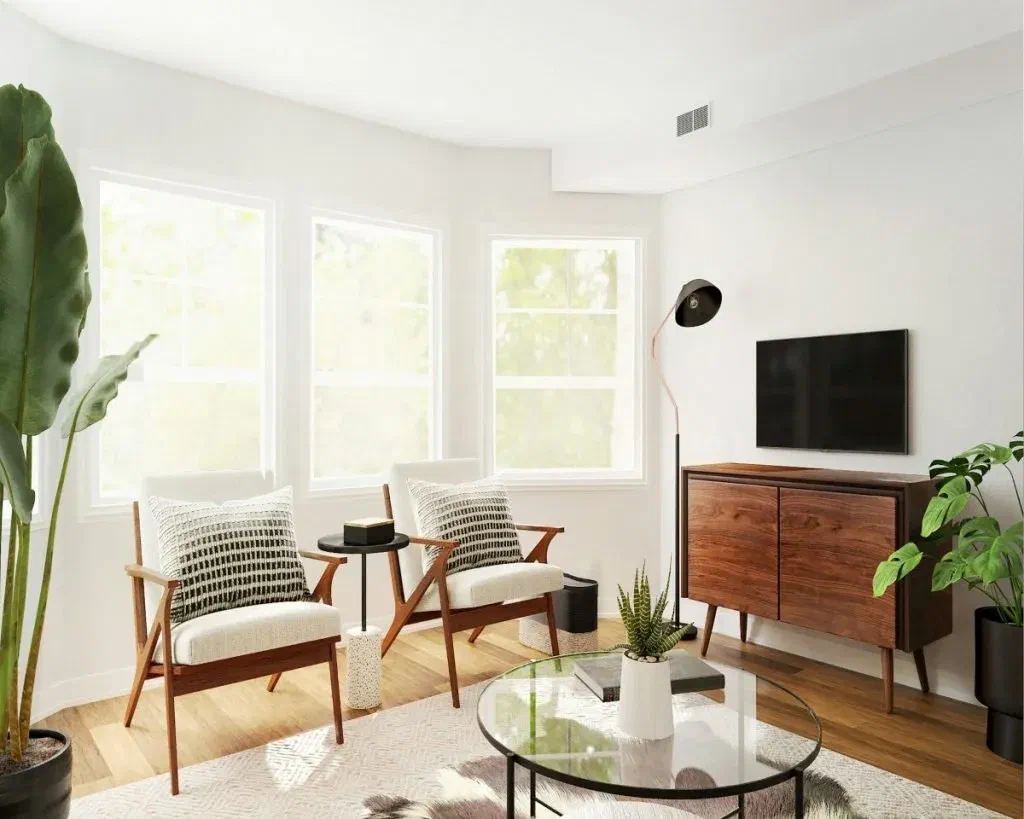
Types of floor lamps
Arc lamps project light over a seating area, mimicking the effect of a pendant light. They’re the classic living-room pick.
Torchiere lamps direct light upwards, bouncing it off the ceiling for indirect ambient light that makes a room feel larger and brighter.
Tree lamps (multi-head floor lamps) have several adjustable heads, so one fixture can cover ambient and task lighting in different directions.
Reading lamps, often with an adjustable arm or head, are ideal next to a sofa or armchair for focused illumination.
Ultimately, lighting should invite you into the room. It’s less about raw brightness and more about atmosphere. A torchiere in the corner does more for how a room feels than a brighter bulb overhead ever will.
If I had to name one lamp that does the arc-lamp job without the arc lamp’s usual downside (that long horizontal arm needs real floor space to swing over a sofa), it’s the Safavieh Nadia: a swing-arm floor lamp with a brushed-gold finish and an adjustable height that still tucks close to a chair rather than reaching all the way across a seating area. It ships with the LED bulb included, which is one less thing to buy separately. At 4.6 stars across 137 reviews it’s a well-liked lamp, though the shade is a plain cotton drum rather than anything more decorative. It reads as understated rather than a statement piece, so pair it with a bolder table lamp elsewhere in the room if you want more personality.
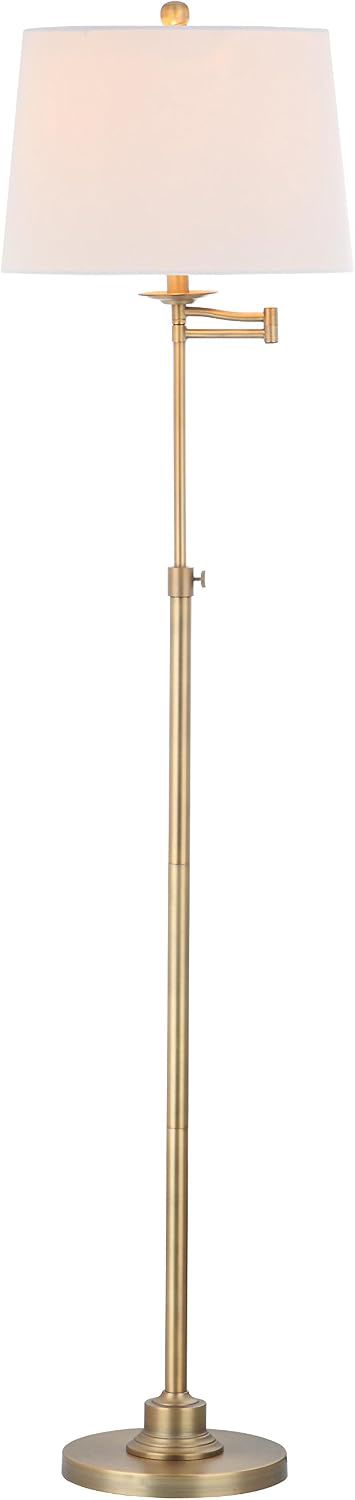 $59.99 price as of Oct 21
Buy the Safavieh Nadia Floor Lamp on Amazon for around $60.
2. Table lamps
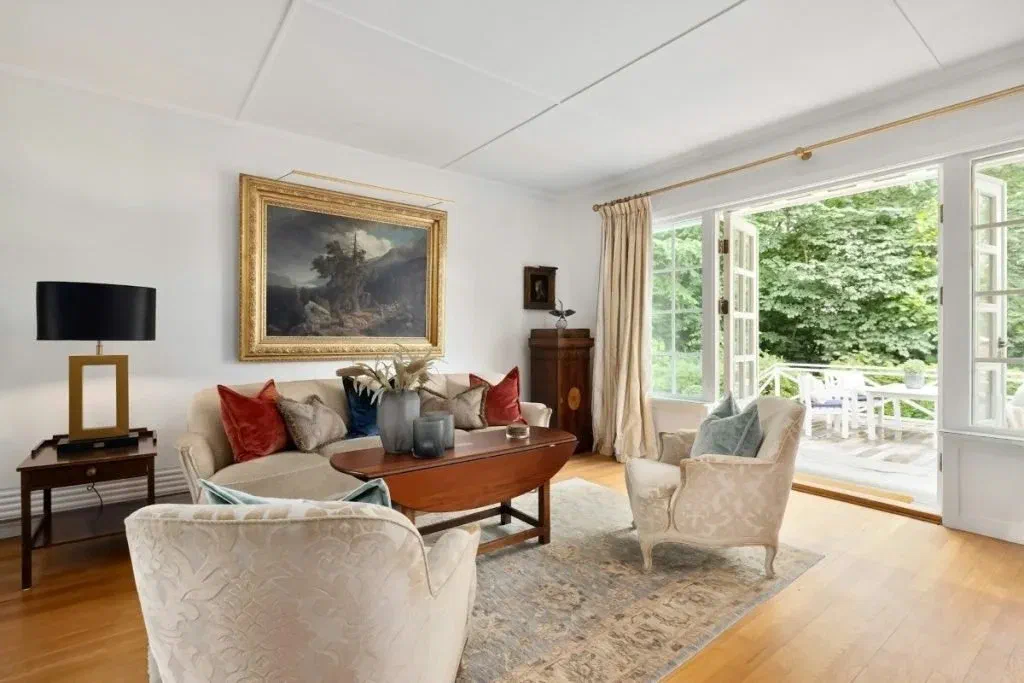
Table lamps are essential for adding layers of light and creating an inviting atmosphere. I generally aim for two to three table lamps in a room that has no overhead fixture, and they don’t all have to sit on side tables. A lamp on a piano, a kitchen counter, or a plant stand in an awkward corner earns its keep just as well.
Tips for table lamps
Vary heights and sizes. A taller lamp on a side table can provide more general light, while a smaller one on a bookshelf adds a touch of accent lighting.
Look at shade material, because it dramatically changes the light. Opaque shades direct light up and down, while translucent shades let it diffuse more broadly.
Pair your lamps with dimmer switches, or bulbs with a warm, adjustable colour temperature, so you can tailor the glow in each area rather than being stuck with one setting all evening.
Arranging lamps at varied heights around a room turns your lighting into a design statement in its own right rather than a functional afterthought.
3. Wall-mounted lights
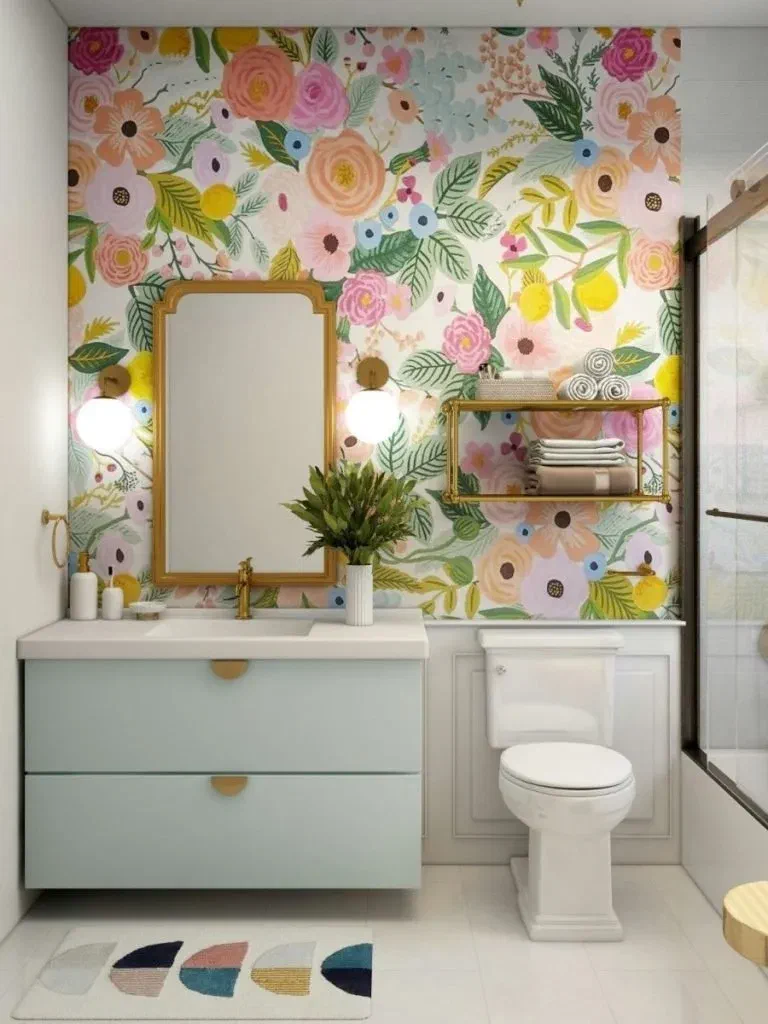
Wall-mounted fixtures are one of the best options for lighting a room with no overhead lighting, because they provide both ambient and accent light without eating into your floor space. Stick-on sconces, rechargeable models, and plug-in wall lights have made this category properly renter-friendly, no electrician required. See my full wall sconce round-up for picks across hardwired, plug-in and rechargeable options.
Types of wall-mounted lighting
Plug-in or battery sconces come in plenty of stylish designs, with USB-rechargeable and battery-operated options that need no electrical wiring at all. They’re easy to install and can flank a sofa, bed, or mirror for decorative and functional lighting.
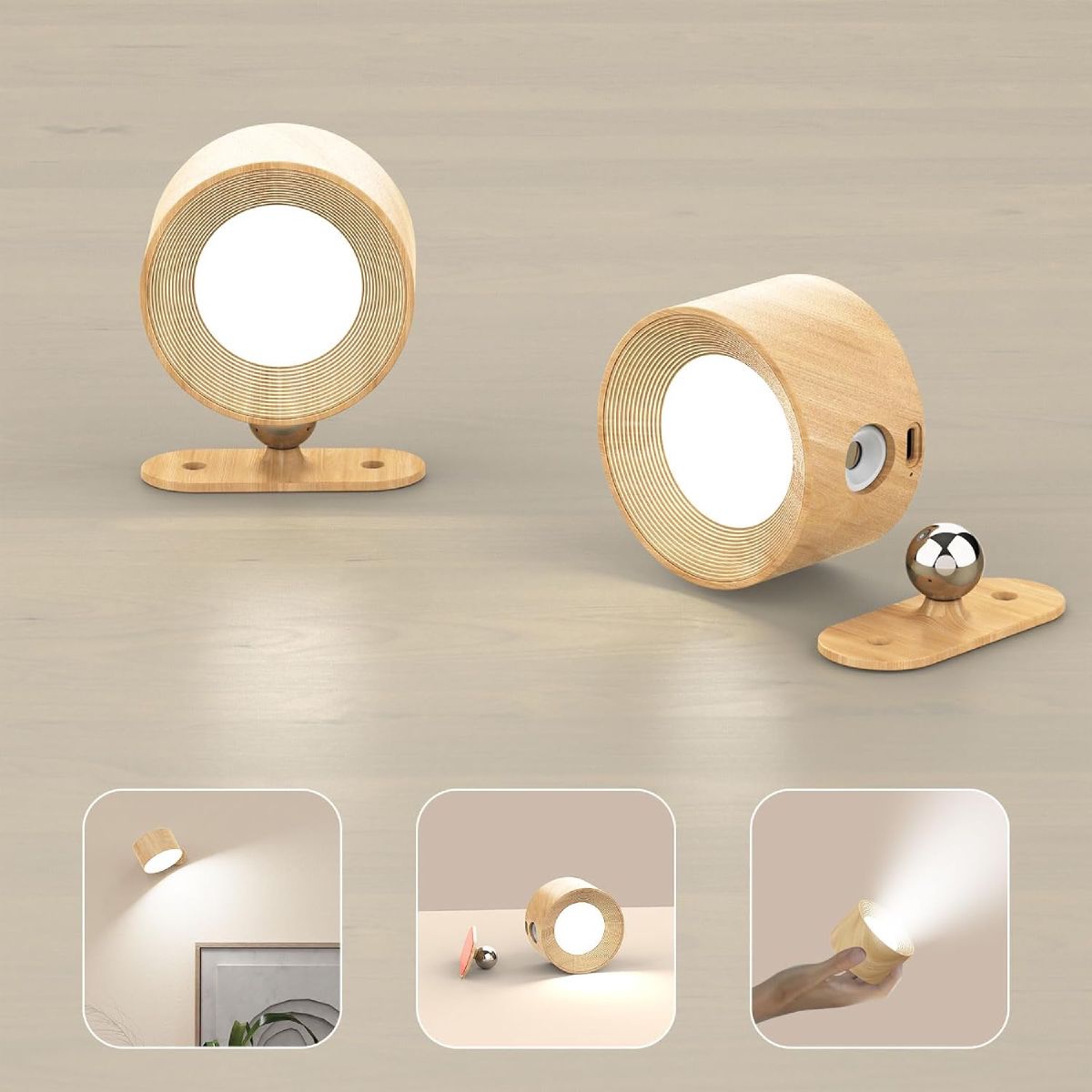
The battery route is the one I’d actually recommend for a rental, because it skips the outlet-hunting entirely. The Koopala rechargeable wall sconce sticks on with adhesive (no drilling), lifts off its magnetic mount in a second to recharge, and gives you three brightness levels and three colour temperatures. Nearly 9,000 reviews at 4.4 stars is a real track record for a battery light, a category where cheap ones tend to disappoint. The trade-off is genuine: it needs recharging every so often (up to 20 hours on the lowest setting, less on max brightness), so it’s not a fit for a spot you’d want lit constantly.
 $31.99 price as of Oct 17
Buy the Koopala Rechargeable Wall Sconce on Amazon for around $30.
Picture lights are designed to highlight artwork. They add a sophisticated touch and draw attention to your favorite pieces.
Plug-in pendant lights offer the look of a ceiling fixture without the hardwiring: hang them up, plug them in, and you have instant overhead-style lighting.
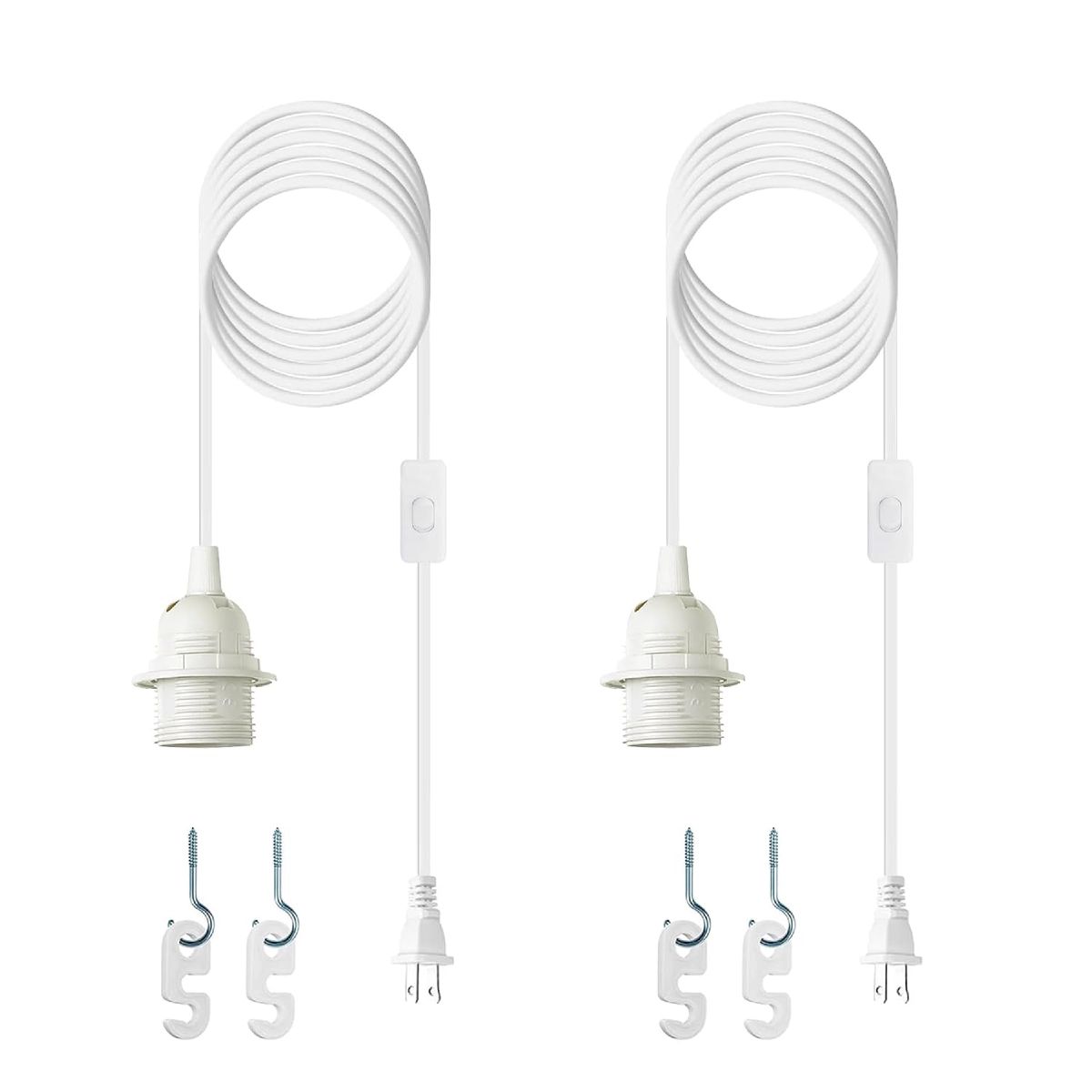
A plug-in pendant kit is the fix I’d reach for first in a room that feels flat without a ceiling light, because it’s the only option here that actually looks like overhead lighting rather than a workaround for one. All it takes is a swag hook in the ceiling and a nearby outlet. Zarnicy’s cord kit gives you two full sockets at 16 feet of cord each, an inline switch you can reach without climbing on a chair, and enough ceiling hooks, cord hooks and ring covers to route the cable along a wall instead of leaving it hanging loose across the room. At 4.6 stars over 613 reviews it holds up well for something this simple. The limit is real, though: it caps at a 60-watt bulb, so it’s a soft accent pendant rather than a genuinely bright one, and you’ll want an LED rated for warm, low-wattage output to get the most out of it.
 $15.98 price as of Oct 19
Buy the Zarnicy Plug-In Pendant Cord Kit on Amazon for around $16.
The one thing a plug-in pendant can’t do on its own is answer to a wall switch, since it’s living in an outlet rather than a ceiling box. I pair mine with an Amazon Smart Plug for that: it sits between the cord and the wall, and from there you’re controlling the pendant, or any lamp in the room, from a voice command, an app, or a schedule that has it glowing before you walk in the door. Setup is a few minutes in the Alexa app, no separate hub needed. It won’t replace an actual light switch: you still need your phone or a smart speaker within earshot, and it switches power on and off rather than dimming. For a rented room with no wiring option, though, it’s the closest thing to real switch control you’ll get.
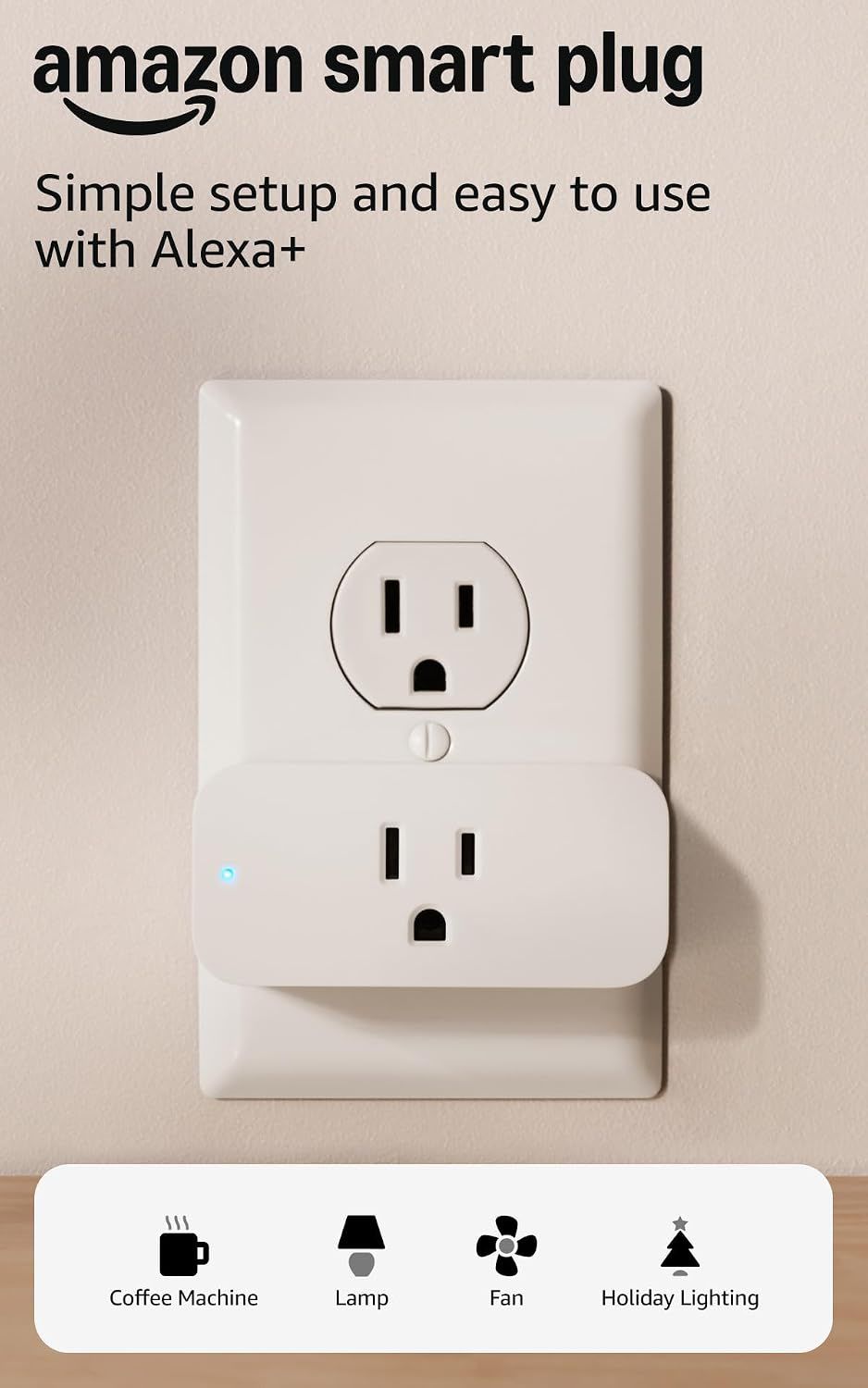 $24.99 price as of Oct 17
Buy the Amazon Smart Plug on Amazon for around $20.
One of my favourite low-effort tricks is a picture light above a bookshelf for a subtle, gallery-like glow, and a plug-in wall sconce either side of the bed for renters who want something more finished-looking than a bedside lamp without touching the wiring.
When ceiling lights aren’t available, wall sconces become an essential design element rather than a nice-to-have. They provide ambient light, highlight architectural features, and free up nightstand or console space while adding real style. Materials like marble, brass, or ribbed glass can turn a sconce into a statement piece even when it’s switched off, and a dimmer gives you full control over the mood.
4. Natural light
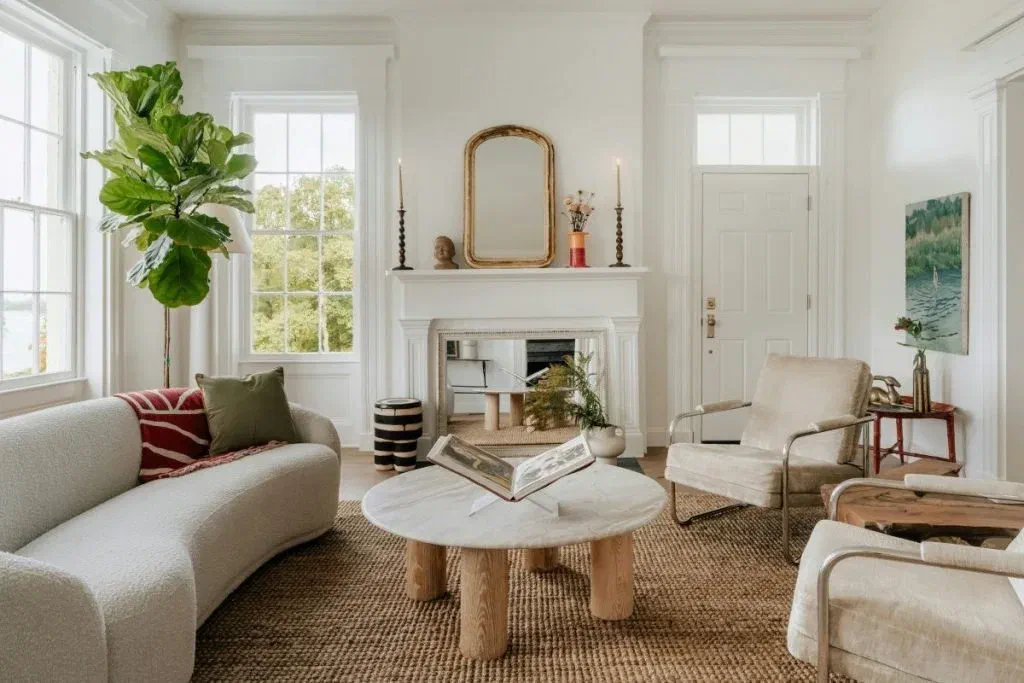
While this isn’t a fixture-based solution, natural light is a tried-and-true way to brighten a room that has no overhead lighting. Open the blinds and curtains fully, and swap heavy, dark drapes for something lighter. White, flowy curtains keep a room feeling airy rather than closed-in.
How to utilize natural light
Keep windows unobstructed. Use sheer curtains or blinds that can be fully opened to let in as much daylight as possible.
Clean windows regularly. It sounds simple, but clean windows let in more light.
Place mirrors where they reflect existing light (from lamps or windows) around the room. It makes the space feel brighter and larger.
Choose light paint colors and furniture. Pale surfaces reflect whatever light you have instead of absorbing it.
For a calm, cohesive feel, keep your bulbs to a single hue across the room. Mixing a warm 2700K lamp with a cool daylight one is the fastest way to make a space feel mismatched rather than intentional.
Lighting design tips
Once you’ve got the options in front of you, here’s how I actually put them together in a room with no ceiling fixture.
Cozy and functional lighting
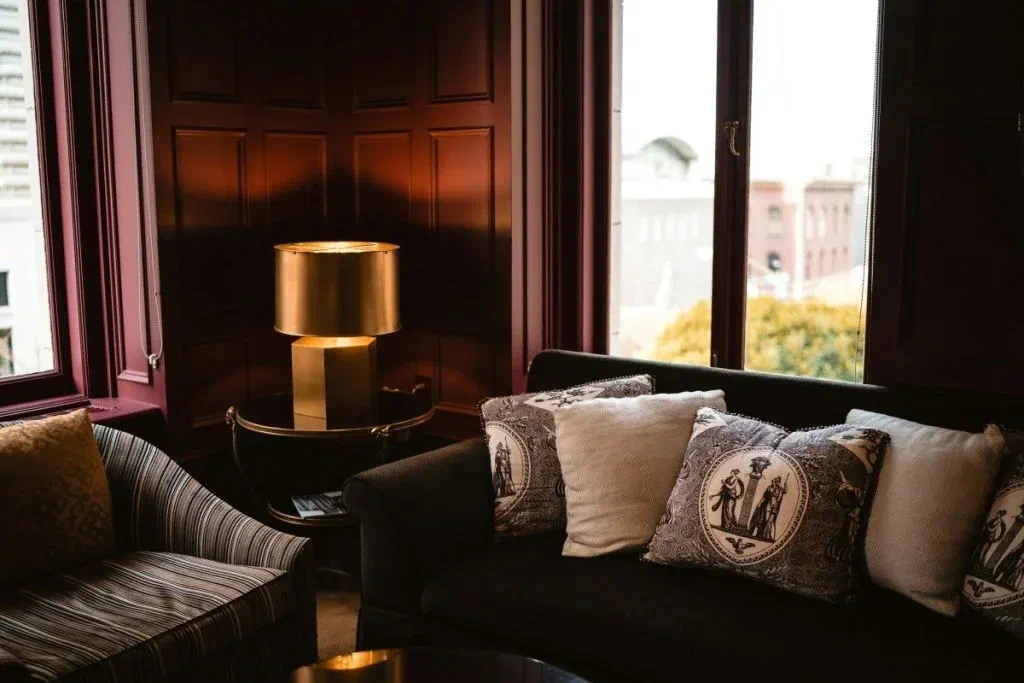
Layering floor lamps, table lamps, and sconces at various heights creates both ambiance and function. Start with a tall arc lamp to cast light across the seating area, then layer in warm-toned table lamps for a cozy glow closer to eye level. Wall-mounted plug-in sconces are underrated here. They’re perfect for renters and add stylish, directional light without any rewiring.
Make lighting a design feature
Treat lighting like décor rather than plain utility. A sculptural floor lamp in the corner, a globe table lamp for a soft glow, and LED strip lighting under shelves or behind furniture all add depth and dimension. These small details make a space feel designed and well-lit, with no overhead fixture required.
Focus on zones, not brightness
A well-lit space doesn’t have to be uniformly bright. Divide the room into zones (reading nook, TV area, workspace) and light each with intent. A swing-arm floor lamp beside a chair or a clip-on light near the sofa does more for mood and function than a brighter bulb overhead ever will.
Layer with purpose, not just placement
Lean into the flexibility that comes with lamps and sconces rather than fighting it. Combine a soft-glow floor lamp with an adjustable reading lamp for light that adapts to different activities in the same room.
One underrated trick: add a dimmable LED strip behind a headboard, mirror, or bookshelf. It gives the illusion of depth and ambiance with zero glare. Choosing bulbs with a warm colour temperature (2700K-3000K) also produces a cozy, inviting feel that mimics natural evening light.
For this I keep coming back to Govee’s RGBIC strip. It’s cheap enough, around $12 a run, that dressing two or three spots in the same room doesn’t feel extravagant. The peel-and-stick backing removes cleanly enough to be renter-safe, and 26,000-plus Amazon reviews put it firmly in proven territory. My gripe: the app buries the handful of warm-white presets you actually want for this cozy look under dozens of flashy colour scenes, so it takes a minute of digging before it behaves like ambient lighting rather than a light show.
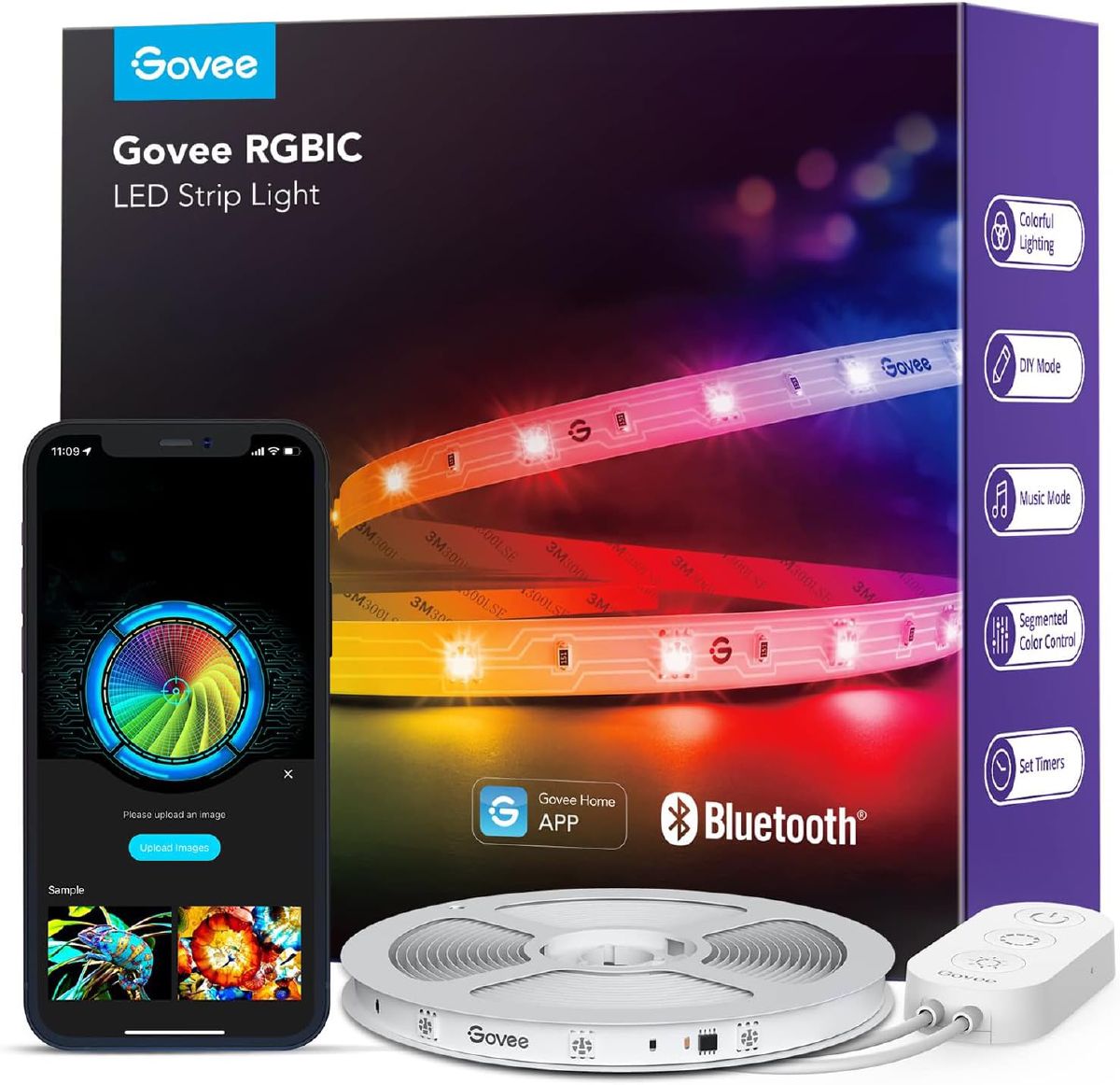 $14.99 price as of Oct 23
Buy the Govee LED Strip Lights on Amazon for around $12.
Think portable, plug-in, and playful
Portable lighting solves the problem outright when ceiling lights are out of reach. Cordless table lamps, battery-powered puck lights, and plug-in sconces offer flexibility without any hardwiring. Style them in unexpected places, like a decorative lamp on a kitchen counter or a sconce flanking a bed, and you turn everyday areas into proper mood-lit moments. The bonus is that none of it is permanent, so you can rotate or move pieces seasonally to refresh the space for free.
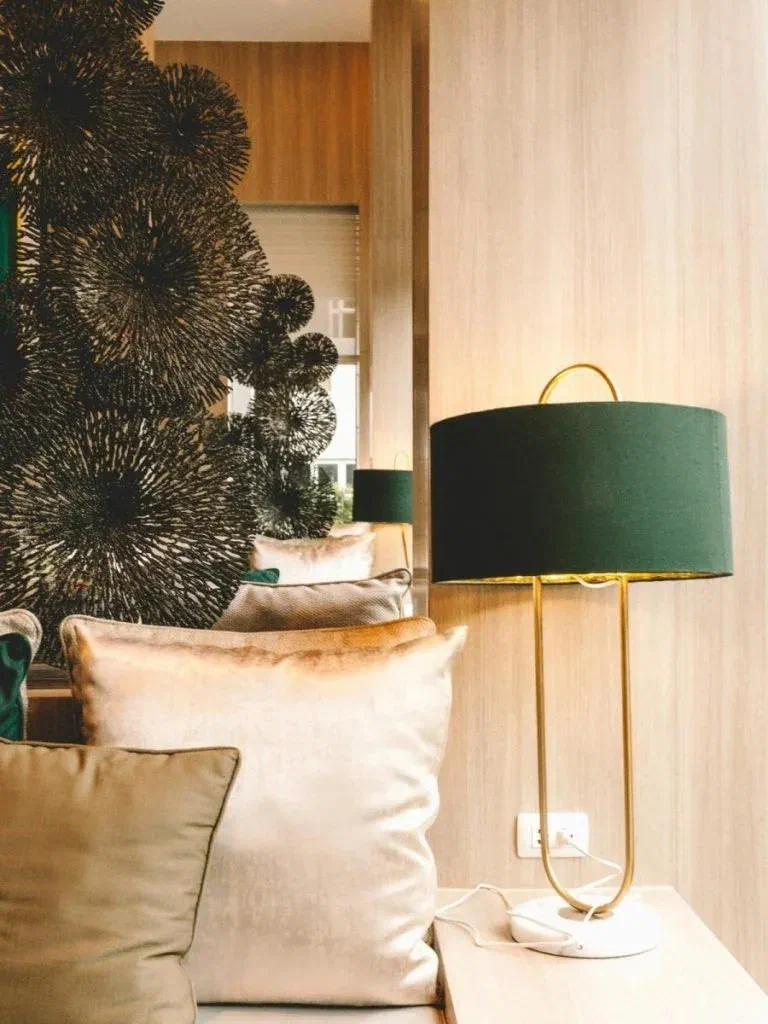
Anchor a room with one statement piece
Anchoring a space with a single standout lamp is a tried-and-true trick. Something like an oversized rattan floor lamp, or a modern arc lamp that curves over the seating area. From there, build out with accent lighting: mini lamps on shelves, warm LED fairy lights in glass jars (my fairy light hanging guide covers the renter-friendly ways to do this without damaging walls), or candle-style wall sconces. The aim is layers that feel intentional and considered, not maximum brightness.
Bonus: Room-by-room lighting ideas
Lighting needs vary throughout the home, especially when you’re working without overhead fixtures. Here’s how I’d approach each of the main rooms.
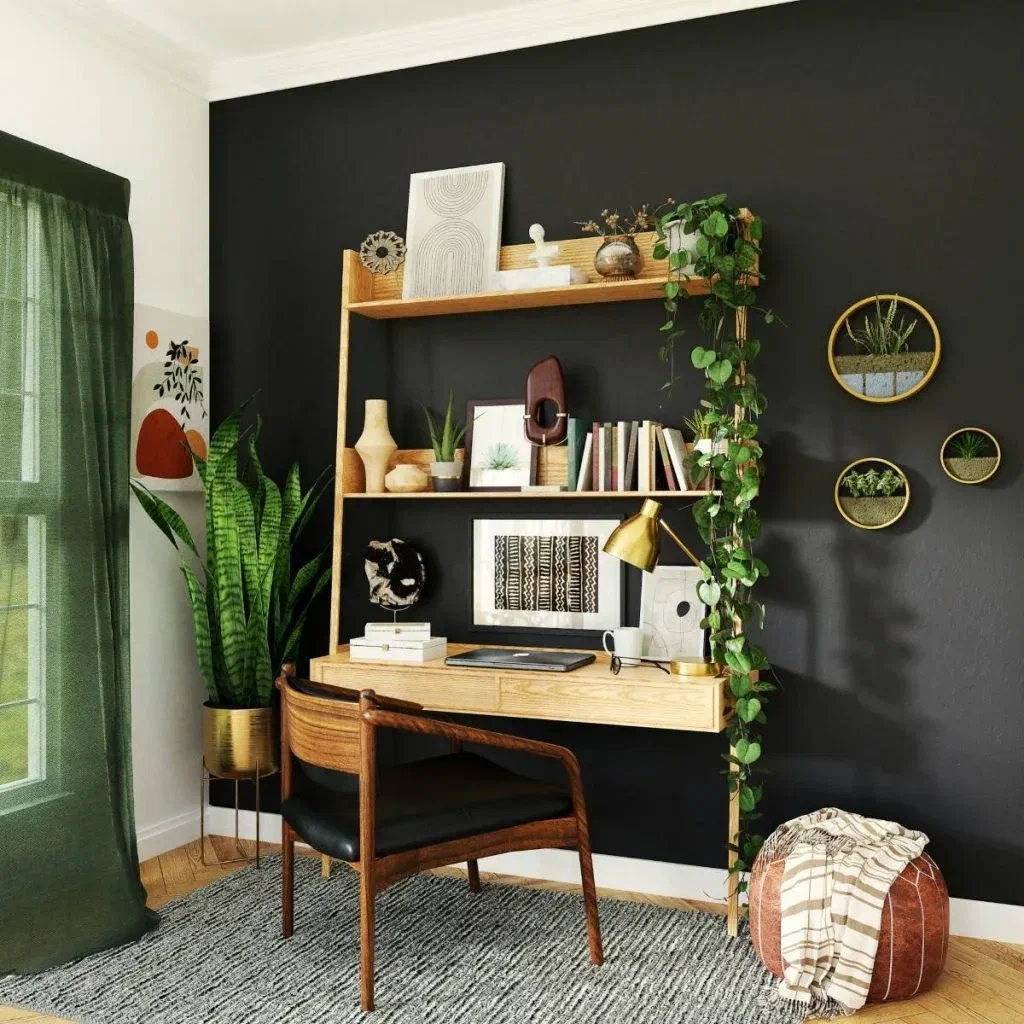
Living room: Combine an arc floor lamp for an overhead effect, several table lamps at different heights, and perhaps some plug-in sconces flanking a bookshelf.
Bedroom: Focus on bedside table lamps for reading, a torchiere lamp for ambient light, and consider LED strip lighting behind your headboard for a soft glow. My bedroom accent lighting guide goes deeper on the mood-lighting side of this if your bedroom has no ceiling fixture to work with.
Dining room: Trickier without overhead lighting, but a pair of arc floor lamps angled toward the table plus tall buffet lamps on a sideboard can create a warm, inviting dining experience.
Home office: A good desk lamp is essential for task lighting. Supplement with a floor lamp for ambient light and perhaps a small table lamp for mood. And if you’re reading in bed as much as at a desk, my best reading lights for bed round-up is worth a look too.
Layered lighting creates warmth and dimension when overhead lighting isn’t an option. When floor lamps, table lamps and sconces are all placed at different heights, they guide the eye and soften the space. In a room like this, the lamps are the design element doing the work your ceiling fixture would otherwise be doing.